
Process
Making Changes Mid-Build: How Change Orders Work
By Peggy Malinowski · January 15, 2026
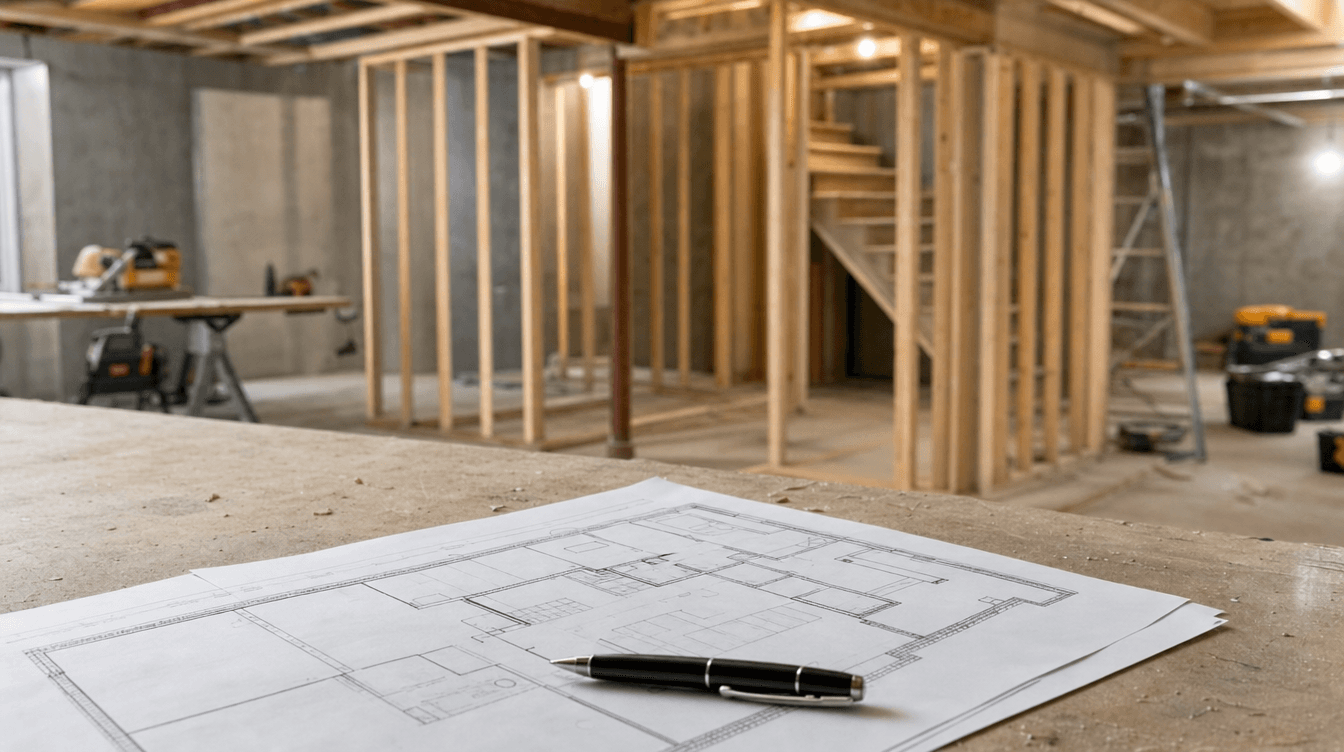
Can you change your mind mid-build? How change orders work on a fixed-price basement — what's easy, what's costly, and why timing is everything.
Yes, you can make changes mid-build — through a change order, a written agreement covering what's changing, what it costs, and any schedule impact, approved by you before the work happens. On a fixed-price basement, change orders are the honest mechanism for handling changes without surprise charges. The key thing to understand is that timing drives cost: the earlier a change, the cheaper it is. (This describes our general process; specifics are set out in your contract.)
Why fixed-price builds have fewer changes to begin with
The best way to handle change orders is to need fewer of them. Because we design the whole basement and price it as one fixed number before construction starts, the layout is set on a plan you approved, finishes and fixtures are selected and itemized, and the scope is clear. That up-front rigor is exactly what prevents the drift that plagues vague, too-cheap quotes — the kind that turn into a stream of surprise change orders.
What a change order actually is
- It's written down — the change, the cost, and any effect on the timeline.
- You approve it first — nothing gets billed or built until you sign off.
- It protects both sides — no ambiguity, no surprise charges, a clear record.
Timing is everything: what's cheap vs. costly
The single biggest factor in what a change costs is when you make it:
- Cheap and easy (early): paint colours before painting, fixture or finish selections before they're ordered or installed, small tweaks before the relevant trade starts.
- Moderate: changes that affect one trade's work that hasn't happened yet.
- Expensive (late): moving a wall, adding a bathroom, or relocating plumbing after framing and rough-ins are done — because it means undoing finished work and redoing it.
The rule of thumb: the earlier the change, the less it costs. A layout change is free to make on paper during design and costly to make in concrete mid-build.
Lock the big decisions during design
This is why the design phase matters so much. The decisions painful to change later — the floor plan, where rooms go, where plumbing and the bathroom sit — are the ones to get right during design, when moving them costs nothing. Small aesthetic choices have more flexibility later. Investing in a thorough design up front keeps change orders rare, small, and cheap. See how our process works and the week-by-week build timeline.
Can I change things after my basement build has started?
Yes, through a change order — a written, pre-approved agreement covering the change, its cost, and any schedule impact. Nothing is charged or built until you sign off, so there are no surprise costs.
Why do late changes cost more?
Because they often mean undoing work that's already done. Changing a paint colour before painting is easy; moving a wall or adding plumbing after framing and rough-ins means tearing out and redoing finished work, which is far more expensive.
How do I avoid change orders altogether?
You can't fully, but a thorough design phase gets it close. Lock the big decisions — layout, room placement, plumbing locations — during design when they cost nothing to move, and change orders stay rare and minor.