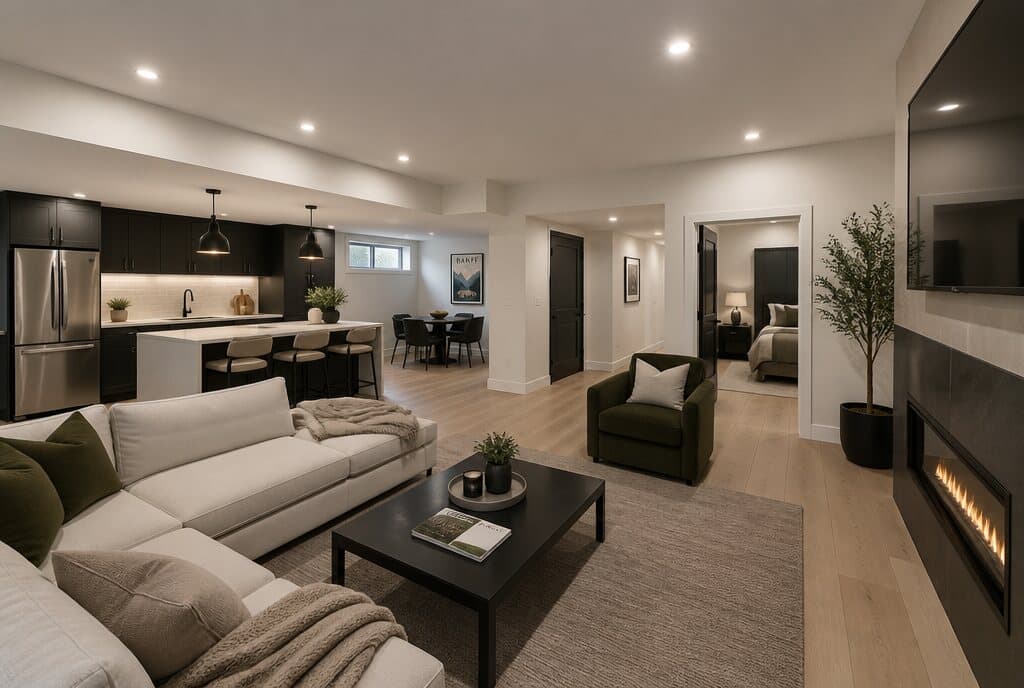
Legal Basement Suites · Calgary
A separate entrance, egress windows, fire separation, a second furnace and full permits — designed and built right, so you can rent with confidence and protect your home's value.
Not ready to book? Get an instant estimate in 1 minute →
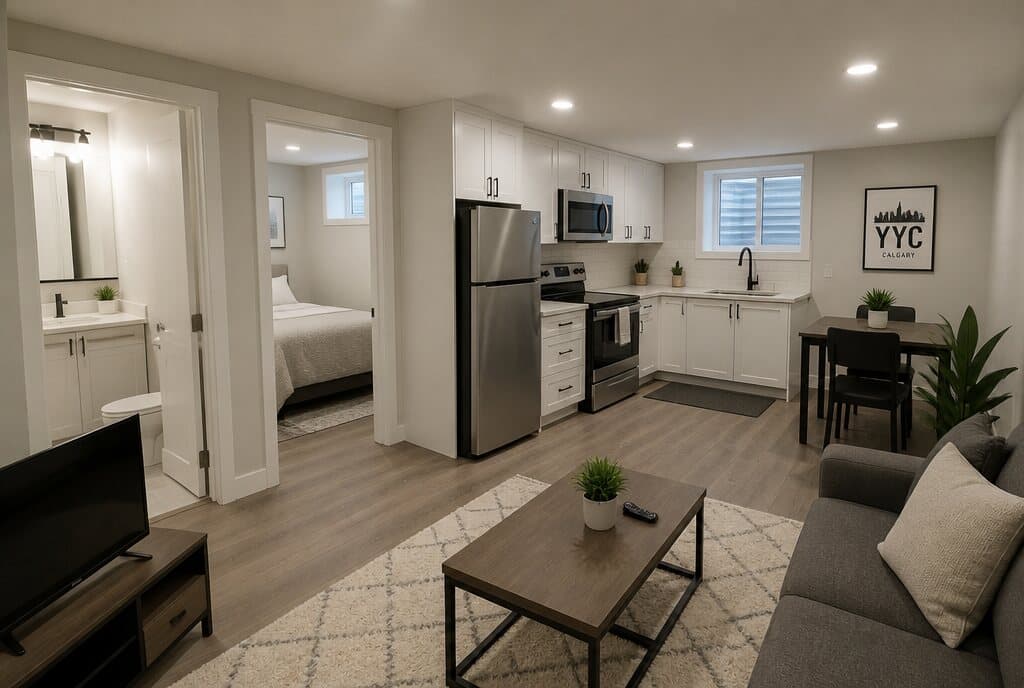
A legal basement suite — the City of Calgary calls it a secondary suite — is a self-contained home within your house: its own kitchen, bathroom, sleeping space and private entrance, built to the National Building Code – 2023 Alberta Edition and registered with the City once it passes inspection.
It's one of the highest-return uses of an unfinished basement in Calgary — but only when it's built to code. A suite that isn't properly permitted and inspected can't be rented legally and can become a problem at resale. If you're comparing builders, start with our complete guide to Calgary basement contractors.
We design and build legal suites the right way: every requirement met, every permit pulled, every inspection passed — planned and scheduled with the same rigor that backs every ReImagine project.
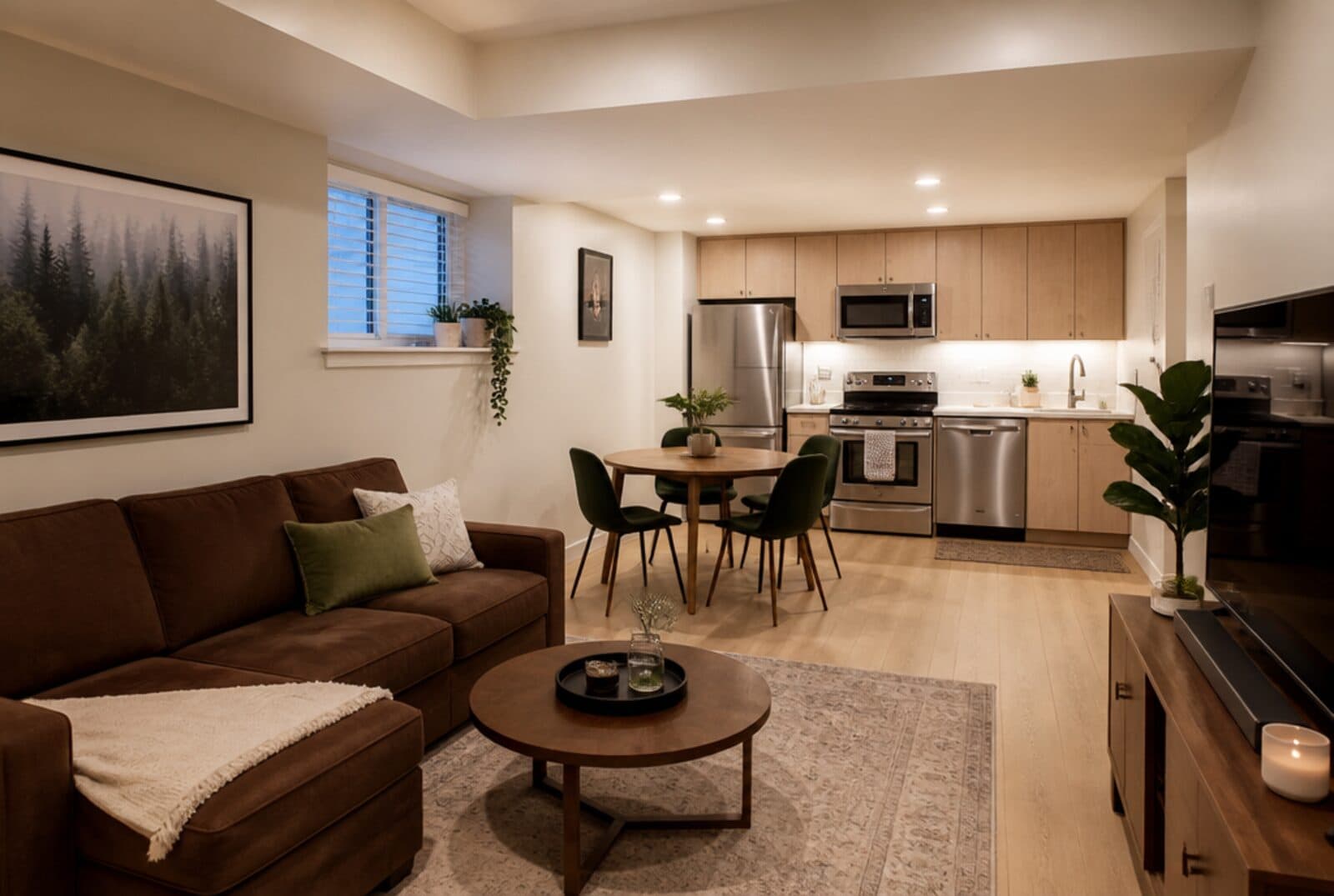
What makes it legal
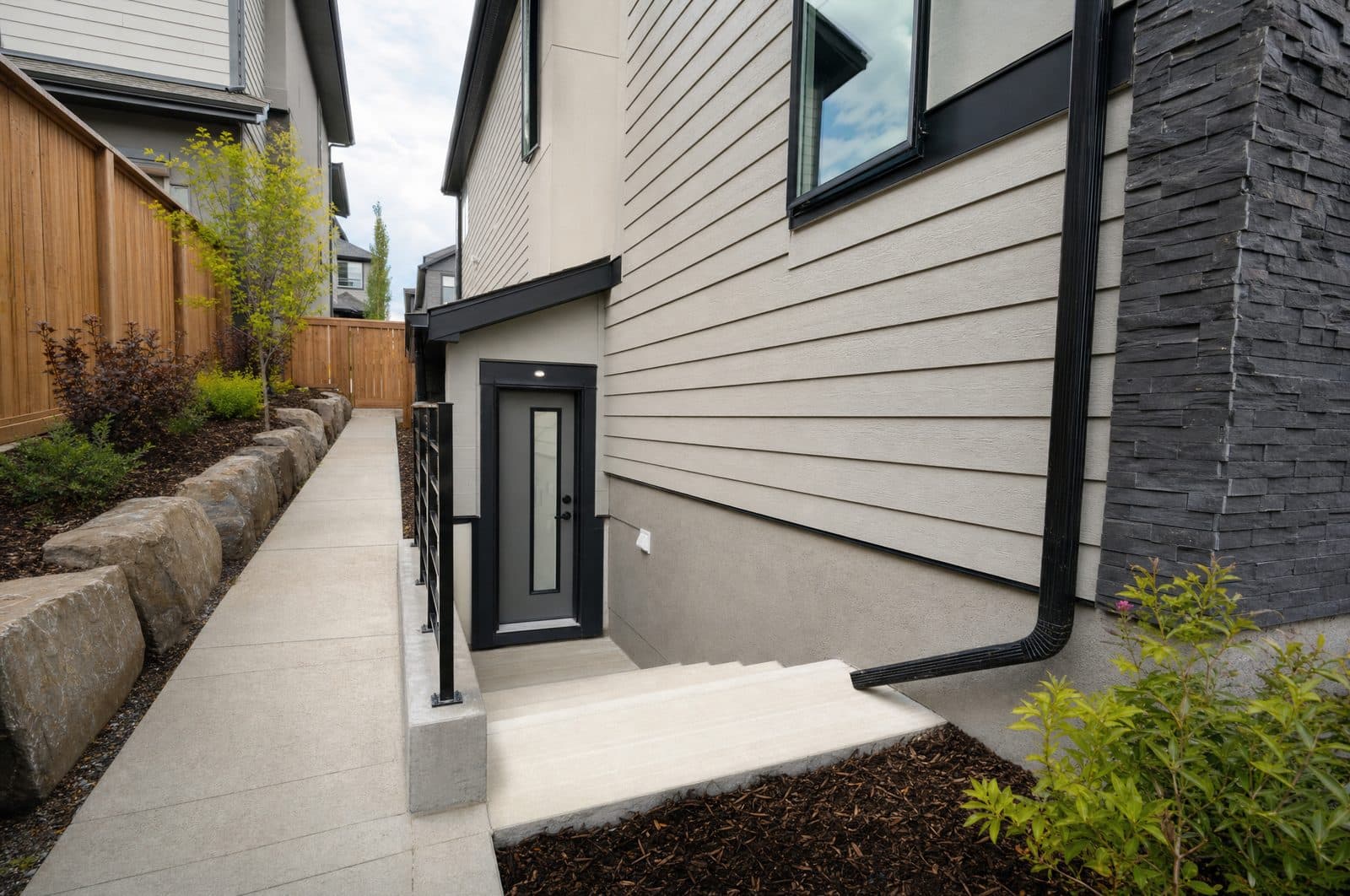
These are the City of Calgary's core requirements for a secondary suite. We handle every one of them — and design them into your plan from the start. A defining one is a separate, private entrance the tenant can use without passing through your home.
A safe way out of every bedroom.
The tenant's own separate door.
At least 1.95 m of headroom.
A rated barrier between the two homes.
Quiet floors, ceilings & walls.
Separately heated, with its own fresh air.
Hardwired smoke & CO throughout.
A complete, self-contained home.
An off-street stall for the tenant.
The City of Calgary's Secondary Suite Incentive used to pay back up to $10,000 of these items. It closed to new applications on Sept. 28, 2026.
A legal secondary suite is a self-contained residence with its own kitchen, living, sleeping and bathroom facilities — fully separate from the main home.
The suite needs an entrance accessible from outside without passing through the main dwelling. A shared stairwell is allowed, but each unit must have its own private entrance.
Living space must meet minimum floor-to-ceiling height (about 1.95 m), which can drop to roughly 1.85 m only under ducts and beams where drop ceilings are unavoidable.
One additional parking stall is generally required for the suite, plus a minimum private amenity (outdoor) space — both checked at the development stage.
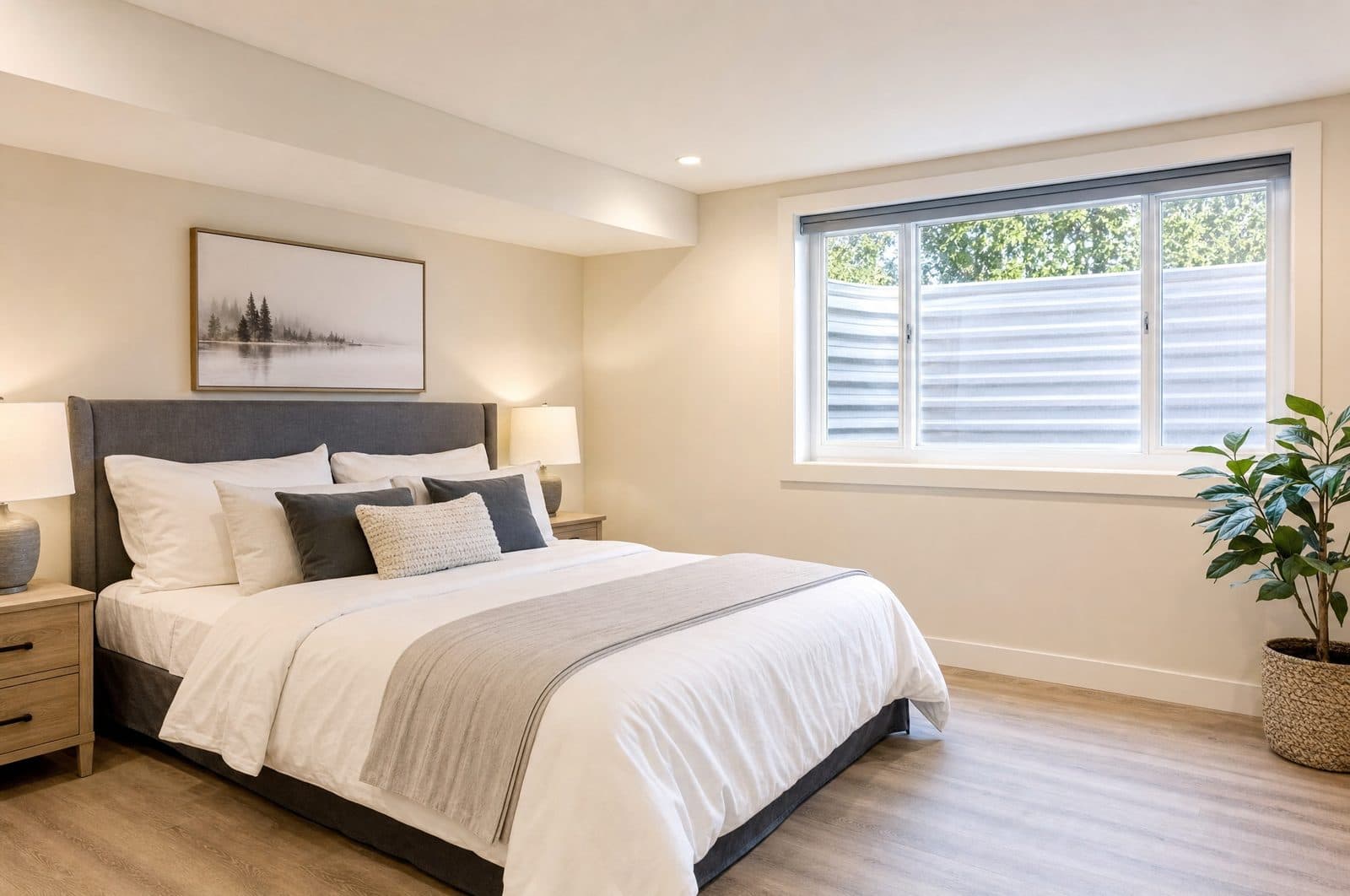
Each bedroom needs a window that opens without tools to an unobstructed 0.35 m² (3.8 ft²), no dimension under 380 mm (15"). Existing window wells need 550 mm clearance; new wells need 760 mm.
A smoke-tight separation (taped, filled ½" drywall) between the suite, the main home and the mechanical room — with a solid-core, self-closing door on the furnace room.
Hardwired, interconnected smoke and carbon-monoxide alarms in both units, so one alarm triggers the rest — including at least one alarm in the main home.
Where the only exit is an exterior stair with a window above it, that opening must be protected (glass block or wired glass) so the escape route stays safe.
A new suite needs its own independent heating and ventilation with separate ductwork — typically a second furnace, or zoned/independent systems — not a shared furnace.
Every suite needs a building permit (and usually electrical, plumbing and HVAC permits). A development permit is needed where the suite is discretionary or parking can't be met.
A finished legal suite is registered on the City's Secondary Suite Registry — the public record that proves the suite is safe, permitted and rentable.
Requirements summarized from the City of Calgary (calgary.ca/secondarysuites). This is general information, not an official code interpretation — final requirements are set by the City.
Financing available
Pay nothing until your suite is finished, then simple monthly payments through our partner Financeit — typically over 5–10 years. $0 deposit to start.

Free instant check
Type your Calgary address — we check your property's actual zoning district against the City's live records.
Will my basement qualify?
Most Calgary basements can become a legal suite — but a handful of things decide it. Here's the short list. If you're unsure on any of them, that's exactly what we confirm for your specific address — free, before you spend a dollar.
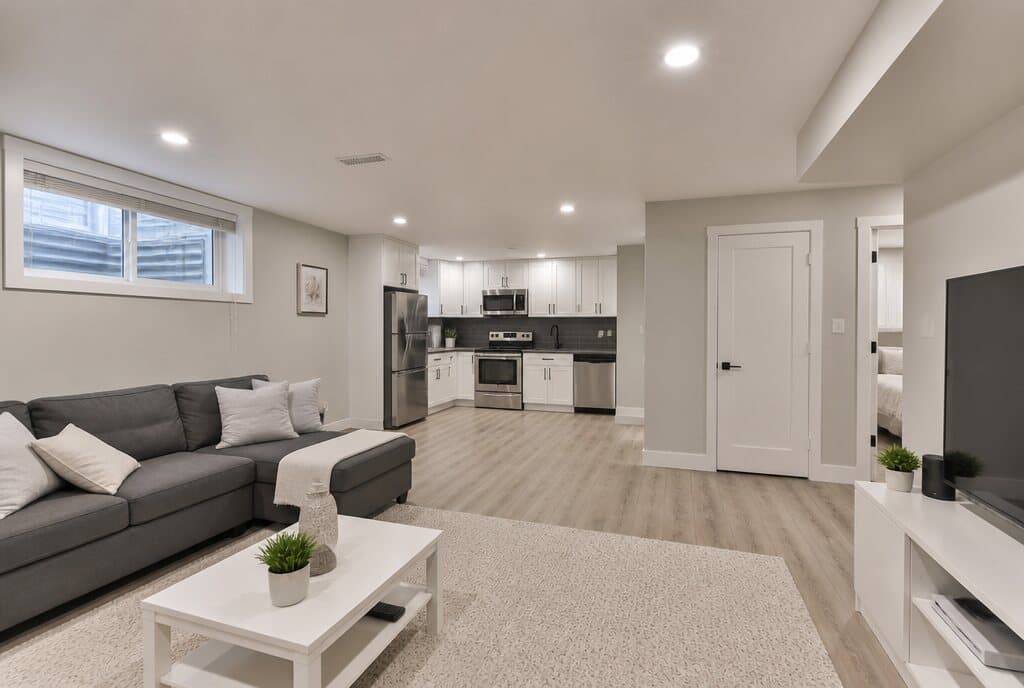
Things we verify on site
Most low-density Calgary homes can have one secondary suite. A few districts (like R-MH) need a land-use change first, and whether you need a development permit depends on your district — so we confirm your exact address before you commit.
Most districts ask for one extra off-street stall for the tenant, on top of your own — street and tandem spots don't count. Some semi-detached lots are exempt.
The suite needs a small private outdoor amenity area — at least 7.5 m² (81 ft²), with no side under 1.5 m. Most yards have room.
Living areas need about 1.95 m (6'5") of height, dropping to ~1.85 m only under beams and ducts. Most newer basements clear this comfortably.
Every bedroom needs a code-sized egress window and well. If the foundation can take the opening, you qualify — we handle the cut and any engineering.
An existing side or rear entrance is ideal, but most homes have space to add one. Basement suites have no maximum floor area, so size is rarely the blocker.
Ask Basement Genius for an instant read — or get a free feasibility check from our team.
Calgary's suite rules are changing through 2026, and the exact requirements depend on your land-use district — we always confirm the current rules for your property before design begins.
Heating & ventilation
The rule that surprises most homeowners: a legal suite can't share the main home's furnace. It needs independent heating and its own fresh-air ventilation, so the tenant controls their comfort and the two homes never share ducted air. It's the single biggest thing separating a suite from a regular finished basement — and there's more than one good way to do it.
We size and recommend the right system for your suite's layout, budget and efficiency goals.
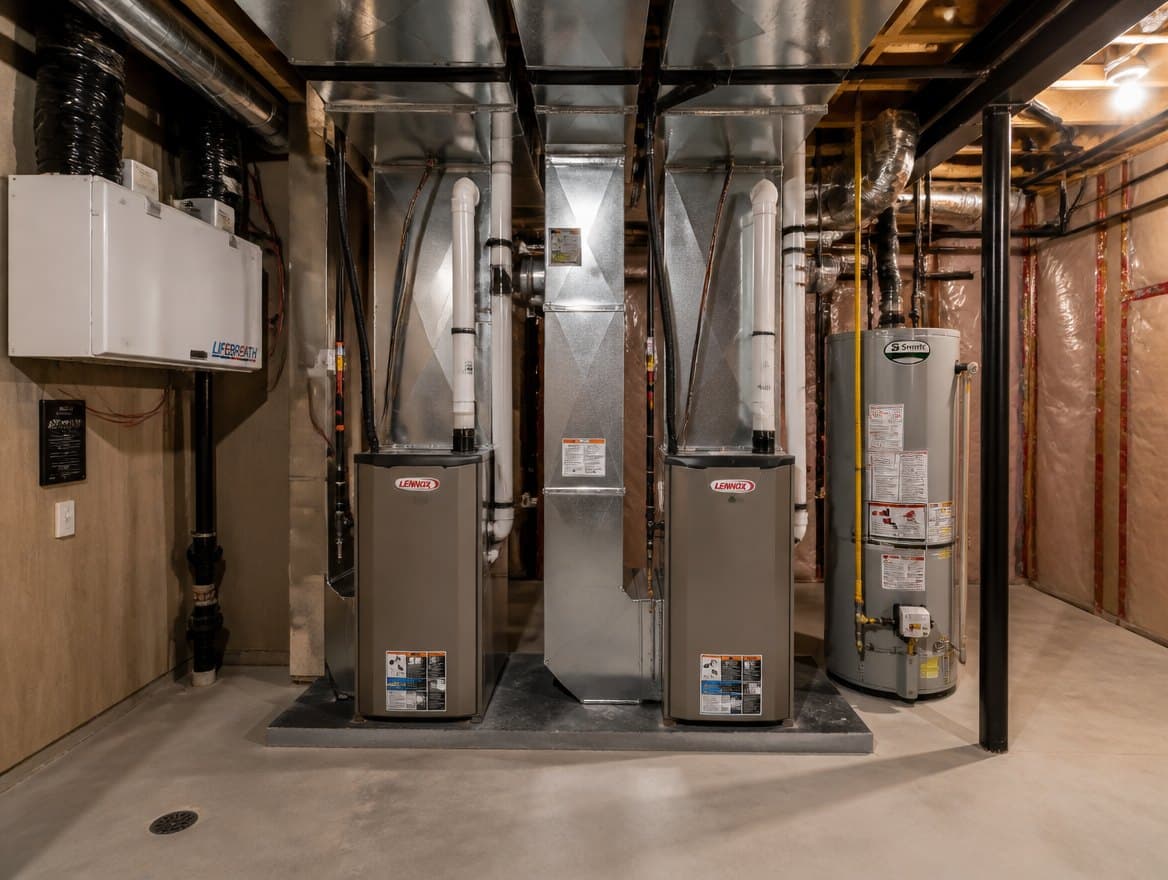
A dedicated forced-air furnace for the suite, with its own ducting and thermostat. It's the most common Calgary solution, gives the tenant full control of their heat, and is what most inspectors expect to see.
Individually controlled electric heaters in each room — the simplest, lowest up-front option, with no shared ductwork at all. Running costs are higher, so they suit smaller suites or rooms a furnace can't easily reach.
A ductless heat pump heats and cools from one quiet wall unit, with no combustion and excellent efficiency. Higher up-front cost, but low running cost and year-round comfort — increasingly the choice for a premium suite.
Not a heat source but a ventilation requirement: an HRV brings in continuous fresh air and exhausts stale air while recovering heat, keeping a below-grade suite healthy and free of condensation and odours.
The right combination depends on your home — we'll walk you through it on your design. A deeper guide to heating and ventilating a Calgary suite is coming to our blog.
Suite vs. basement
They start as the same below-grade space, but they're two different builds. Here's how a legal suite compares with a standard finished basement, line by line.
Costs are typical Calgary ranges, not fixed quotes. The point isn't simply that a suite costs more — it's that the extra work is exactly what makes it legal to rent.
Cost
Finishing a basement and building a legal suiteare two different jobs. A regular basement can share the home's furnace, needs no second kitchen, and carries little fire separation or soundproofing. A legal suite adds a stack of code-required work on top — and that's what moves the number.
Most Calgary legal suites run $75,000 to $125,000. The ranges below are typical Calgary costs for the suite-specific items — your exact figures come itemized on your quote.
A code-legal suite can't share the home's furnace. Adding an independent furnace (or zoned system) with its own ductwork is usually the single biggest added line a regular basement never needs.
Comfortable separation between landlord and tenant means resilient channel, sound insulation and often double drywall. A standard basement skips almost all of this.
Type X (⅝") fire-rated drywall, sealed penetrations, and solid-core self-closing doors on shared and mechanical spaces — labour and material a regular rec room doesn't require.
Cutting or enlarging a foundation opening, plus a compliant window well. Oversized openings need an Alberta-licensed engineer's stamped drawings, adding cost.
If the home doesn't already have a private side or rear entrance, it means excavation, concrete stairs, a landing, drainage and an exterior door — a major add unique to suites.
A full second kitchen — cabinets, counters, appliances, plumbing and a dedicated electrical run — versus a regular basement that often has no kitchen at all.
Hardwired, interconnected smoke/CO alarms across both units, dedicated circuits, and sometimes a sub-panel or service upgrade to carry the added load.
More permits (building, electrical, plumbing, HVAC), more detailed drawings, possible development permit and engineering — all on top of a standard basement permit.
Ranges are illustrative and vary with your home, layout and finishes — nothing here is a fixed quote. See the Full Calgary Basement Cost Breakdown →
A legal suite, by the numbers
Most legal suites run $75,000 to $125,000. To show where the money goes, here's a representative fully-equipped legal suite from our 2026 pricing — a standard finished basement plus the suite-specific work the City requires, line by line. It's an illustrative breakdown, not a fixed quote; your own figures come itemized on your designed plan.
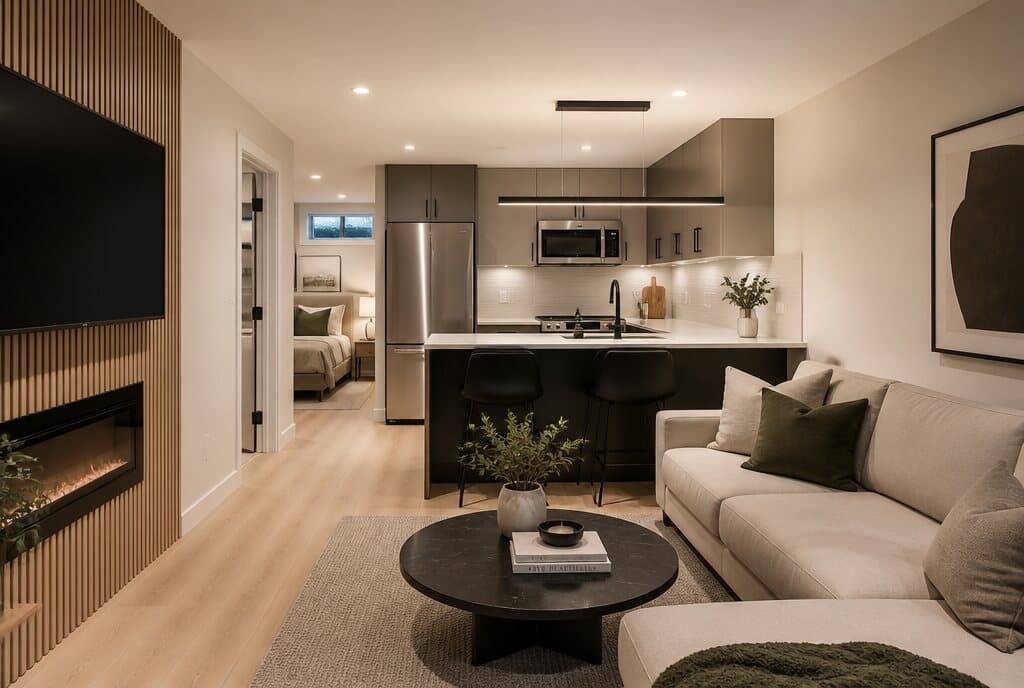
The complete standard build — design, permits, framing, electrical, plumbing rough-in, drywall, paint, a bathroom, flooring and a custom vanity.
A 40,000 BTU Goodman furnace, separate ductwork, gas, and the City of Calgary mechanical and gas permits.
Load calculation, dedicated kitchen and appliance circuits, extra interconnected smoke/CO alarms, and furnace and thermostat wiring.
Mechanical-room and common-wall assemblies built to STC 43 / ASTC 40 — real fire and sound separation between the suite and your home.
A complete Samsung kitchen and laundry set: fridge, range, microwave, dishwasher, washer and dryer.
Coordinating the extra trades, permits and sequenced inspections a suite requires.
Back-flow device, zone controls, and laundry, dishwasher and kitchen rough-ins.
Solid-core, fire-rated suite doors and hardware.
Elevation, floor and site drawings prepared for permit submission.
A legal-suite kitchen cabinet package plus a Delta faucet and sink.
Before GST. The City of Calgary's Secondary Suite Incentive closed to new applications on Sept. 28, 2026, so this total assumes no grant. Every figure is a typical guide price confirmed on your quote; we don't pad the number or hide line items.
Smaller suites, an existing separate entrance, or fewer upgrades land lower; larger footprints and higher finishes land higher. See the Full Calgary Basement Cost Breakdown →
The return
A legal suite earns because it's legal. Tenants pay a premium for a registered, permitted unit they know is safe — and you can advertise it openly, screen properly and rent with confidence. Here's what basement suites are renting for in Calgary right now, sampled from roughly 300 live listings on RentFaster.ca.
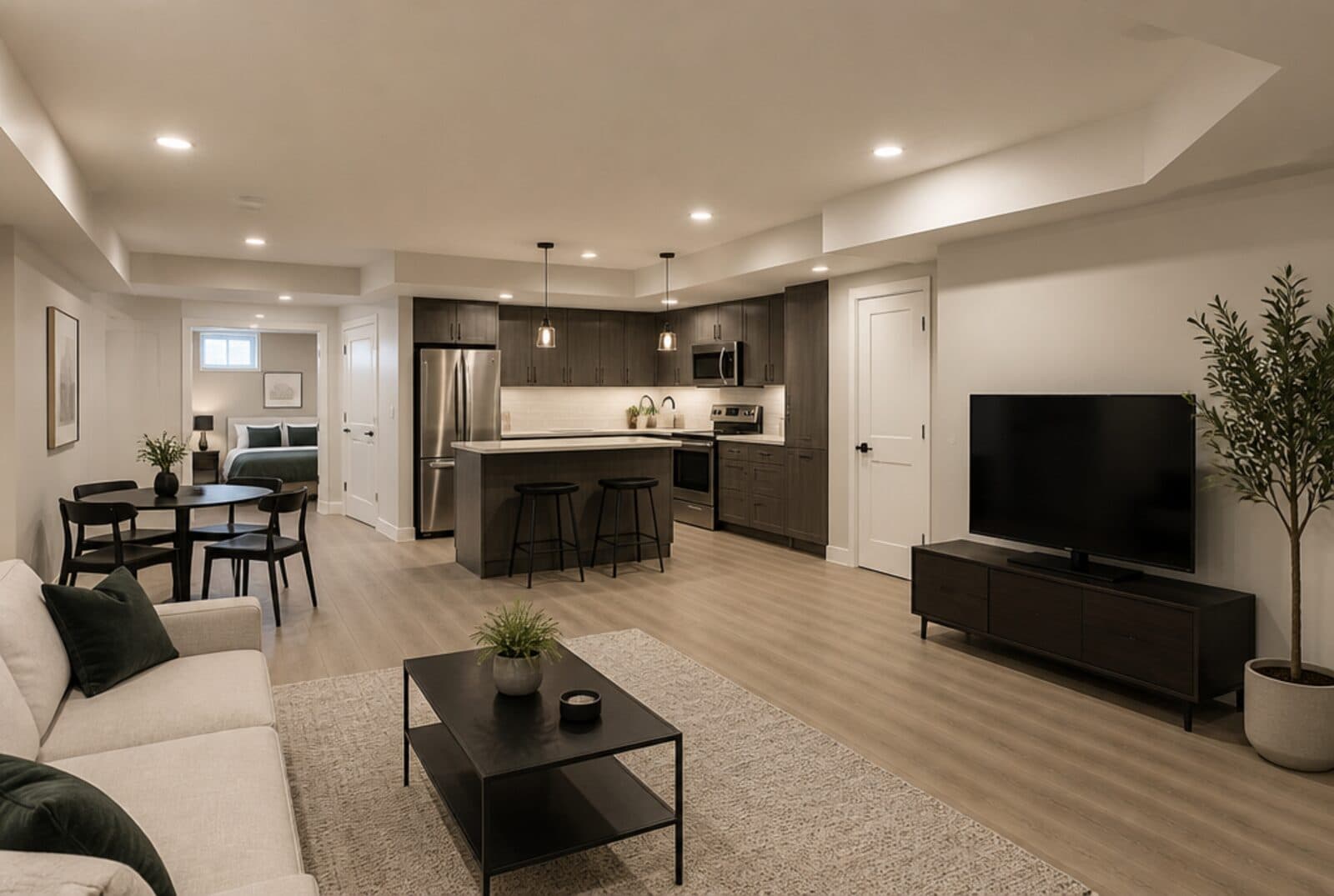
$1,150–$1,500 / mo
The most common legal-suite layout. Registered, permitted suites sit at the upper end — tenants pay more for a unit they know is safe and legal.
$1,400–$1,800 / mo
A second bedroom and bathroom lifts both the rent and the tenant pool — families and roommates as well as singles.
$15,000–$21,000 / yr
At Calgary's current rents, a legal suite commonly grosses this much a year — the income that pays a suite back over time and lifts your home's value.
A small point of pride: those rent numbers come from RentFaster.ca — a site ReImagine's founder, Bo Fric, helped found and served as its first president. We've had a front-row seat to Calgary's rental market for a very long time, which is part of why we build suites that actually rent.
Cost, meet income
Put the two halves together. Say a legal suite costs around $80,000 and rents for about $1,500 a month — roughly $18,000 a year in gross rent. The City's suite incentive closed to new applications on Sept. 28, 2026, so there's no grant in this math. Before financing and operating costs, that build can pay for itself in roughly six to eight years, and keep earning long after, on top of the value a legal suite adds to the home.
~$18,000
Typical gross rent per year
~$80,000
Build cost, no City grant
~6–8 yrs
Illustrative payback window
A simplified illustration to show how the pieces fit — not a projection or financial advice. Your actual payback depends on your build cost, rent, vacancy, financing and operating expenses.
Rent figures are a snapshot of current Calgary listings (June 2026) and vary with location, size, condition and parking — general market information, not a guarantee of income or financial advice. See live listings any time on RentFaster.ca.
Get your price
Get a ballpark in 1 minute.
Dial it in to a precise estimate.
Lock a guaranteed fixed price.
Since 2010 · 1,000+ basements · 4.9 · $0 deposit
Timeline
A legal suite isn't just more construction — it's more approval. Where a standard basement runs on a single building permit, a suite often needs a development permit as well, plus separate electrical, plumbing and HVAC permits. Each permit carries its own inspections, and those inspections have to pass in sequence before the next stage can close in.
The added scope stretches the schedule too: a second furnace and ductwork, a separate entrance that may need excavation and concrete, a full second kitchen, and fire-rated assemblies all bring extra trades that have to be coordinated in a set order. Cutting or enlarging foundation openings for egress windows can also require an Alberta-licensed engineer's stamped drawings before work begins.
We plan for all of it up front — every permit, inspection and trade mapped to specific days before we break ground — so the extra steps are planned into your schedule from the start rather than discovered along the way. (Our 13-week completion guarantee applies to standard basements, not suites — a suite has too many permitting and approval variables to put the same firm clock on — but we still build every suite to a detailed, booked schedule.)
The process
A suite has more moving parts than a standard basement — so we map every one before we start. Here's the path from first question to a rent-ready, registered suite.
We confirm your land-use district and what your lot allows — including whether your suite needs a development permit — before you spend a dollar.
Your suite is designed to code, with the architectural and site plans prepared for permit submission.
We pull the building permit (and a development permit where your district needs one), plus electrical, plumbing and gas/HVAC permits.
Construction to the approved plans: framing, mechanical, the second kitchen, fire and sound separation, and finishes.
Building, electrical, plumbing and gas inspections — passed in sequence as each stage closes in.
Final approval, your suite is added to the City's Secondary Suite Registry, and it's ready to rent with confidence.
Grants & Incentive Programs
Here's a plain-language summary of the programs, from civic to federal. The City of Calgary's two suite incentives closed to new applications on Sept. 28, 2026. Amounts and eligibility are set by each government and change over time — confirm the current details directly with the program before you rely on them.
Civic programs
The City of Calgary paid qualifying homeowners back up to $10,000 for the safety elements of a suite built within the main home (not backyard/detached). Eligible items were capped per element: egress window(s) $1,500, hardwired interconnected smoke/CO alarms $1,000, protected exiting $1,000, smoke-tight barrier $4,000, and split heat / separate air $6,000.
Status (checked Oct 7, 2026): the City closed this program to new applications on Sept. 28, 2026 and is no longer accepting them. Applications already on its waitlist are still being worked through. If you applied before it closed, check your place on the City's waitlist page.
Source: calgary.caLaunched March 2026 for detached backyard suites (laneway/garden suites), not suites attached to the main home. It offered up to $35,000, including up to $15,000 toward general construction, up to 40% of underground servicing to a $20,000 max, $7,500 for accessible designs, and $2,500 for designs needing no Land Use Bylaw relaxations.
Status (checked Oct 7, 2026): the City closed this program to new applications on Sept. 28, 2026.
Source: calgary.caProvincial programs
Alberta does not currently run a province-wide secondary-suite grant. Suite incentives in Alberta are offered at the municipal level — Calgary's programs above were the ones that applied here, and both are now closed to new applications. (For comparison, other Alberta cities run their own: Edmonton offers up to $20,000 and Cold Lake up to $5,000.) Provincially, your suite income and renovation costs may also have tax implications worth reviewing with an accountant.
Federal programs
A refundable federal tax credit worth 15% of up to $50,000 in eligible costs to create a self-contained secondary unit for a relative who is a senior (65+) or an adult eligible for the Disability Tax Credit. The qualifying person must move in within 12 months, and it can be claimed once in that person's lifetime.
Source: canada.caSince January 15, 2025, homeowners can refinance up to 90% of their property's post-renovation value (capped at $2 million) through insured mortgage financing to build up to four units — a financing tool rather than a grant.
Source: cmhc-schl.gc.caCity program status checked Oct 7, 2026. Other program figures current as of June 2026 and subject to change. This is general information, not legal, tax or financial advice — verify eligibility and amounts with the City of Calgary, the Canada Revenue Agency, CMHC, or your own advisor.
Questions, answered plainly
A legal (secondary) suite is a self-contained home within a house that meets the City of Calgary's safety code under the National Building Code – 2023 Alberta Edition: a separate entrance, code-compliant egress windows in bedrooms, minimum ceiling height, smoke-tight fire separation, hardwired interconnected smoke and CO alarms, its own heating and ventilation, and the proper building, electrical, plumbing and HVAC permits. Once it passes inspection it's added to the City's Secondary Suite Registry.
Thinking about a legal suite?
Free, $0 deposit — and we confirm what your specific address allows before you commit.