
Planning & DIY
The 10 Most Common Basement Finishing Mistakes (and How to Avoid Them)
By Bo Fric · April 8, 2026
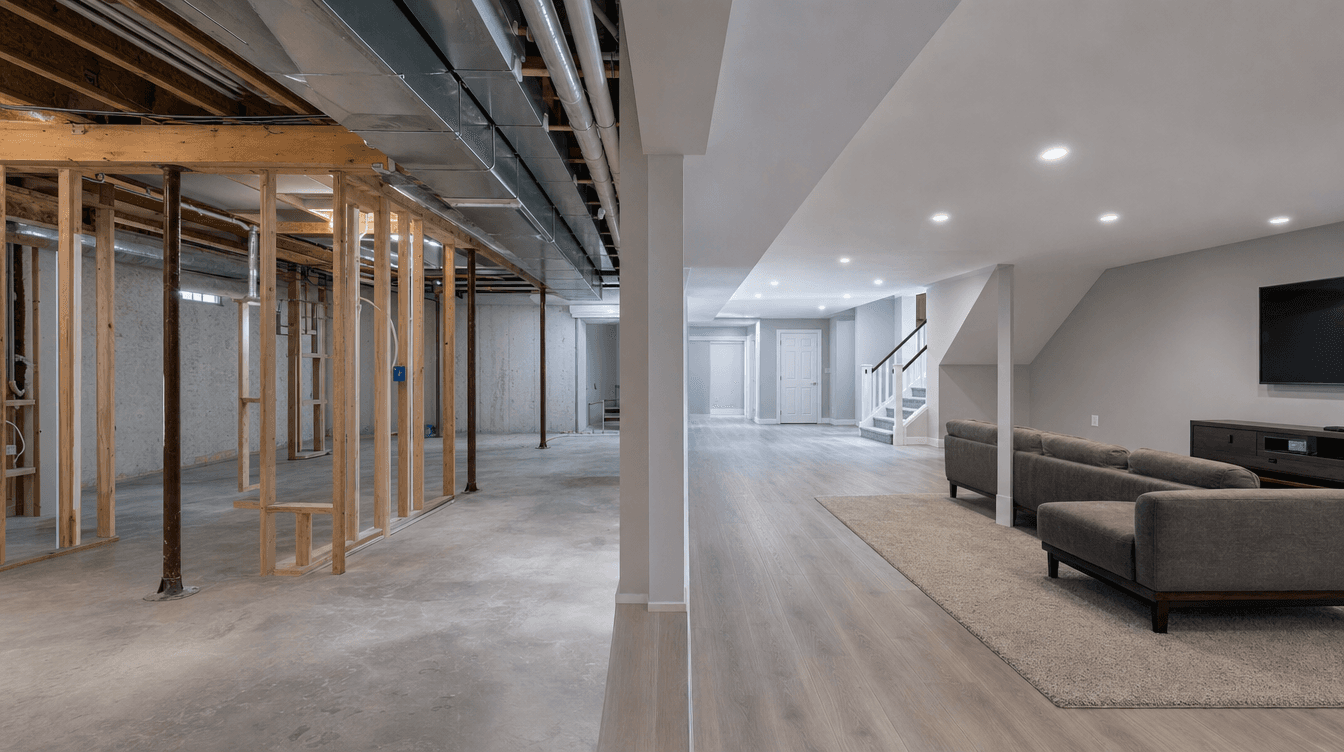
The 10 mistakes that wreck basement renovations — from skipping moisture control to forgetting egress and storage — and exactly how to avoid each one.
The most common basement finishing mistakes — ignoring moisture, skipping permits, forgetting egress, and underplanning lighting and storage — are also the most avoidable, because every one of them comes down to planning the space properly before the work starts. After more than 1,000 basements, we see the same ten errors trip up homeowners and DIYers again and again. Here's each one and exactly how to avoid it.
1. Ignoring moisture before you frame
Water is a basement's biggest enemy, and it's the mistake that causes the most expensive regret. Framing and drywalling over a moisture problem traps it — leading to mold, ruined finishes, and a teardown later. The fix: assess and address moisture and drainage before anything closes up. Get this right first and everything else lasts.
2. Skipping permits
It's tempting to "just finish it" without permits — until you go to sell or file an insurance claim. An unpermitted basement can derail a home sale, fail to count toward your home's legal living area, and void coverage if something goes wrong. The fix: permit the work and have it inspected. A properly permitted basement is a documented asset, not a liability.
3. Forgetting egress in bedrooms
If you want a basement bedroom, code requires a proper egress window — a second escape route in a fire. Plenty of basements get "a bedroom" that legally isn't one, and that's both a safety risk and a problem at resale. The fix: plan egress into any sleeping room from the start (and into any future legal suite).
4. Underplanning the lighting
Basements get little to no natural light, so a single ceiling fixture leaves the space feeling like a dungeon. The fix: layer your lighting — pot lights for general coverage, plus task and accent lighting — and plan it during design, when adding fixtures is cheap and easy rather than a retrofit.
5. Forgetting storage
This is the regret we hear most: the finished space looks amazing, but there's nowhere left for the seasonal bins, luggage, and gear that used to live down there. The fix: design storage in from day one — leave some unfinished space, use the area under the stairs, and add built-ins where they count.
6. Fighting the ceiling height, ducts, and beams
Basements come with low spots, ductwork, and structural beams. Ignoring them produces lumpy bulkheads and a cave-like feel. The fix: plan the layout around the mechanical realities — route ducts smartly, design clean bulkheads, and put the lowest ceilings over storage or utility space, not the living areas.
7. Cheaping out on soundproofing
Skip soundproofing and every footstep, movie, and treadmill session travels straight up into the main floor. The fix: plan sound control before the ceiling closes — at minimum dense mineral-wool insulation, and resilient channel or double drywall where it matters (a theatre, a bedroom below, a suite). It's far cheaper to do now than to retrofit.
8. Choosing the wrong flooring
A basement floor sits on a cold concrete slab that can carry moisture and temperature swings. Flooring meant for an upstairs bedroom can fail down here. The fix: choose flooring rated for below-grade use and pair it with the right subfloor/underlay so it stays warm, dry, and durable.
9. Neglecting the mechanical room
The furnace, hot-water tank, and electrical panel still need to be accessible — and the mechanical room shouldn't become an afterthought you can barely reach. The fix: plan proper, code-compliant access and clearances, and use the mechanical area as a smart spot to tuck in storage shelving.
10. Hiring on price alone
The biggest mistake of all: choosing the cheapest quote. A low bid usually wins by leaving things out — permits, egress, finishes — which come back as change orders once you're committed. The fix: compare quotes on what's actually included, and favour a detailed, fixed-price scope. The honest quote is often the cheaper one by the time the job is done.
The common thread: plan before you build
Notice the pattern — almost every mistake here is a planning failure, not a construction one. The basements people love years later are the ones where moisture, egress, lighting, storage, and sound were designed in before the first wall went up. That's the entire case for finishing a basement with a team that's done it a thousand times and shows you the plan — renderings and all — before you commit a dollar. If you're comparing builders, start with our complete guide to basement development in Calgary.
Frequently asked questions
What is the most common mistake when finishing a basement?
Ignoring moisture before framing. Water is a basement's biggest enemy, and building over a moisture problem leads to mold and a costly teardown. Addressing drainage and moisture first — before anything closes up — is the single most important step.
Do I really need a permit to finish my basement?
Yes. An unpermitted basement can derail a home sale, may not count toward your legal living area, and can void insurance if something goes wrong. Permitting and inspection turn the work into a documented asset rather than a future liability.
How do I avoid getting burned by a cheap basement quote?
Compare quotes on what's included, not just the bottom-line price. Cheap bids often win by leaving out permits, egress, or finishes, which return as change orders later. A detailed, fixed-price scope is how you avoid surprises.