
Cost
Basic vs High-End Basement: What the Price Difference Buys You
By Bo Fric · August 8, 2025
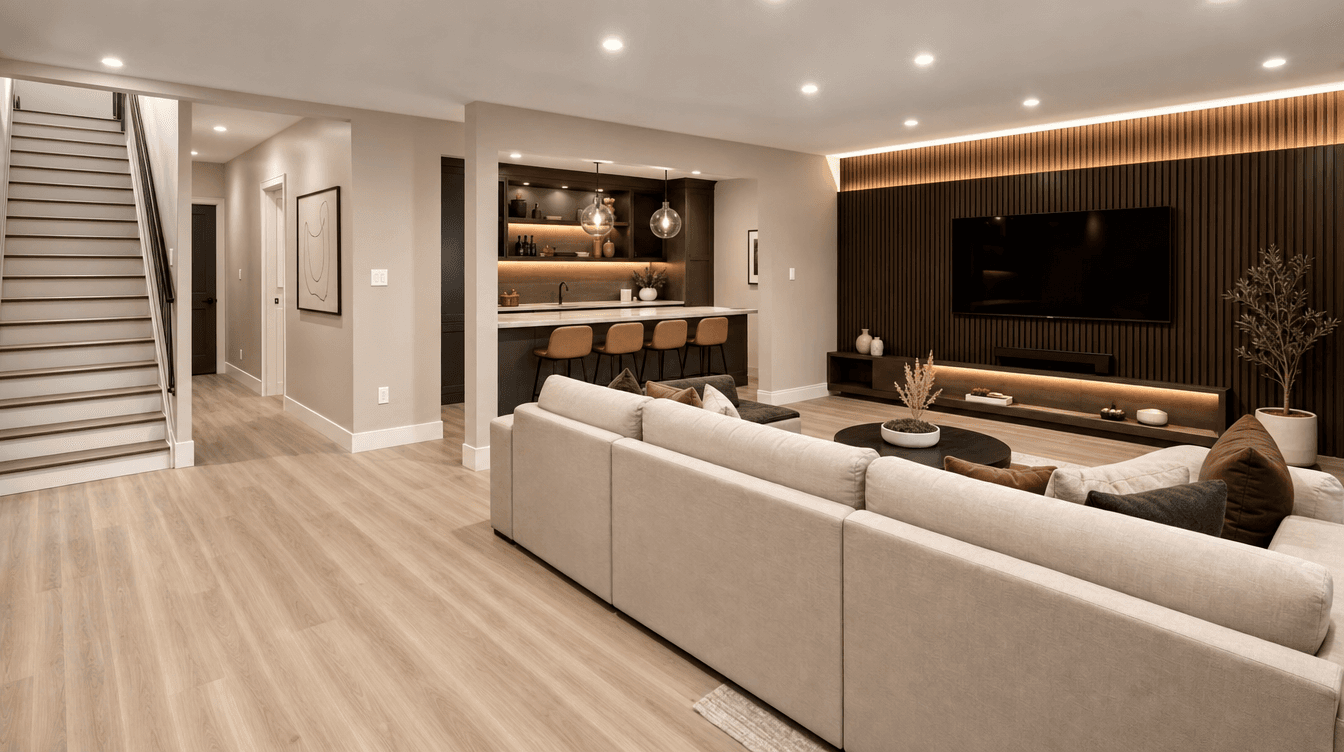
Basic vs high-end basement: what the price difference actually buys you — finishes, features, and materials — and how to decide which level fits your goals.
The price difference between a basic and a high-end basement comes down almost entirely to finishes and features, not structure — the waterproofing, framing, electrical, and insulation are done to the same standard at any budget. What you're paying more for is everything you see and touch: flooring, millwork, countertops, lighting, fixtures, and premium features like a full kitchen or spa bathroom. Here's what each level buys you and how to choose. (Cost here is relative; your exact figure comes in a fixed-price quote.)
What stays the same at every level
This is the most important thing to understand: the bones don't change with the budget. Regardless of finish level, a properly built basement gets:
- Waterproofing and drainage done right.
- Correct [wall insulation](/blog/insulate-basement-walls) and framing.
- Code-compliant electrical and plumbing, permitted and inspected.
We don't cut the hidden, structural work to hit a price — that's the line you never cross. The difference between basic and high-end is entirely in the finishes.
What a basic (quality) basement gets you
"Basic" doesn't mean cheap — it means a clean, comfortable, durable space without the premium upgrades:
- Durable [luxury vinyl plank](/blog/best-basement-flooring-calgary) flooring.
- Standard trim and stock cabinetry.
- Simple, effective lighting and standard fixtures.
- A straightforward, functional layout.
It looks great, it lasts, and for many families it's exactly the right call.
What stepping up to high-end buys
Move up the finish tiers and the money goes into detail and luxury:
- Premium flooring — wide-plank, engineered wood, or large-format tile.
- Custom millwork and built-ins rather than stock.
- Quartz or stone countertops and a statement feature wall.
- Layered, designer lighting and upgraded fixtures throughout.
Same square footage, more luxury in every surface — this is the finish-tier effect that drives per-square-foot cost.
Features move the number too
Beyond finishes, the features you include shift the price between levels:
- A [wet bar vs. a full kitchen](/blog/basement-bar-kitchen-cost).
- A standard bathroom vs. a spa-style bath.
- A simple rec room vs. a [home theatre](/blog/basement-home-theatre-ideas) or gym.
How to choose
The honest advice: spend where you'll feel it every day, and save where you won't notice. A family rec room might not need quartz, while a suite you'll rent or a space you'll live in daily might justify the upgrades. There's no wrong answer — and a fixed-price quote lets you see both levels priced for your space, so you decide with real numbers, as part of your full basement development.
What's the difference between a basic and high-end basement?
Almost entirely finishes and features, not structure. The waterproofing, framing, electrical, and insulation are done to the same standard at any budget. The extra cost of a high-end basement buys premium flooring, custom millwork, stone counters, designer lighting, upgraded fixtures, and features like a full kitchen or spa bath.
Does a cheaper basement mean lower quality construction?
It shouldn't. A quality builder never cuts the hidden, structural work — waterproofing, framing, insulation, electrical — to hit a lower price. A "basic" basement means simpler, more affordable finishes (vinyl plank, stock cabinets, standard fixtures), not compromised bones. The structure is the same; the surfaces differ.
Is a high-end basement worth the cost?
It depends on how you'll use the space. Spend on upgrades where you'll feel them daily — a space you live in, or a suite you'll rent — and save where you won't notice. Both levels deliver a quality, lasting basement, so the right choice is the one that fits your goals and budget.