
Permits & Legal Suites
Do You Need a Permit to Finish a Basement in Calgary?
By Kloe Bay · July 24, 2025
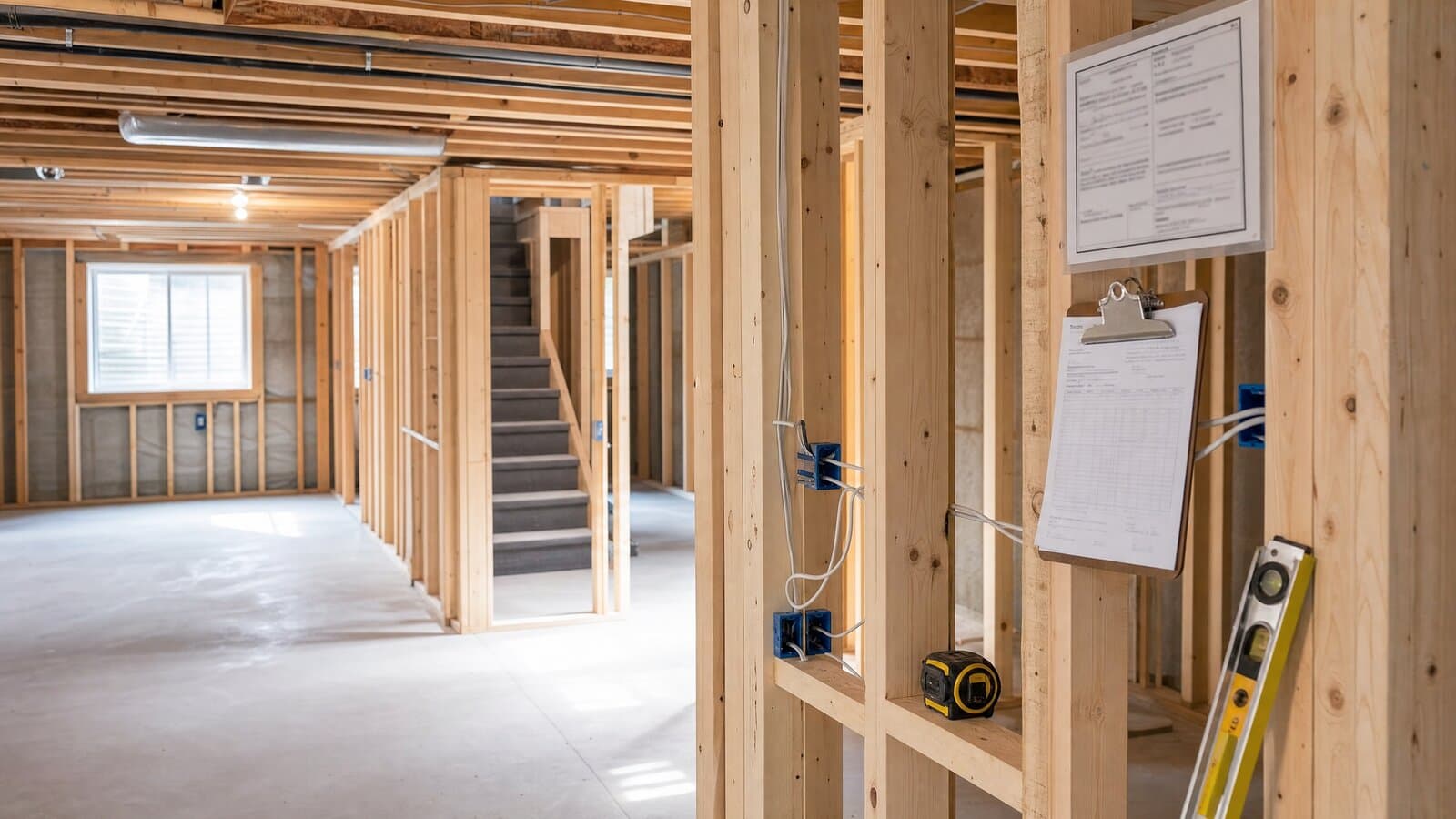
When a basement development needs a permit in Calgary, which permits you actually need, what they cost, and how the right builder handles the whole process for you.
Yes — in almost every case, finishing a basement in Calgary requires a building permit. The City requires one whenever you develop a basement for the first time, add or move walls, or cut in new windows or doors. You'll also need a separate electrical permit, plus plumbing and gas permits if those trades are involved. Only minor cosmetic work — painting, trim, or swapping flooring — is exempt. A reputable builder pulls every required permit for you as part of the job.
You won't be alone in it, since City of Calgary permit data shows more than 1,000 basement development permits issued from January to August 2026.
We build complete basement developments and handle the full permit process inside our fixed price — it's not an extra you have to chase down yourself.
When a basement permit is required in Calgary
You need a permit if your project involves any of the following — which covers virtually every real basement development:
- Developing the basement for the first time (finishing previously unfinished space).
- Structural changes — moving or removing walls on any floor.
- New or relocated windows or doors, including an egress window.
- Adding a bathroom, wet bar, or kitchenette (new plumbing fixtures).
- New electrical circuits or wiring.
Strictly cosmetic work — paint, new flooring over an existing finished floor, furniture — generally doesn't require a permit.
Which permits you'll need
- Building permit (building safety approval) — the main one, required for nearly all basement developments.
- Electrical permit — a separate permit for all electrical work.
- Plumbing and gas permits — if you're adding a bathroom, wet bar, or moving mechanical equipment.
- Development permit — only needed if you're building a legal secondary suite or your plans don't meet the Land Use Bylaw.
How much do basement permits cost in Calgary?
Building permit fees are based on the construction value of the project, so they scale with the size of the job. For a typical basement development, the building permit commonly runs in the range of $400 to $2,000, with electrical and other trade permits on top. The City of Calgary publishes a fee calculator that estimates the exact amount for your project. (Fees are set by the City and change periodically — treat these as a guide.)
Why permits protect you (and your home's value)
Permits aren't red tape — they're the paper trail that proves your basement was built to code and inspected at each stage. Unpermitted work is one of the most common problems that surfaces during a home sale or insurance claim, and "fixing" it after the fact (opening finished walls for inspection) is far more expensive than doing it right the first time.
We handle the permits for you
Permitting is built into how we work: it's part of the fixed-price scope, applied for on your behalf, with inspections scheduled as the build progresses. Combined with a $0 deposit, a 13-week completion guarantee, and a 5-year warranty, the goal is a finished basement that's fully legal and fully documented — with none of the paperwork on your plate.
Frequently asked questions
Do you need a permit to finish a basement in Calgary?
Yes. The City of Calgary requires a building permit to develop a basement for the first time, move or remove walls, or add new windows or doors. A separate electrical permit is also required, along with plumbing and gas permits if those trades are involved. Only minor cosmetic work is exempt.
How much does a basement permit cost in Calgary?
Building permit fees are calculated from the project's construction value, so they scale with the size of the build — commonly $400 to $2,000 for a basement development, with electrical and other trade permits on top. The City's online fee calculator gives an exact estimate.
What happens if you finish a basement without a permit?
Unpermitted basement work commonly causes problems at resale, can complicate insurance, and may have to be opened up for inspection after the fact — which is far more costly than permitting it correctly from the start. A licensed builder handles permits for you to avoid this.