Permits & Legal Suites
Legal vs Illegal Basement Suites in Calgary: What's the Difference?
By Kloe Bay · March 3, 2026
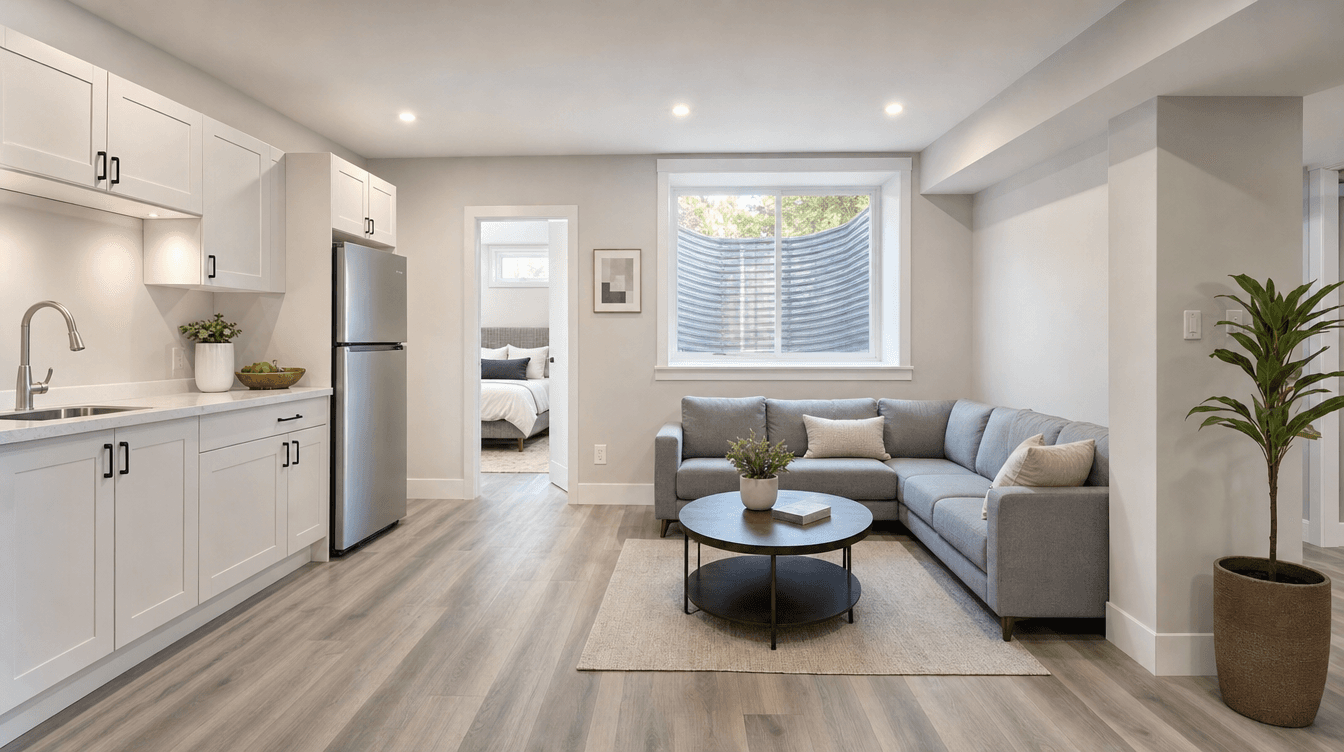
What actually separates a legal basement suite from an illegal one in Calgary — the permits, egress, and fire code that matter, and the real risks of getting it wrong.
The difference between a legal basement suite in Calgary and an illegal one comes down to one thing: whether it was built and approved to code. A legal (or registered) secondary suite has the required permits, meets egress and fire-separation requirements, and has passed inspection. An illegal (or non-conforming) suite is missing one or more of those — and that gap exposes the homeowner to real risk on insurance, resale, and safety. Here's exactly what separates the two, and why it matters.
What makes a basement suite legal
A legal secondary suite in Calgary isn't about a single document — it's a set of requirements that together make the space safe and approved to rent. The core ones:
- Permits — the suite was built under a development permit (an approved use for the property) and a building permit (the construction meets code), then passed the required inspections.
- Egress — every bedroom has a proper escape route, typically an egress window sized to code so a person can get out and a firefighter can get in.
- Fire separation — a code-compliant separation between the suite and the rest of the home, plus interconnected smoke alarms so an alarm anywhere sounds everywhere.
- Independent systems — appropriate heating, ventilation, and electrical for a self-contained dwelling, along with its own kitchen and bathroom.
- Zoning — the property's land-use district actually permits a secondary suite.
When all of these are in place and the suite is registered with the City, it's legal. Miss any of them and it isn't — regardless of how nice it looks.
What counts as an illegal suite
An illegal — or "non-conforming" — suite is simply one that skipped part of that list. Often it's a basement that was finished and rented without ever being permitted, or one built before the rules tightened and never updated. It can look completely livable and still be illegal, because legality is about code and approval, not appearance. The most common gaps we see are no permits, undersized or missing egress windows, and inadequate fire separation between the suite and the main home.
The real risks of an illegal basement suite
This is where it stops being paperwork and starts being money and safety:
- Insurance. If a fire or claim traces back to an unpermitted, non-code suite, your insurer can reduce or deny the claim — potentially leaving you personally exposed for damage and liability.
- Safety. The code requirements aren't bureaucratic box-ticking. Egress windows and fire separation exist so people can get out of a basement in a fire. An illegal suite often skips exactly the things that save lives.
- Resale. When you sell, buyers, their lenders, and appraisers want to see that a suite is legal and registered. An unpermitted suite can scare off buyers, complicate financing, or knock the value down.
- Enforcement. A complaint (often from a tenant or neighbour) can trigger a City order to fix or remove the suite, on the City's timeline rather than yours.
In short: an illegal suite can generate income right up until the moment it costs you far more than it ever made.
What if you already have an illegal suite?
Many non-conforming suites can, in principle, be brought up to code and registered — the path usually involves a professional assessment of what's there, identifying the gaps (egress, fire separation, permits), and completing the upgrades needed to pass inspection. That's a renovation-style retrofit, and it's specialized work.
To be clear about our lane: ReImagine builds complete basement developments, not retrofits of existing suites. Where we shine is building a legal suite correctly from the start as part of developing an unfinished basement — so it's permitted, inspected, insurable, and sellable from day one, with none of the legal-vs-illegal risk to untangle later. If that's the project you're planning, you're in the right place.
Frequently asked questions
What makes a basement suite legal in Calgary?
A legal secondary suite has the required development and building permits, passed inspection, has code-compliant egress windows in every bedroom, proper fire separation with interconnected smoke alarms, its own kitchen and bathroom, and sits in a zone that permits a suite. All of it together is what makes it legal — and registered with the City.
What are the risks of renting out an illegal basement suite?
The big ones are insurance (a claim can be denied if the suite isn't to code), safety (missing egress or fire separation can be deadly in a fire), resale (an unpermitted suite can hurt your sale or value), and enforcement (a complaint can trigger a City order to fix or remove it).
Can an illegal basement suite be made legal?
In principle, many non-conforming suites can be brought up to code through a retrofit — an assessment finds the code gaps (usually egress, fire separation, and permits), then the upgrades needed to pass inspection are completed. That's a specialized renovation. ReImagine focuses on full basement developments — building a legal suite correctly from the start — rather than retrofitting existing suites.