
Planning & DIY
Should You Wait a Year Before Finishing a New Home's Basement?
By Josh Wallace · August 13, 2025
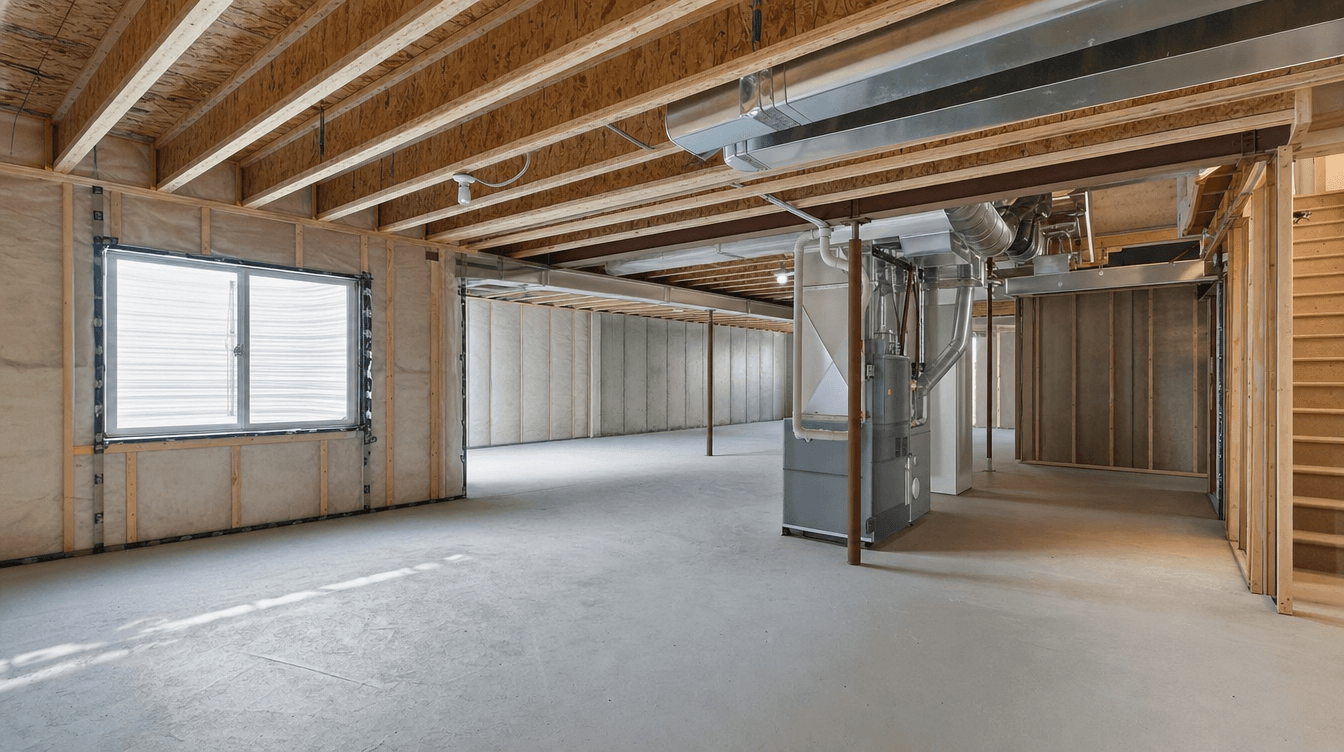
Do you have to wait a year to finish a new home's basement? The settling myth, what actually matters, and when it makes sense to develop sooner.
No — in most cases you don't need to wait a year to finish a new home's basement. The common advice to 'let the house settle first' is largely a myth: a new build does move slightly in its first year, but that movement mainly shows up in the finished living areas above grade, not in the basement, which sits on the most stable part of the house — the concrete foundation. What actually matters before you develop is that the basement is dry and that you understand your builder's warranty terms. (This is general guidance; we confirm the specifics for your home during a free walkthrough.)
Where does the 'wait a year' idea come from?
New homes do settle. As the soil compacts and framing lumber dries and acclimatizes, you may see minor drywall cracks, nail pops, or a door that needs adjusting — usually on the main and upper floors. That's normal, and it's why builders often schedule a one-year warranty touch-up. People hear 'settling' and assume the whole house, including the basement, needs a year of patience. In practice, the basement is the part least affected by settling.
Why the basement is the least affected level
Your basement is built directly on the foundation — poured concrete footings and walls engineered to carry the entire house. It doesn't rely on the wood framing that moves as it dries. That's exactly why it's a stable base to build on:
- The floor is a concrete slab, not a framed floor that flexes.
- The walls you'll frame are attached to solid concrete, kept off the slab correctly to manage moisture.
- Any minor whole-house movement is absorbed mostly by the finishes upstairs, not the basement structure.
What actually matters before you develop
Instead of watching the calendar, check the things that genuinely affect the build:
- Moisture and water. The slab and walls should be dry, with no signs of water intrusion. In a new build this is usually confirmed early — and it's the single most important condition for finishing.
- Your builder's warranty. Some new-home warranties include terms about finishing the basement — who can do the work, or how it affects coverage. Read it, and ask your builder if anything's unclear, before you start.
- Rough-ins already in place. New homes often come with basement plumbing, electrical, and sometimes a side-entrance rough-in. Knowing what you have shapes the design and the cost.
Is there a reason to develop sooner rather than later?
Often, yes:
- You're already in build mode. Finishing before you move furniture and storage into the basement means a cleaner, faster job.
- You stop paying for empty space. You're carrying a mortgage on that square footage either way — finishing it turns it into living space you actually use.
- You lock in today's scope and price. A fixed-price quote means the number you agree to is the number you pay.
Do I have to wait a year to finish a basement in a new home?
Usually not. The 'let it settle' rule mainly applies to finishes on the upper floors. As long as the basement is dry and your builder's warranty allows it, you can typically develop well before the one-year mark.
Does finishing the basement early void a new-home warranty?
It depends on your specific warranty. Some have terms about basement work, so read yours and confirm with your builder before starting. The structural foundation warranty and your finishing work are generally separate things.
What should I check before developing a new build's basement?
Confirm the basement is dry with no water issues, review your builder's warranty terms, and take stock of the rough-ins already installed (plumbing, electrical, side entrance). Those three things matter far more than the calendar.
Is it better to finish the basement before moving in?
It's often easier and cleaner to develop before the space fills with storage, and you get usable square footage sooner. Learn more on our Calgary basement development page.