
Process
What a Typical Build Day Looks Like in Your Home
By Peggy Malinowski · November 20, 2025
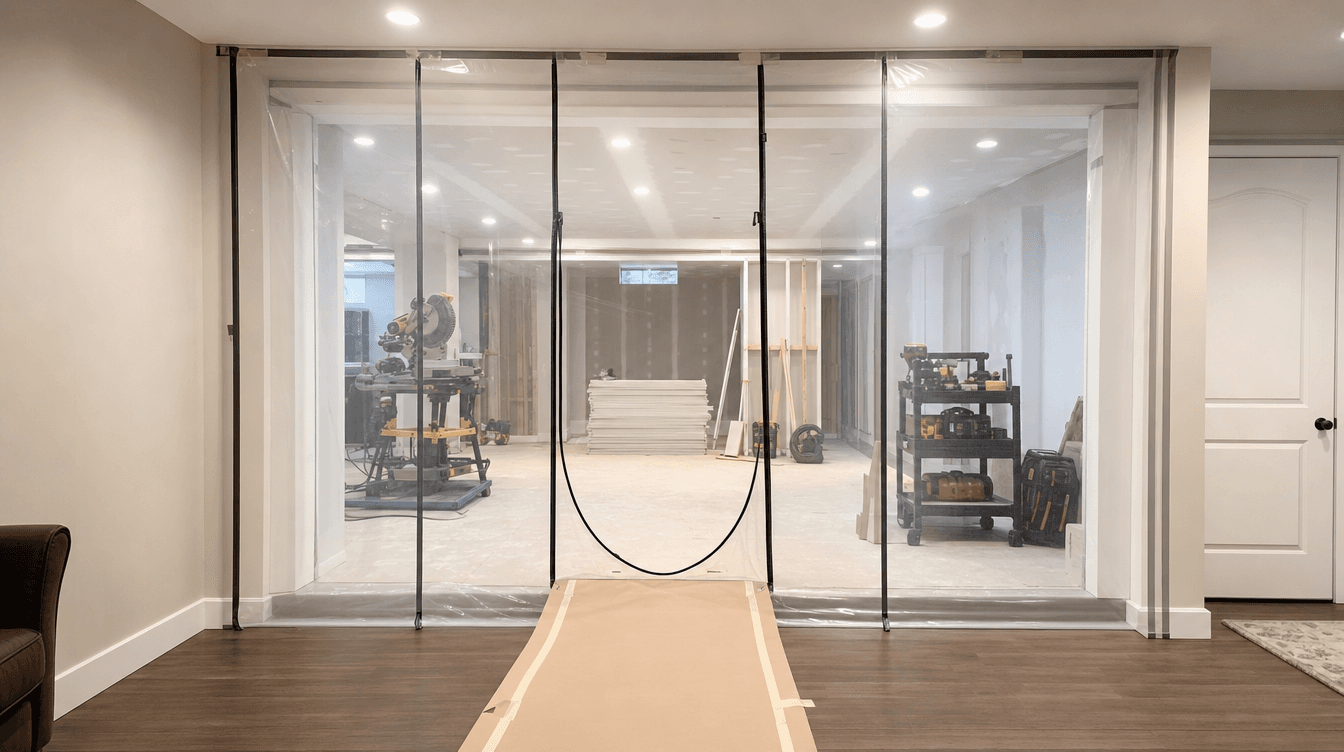
What a typical basement build day looks like in your home — crew hours, entry and cleanup, bathrooms, noise, and how we keep your upstairs livable.
A typical basement build day is more predictable and less disruptive than most homeowners expect: the crew arrives at an agreed hour, works in a contained, dust-sealed basement through one entry point, groups the loud tasks, and tidies the site before leaving — so the project moves forward on schedule while your upstairs stays livable. You don't need to be home, and you won't be stepping over a mess every evening. Here's what the daily rhythm actually looks like. (Specifics are tailored to your home and confirmed before the build begins.)
When the day starts and ends
Predictability is the point. Start and end times are agreed before the build, so they fit your household rather than surprising it. The crew arrives at that set hour, works a normal construction day, and wraps at a consistent time. No random early knocks, no crew lingering into the evening.
How the crew moves through your home
We keep the footprint small and protected:
- One agreed entry point, usually the most direct route to the basement.
- Floor and surface protection along the path the crew uses.
- The work zone stays downstairs — your main living areas remain yours.
Dust, noise, and how we contain them
We won't pretend a build is silent — there's dust and noise, especially at certain stages. What matters is that it's managed:
- Dust barriers seal the work area so dust doesn't migrate upstairs.
- The loudest tasks are grouped rather than spread across every hour of every day.
- Cleanup is daily, not saved for the end of the project.
For the details on how we keep the rest of the house clean, see our process.
Do you need to be home?
Almost always, no. Most of our clients are at work during the day, and the build runs from an agreed plan and drawings, so progress doesn't depend on you being present to answer questions hour by hour. Decisions are handled through a single point of contact, and access is arranged in advance. You come home to progress, not to a list of interruptions.
Bathrooms, utilities, and daily life
- Bathrooms — the crew's use of facilities is arranged up front so it's not a daily question.
- Utilities — any brief, planned interruption to power or water is communicated ahead of time, not sprung on you.
- Your routine — because the work is contained downstairs, day-to-day life upstairs mostly carries on as normal.
The end-of-day standard
Every day ends with the site left in order: tools stored, debris managed, the access path cleaned. A tidy site isn't just courtesy — it's how a project stays safe and on schedule. That daily discipline is part of why a basement runs on a 13-week completion guarantee rather than dragging on. For the full timeline, see how long it takes to finish a basement.
What are the working hours during a basement build?
The crew works a normal construction day, with start and end times agreed before the project so they fit your household. You'll know the schedule up front rather than being surprised by it.
Do I have to be home while my basement is being built?
No. Most clients are at work during the day. The build runs from an agreed plan with decisions handled through a single point of contact, so it progresses whether you're home or not.
How do you keep the dust and mess out of the rest of my house?
Dust barriers seal off the basement work area, the crew uses one protected entry path, and the site is cleaned daily. The loudest tasks are grouped rather than spread through every hour, so the disruption is contained.