
Cost
How Much Does a Basement Bar or Kitchen Cost?
By Bo Fric · August 29, 2025
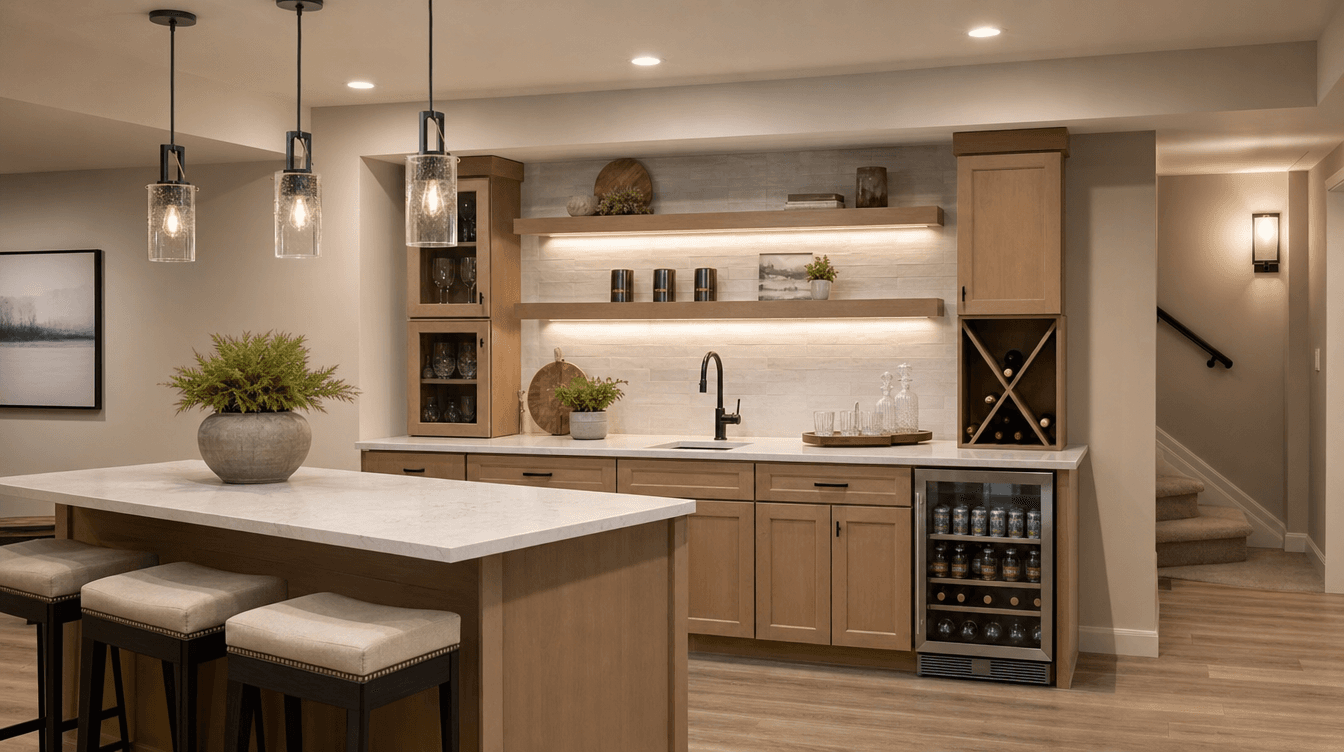
How much does a basement bar or kitchen cost? What drives the price — wet vs dry bar, a kitchenette vs a full suite kitchen — and why plumbing is the big lever.
The cost of a basement bar or kitchen swings more than almost any other basement feature, and the single biggest driver is plumbing: a dry bar with no sink is the affordable end, a wet bar adds water supply and drainage, and a full suite kitchen is a much larger job again. On top of that, cabinetry, appliances, and finish level move the number substantially. There's no single price — but here's exactly what drives it. (All cost here is relative; your exact figure comes in a fixed-price quote.)
Dry bar vs. wet bar: plumbing is the line
The first and biggest fork is whether there's a sink:
- Dry bar — cabinets, a counter, and maybe a beverage or wine fridge, with no plumbing. This is the affordable option because you're only paying for millwork, a counter, and an electrical circuit.
- Wet bar — adds a sink, which means running water supply and drainage to that spot. That plumbing is the real added cost, not the cabinet that sits over it.
If you're deciding between the two, the question is really "do I want a sink here?" — because that's what changes the budget.
Stepping up to a full kitchen
Beyond a wet bar sits a full second kitchen, most often for a legal basement suite. It stacks on:
- A range and range hood (with the venting and electrical they require).
- A full-size fridge and often a dishwasher.
- More cabinetry and counter, and a larger plumbing scope.
A suite kitchen is a meaningfully bigger project than a bar, which is part of why a legal suite costs more than a regular basement.
Finishes: same footprint, different price
Two bars of identical size can cost very differently based on finishes:
- Cabinets — stock vs. semi-custom vs. custom millwork.
- Countertop — laminate vs. quartz or stone.
- Backsplash, fixtures, and lighting — standard vs. premium.
This is the same dynamic behind where every dollar in a basement goes: the finish tier quietly moves the total.
Why we quote it as one fixed number
Because a bar or kitchen combines plumbing, electrical, cabinetry, and appliances, a per-item guess is unreliable. We price the whole scope — every cabinet, the plumbing run, the appliances, the finishes — into one fixed price with a $0 deposit, as part of your full basement development. That way you know the real cost of your bar, not an average.
How much does it cost to add a bar to a basement?
It depends most on whether it's a dry bar or a wet bar. A dry bar (cabinets, counter, beverage fridge, no sink) is the affordable end; adding a sink makes it a wet bar and brings plumbing costs for water supply and drainage. Cabinetry and finish level move the number further. A fixed-price quote gives your real figure.
What's the difference in cost between a wet bar and a dry bar?
The difference is essentially the plumbing. A dry bar has no sink, so there's no water supply or drain to run — you're paying for cabinets, counter, and electrical. A wet bar adds a sink, which requires plumbing to that location, and that's the main added cost rather than the bar itself.
How much does a basement kitchen cost for a suite?
A full suite kitchen costs considerably more than a bar because it adds a range and hood, a full-size fridge, often a dishwasher, more cabinetry, and a larger plumbing scope. It's one of the reasons a legal suite costs more than a standard basement. The exact figure is captured in a fixed-price quote on your scope.