
Design & Room Types
Best Colors and Finishes for a Basement
By Oscar Fonseca · August 15, 2025
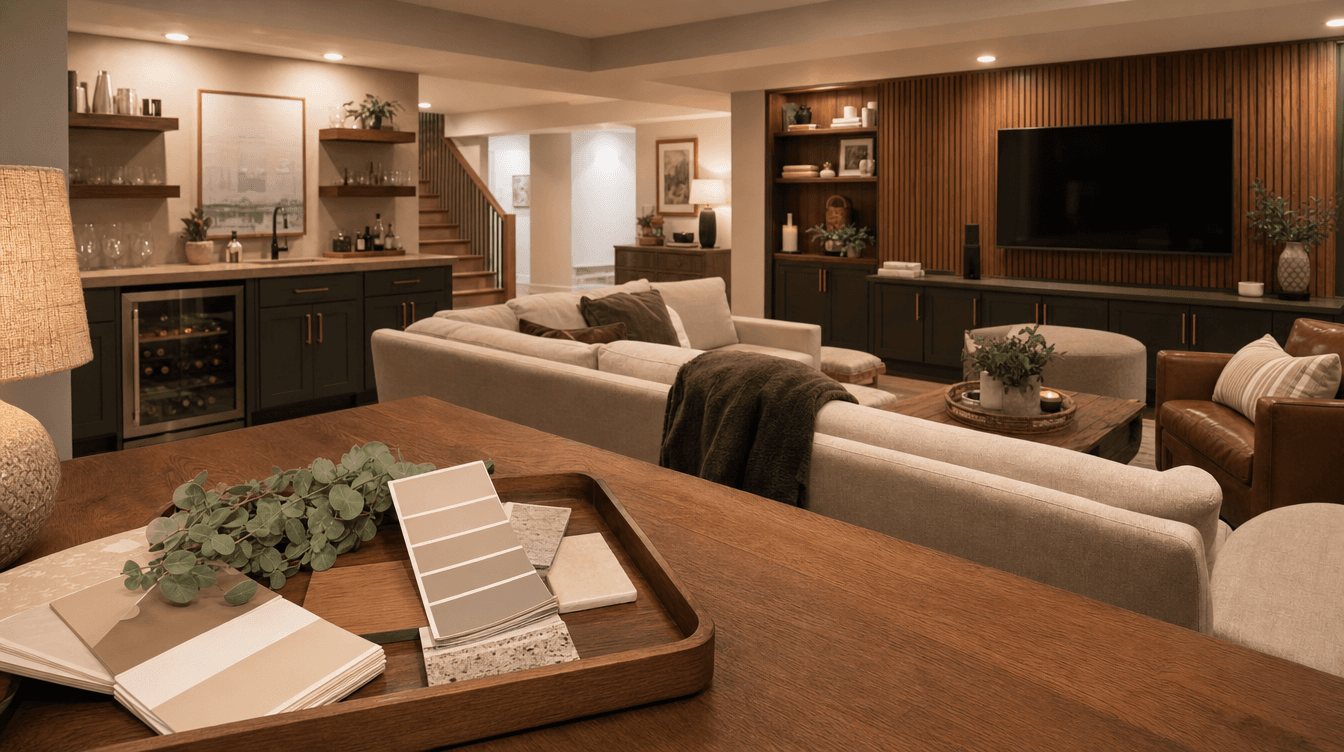
The best colors and finishes for a basement — a warm, light palette and finish choices that beat the 'basement' feeling and make the space feel like the rest of your home.
The best colors and finishes for a basement follow one formula: warm and light on the walls, with contrast and depth coming from the finishes — not from dark paint. In a space with limited natural light, a warm, light palette makes the room feel bigger, brighter, and cozy rather than clinical. Here's how to choose colors and finishes that beat the "basement" feeling. (Design guidance here is general; we tailor the palette to your space and show it to you first.)
Start light — but warm, not cold
Light walls are the foundation, because they bounce the limited light and open up the room. But the trap is going cold:
- Lean warm white and soft, warm neutrals — greige, warm off-whites, gentle taupes.
- Avoid stark, blue-white shades, which feel clinical and institutional in a windowless space.
- Warmth is what reads as cozy — it's the difference between "cozy lounge" and "cold basement."
This works hand in hand with layered, warm lighting — colour and light together set the mood.
Add depth with finishes, not dark walls
The instinct to add "richness" with dark paint usually backfires in a basement — it eats the light. Instead, build contrast through materials and texture:
- A warm wood-tone [feature wall](/blog/basement-feature-wall-ideas) or millwork for a focal point.
- Natural textures — stone, wood, woven materials — for depth.
- A slightly richer floor to ground the space.
The light walls stay bright; the finishes carry the interest.
Flooring: warm-toned and durable
For the floor, warm-toned [luxury vinyl plank](/blog/best-basement-flooring-calgary) is the basement go-to: it's durable, waterproof, and its warm tone grounds the room and reinforces the cozy palette. Cool grey floors can push a basement toward that cold feeling, so warmth matters here too.
Keep it cohesive
The final principle is cohesion. Pick a palette and carry it through the whole basement:
- Walls, floor, trim, doors, and fixtures that belong to the same family.
- A consistent metal finish on hardware and lighting.
- A restrained number of accent colours, used deliberately.
A cohesive palette makes the basement read as one intentional space, not a patchwork of rooms — which is exactly what a designed space should feel like. It's the kind of thing you lock in during a basement design so you can see it before it's built.
What are the best paint colors for a basement?
Warm, light neutrals — warm whites, greige, soft taupes — because they bounce the limited natural light and make the space feel bigger and cozy. Avoid stark blue-white shades, which read as clinical in a windowless room, and use dark colours sparingly as accents rather than on main walls, since they absorb light.
Should a basement have light or dark walls?
Light walls are usually best, since they reflect the limited light and open up the room. Rather than adding richness with dark paint (which eats light), build depth through finishes — a warm wood feature wall, natural textures, and a grounding floor — so the walls stay bright while the materials carry the visual interest.
What flooring color works best in a basement?
Warm-toned luxury vinyl plank is a strong choice — durable, waterproof, and its warmth grounds the room and supports a cozy palette. Very cool grey floors can push a basement toward a cold, hard feeling, so leaning warm on the floor helps the whole space feel inviting rather than clinical.