
Design & Room Types
Lighting a Basement With No Windows
By Oscar Fonseca · June 13, 2025
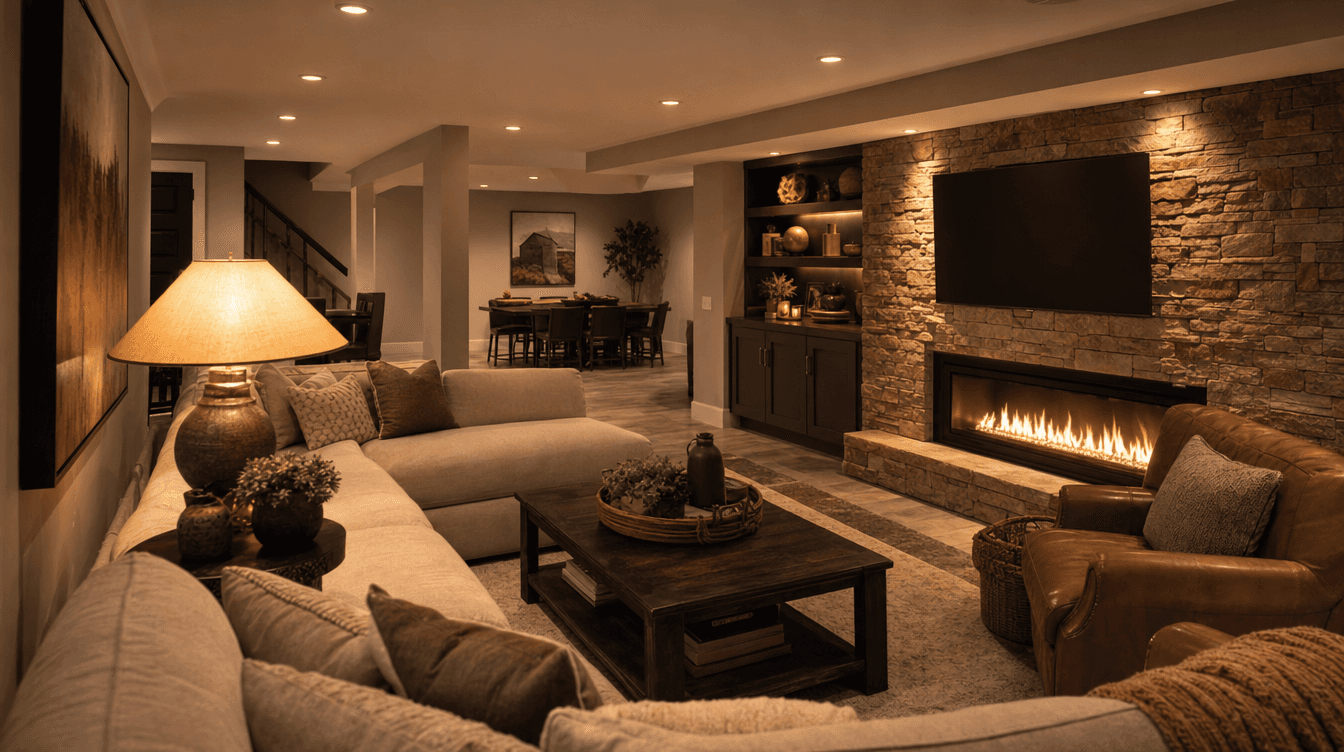
How to light a basement with no windows — the layered lighting approach, warm color temperature, and design tricks that make a windowless space feel bright and alive.
A basement with no windows can still feel bright, warm, and alive — the key is to build the light in deliberately, in layers, using warm color temperature. The single biggest mistake is relying on one overhead fixture; the fix is layering pot lights, eye-level lighting, and accents, then choosing warm bulbs over cold ones. Here's exactly how to light a windowless basement. (Design guidance here is general; we tailor the lighting plan to your space and show it to you first.)
Why layering matters more without windows
With no natural light, artificial light does all the work — so it has to be planned, not left to a single fixture. One central ceiling light casts flat, harsh light and deep shadows in the corners, which is exactly what makes a windowless room read as a "basement." Layering solves that, the same principle behind making any basement feel less like a basement.
The three layers of light
Layer 1 — general (the base): recessed pot lights spread evenly across the ceiling so there are no dark corners. This is your foundation of even, ambient light.
Layer 2 — eye-level (the warmth): lamps and wall sconces at human height. Light at eye level is what makes a room feel like a living space rather than a utility area — it's the most-skipped and most-important layer.
Layer 3 — accent (the magic): under-cabinet strips, toe-kick lighting, and a backlit [feature wall](/blog/basement-feature-wall-ideas). These add depth and make the space feel intentionally designed.
Get the color temperature right
Just as important as where the light is, is what color it is:
- Use warm white bulbs (a lower, warmer color temperature) that feel like lamplight and evening sun — cozy and inviting.
- Avoid cold, blue-white bulbs, which feel clinical and institutional, exactly the opposite of what a windowless room needs.
- Keep bulbs consistent so the whole space reads as one warm, cohesive light.
Design tricks that stretch the light
A few finishing moves make layered light go further:
- Mirrors to bounce light around the room and suggest depth.
- Light, warm wall colours that reflect rather than absorb light.
- Dimmers on each layer so you can shift from bright-and-functional to cozy-and-relaxed.
Done well, a windowless basement can feel every bit as warm as a room full of sunshine — it's one of the most satisfying things to get right in a basement design.
How do you light a basement with no windows?
Build the light in layers: recessed pot lights spread evenly for a base of ambient light, lamps and sconces at eye level for warmth, and accent lighting (under-cabinet, toe-kick, backlit walls) for depth. Use warm white bulbs rather than cold blue-white ones, and add mirrors, light wall colours, and dimmers.
What color light is best for a basement?
Warm white — a lower, warmer color temperature that feels like lamplight or evening sun. It makes a windowless space feel cozy and inviting. Cold, blue-white light feels clinical and institutional, which works against a basement. Keeping all the bulbs a consistent warm tone gives the space a cohesive, comfortable glow.
Can a basement without windows still feel bright?
Yes. With a layered lighting plan — even pot lights, eye-level lamps and sconces, and accent lighting — plus warm bulbs, light wall colours, mirrors, and dimmers, a windowless basement can feel bright and warm. The light is simply built in deliberately rather than borrowed from windows, and done well, nobody misses them.