Process
The Deficiency List: How the Final Details Get Finished
By Peggy Malinowski · January 12, 2026
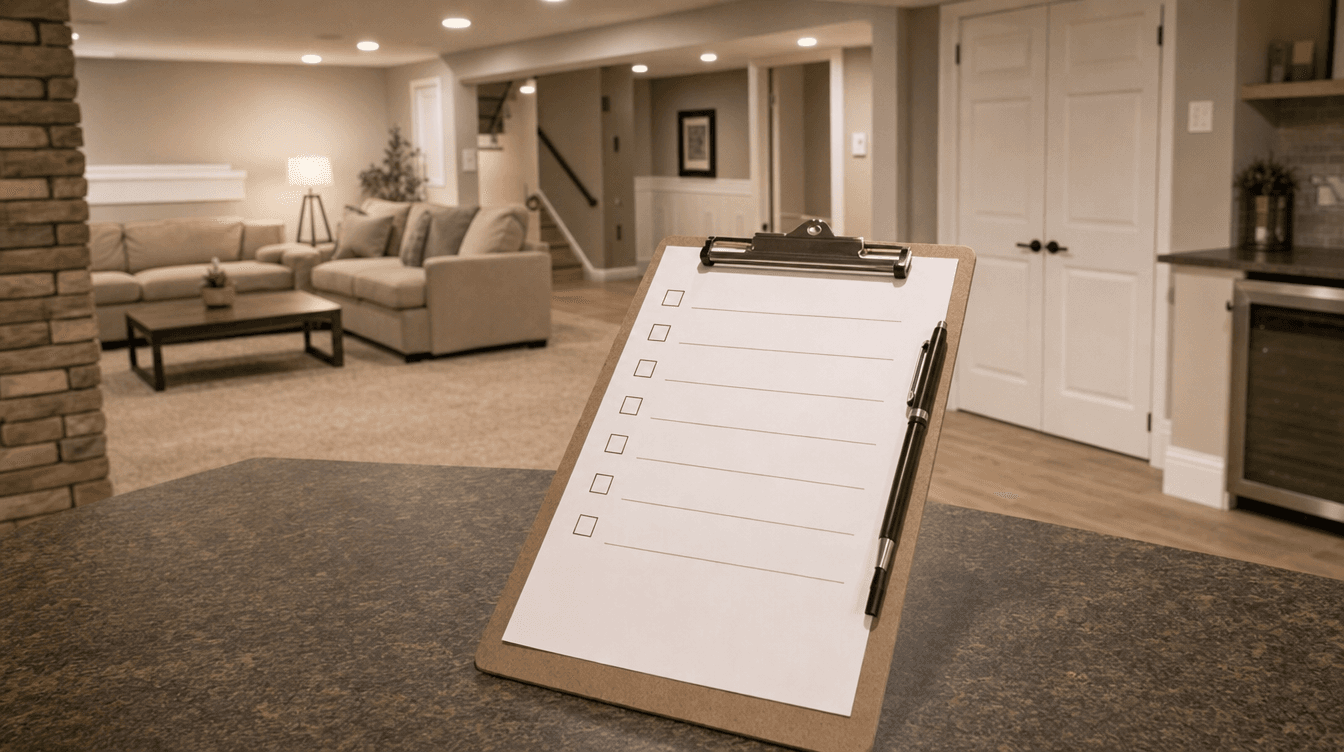
What a deficiency list is and how it works — the running list of final touch-ups from your basement walkthrough, and why it's a sign of a thorough finish, not a problem.
Near the end of a basement build you'll hear the term deficiency list (some call it a punch list). It sounds negative, but it's actually one of the most reassuring parts of the process — a formal way of making sure every last detail is right before the job is truly done. Here's what it is and how it works. (This describes our standard process; specifics vary by project.)
What a deficiency list is
A deficiency list is simply the running list of small items to finish or fix identified near the end of a build — the little things that separate "basically done" from "actually done." Think a paint touch-up, a cabinet door to adjust, a bit of trim to tidy. It's created at the final walkthrough, where we go through the space together.
Why it's a good sign, not a bad one
People sometimes worry that a list of items means something went wrong. The opposite is true:
- Every quality build has one — no large project finishes flawlessly on the first pass; a thorough builder expects to catch small items.
- It's a commitment in writing — the list is the promise that these details will be completed, not waved away.
- It protects you — nothing gets forgotten because it's written down and tracked.
A builder who produces a clear deficiency list is showing you their standard, not their shortcomings.
How it works
The process is straightforward:
- We walk the finished basement together and note anything that needs attention — your eyes and ours.
- Each item goes on the list, clear and specific.
- We complete the items, then confirm they're done to your satisfaction.
It's the structured close to the finishing stage, and it's driven by the project manager who's owned quality throughout.
Your part in it
This is your moment to be thorough — walk the space carefully and point out anything that catches your eye, even small things. A good builder wants that input; the whole purpose of the list is to get the space exactly right for you before handover. And anything that surfaces after you move in is covered by the 5-year warranty.
The takeaway
A deficiency list isn't a red flag — it's how a careful builder guarantees the details are finished. It turns "close enough" into "done right," in writing, before the basement is handed over. It's a core part of a thorough process and one of the clearest signs your builder sweats the small stuff.
What is a deficiency list in a renovation?
It's the running list of small items to finish or fix that's identified near the end of a build — things like a paint touch-up, a cabinet adjustment, or a bit of trim to tidy. Sometimes called a punch list, it's created at the final walkthrough, where the builder and homeowner go through the space together and note anything that needs attention before handover.
Is a deficiency list a bad sign?
No — it's the opposite. Every quality build has one, because no large project finishes flawlessly on the first pass, and a thorough builder expects to catch small items. The list is a written commitment that those details will be completed, and it protects you by making sure nothing is forgotten. A clear deficiency list reflects a builder's standard, not a problem.
What should I do at the final walkthrough?
Be thorough. Walk the finished basement carefully and point out anything that catches your eye, even minor things — that's exactly what the walkthrough is for. Each item goes on the deficiency list, gets completed, and is confirmed done to your satisfaction. A good builder welcomes your input, since the goal is to get the space exactly right before handover.