
Process
Who Runs Your Basement Project? The Project Manager's Role
By Peggy Malinowski · February 16, 2026
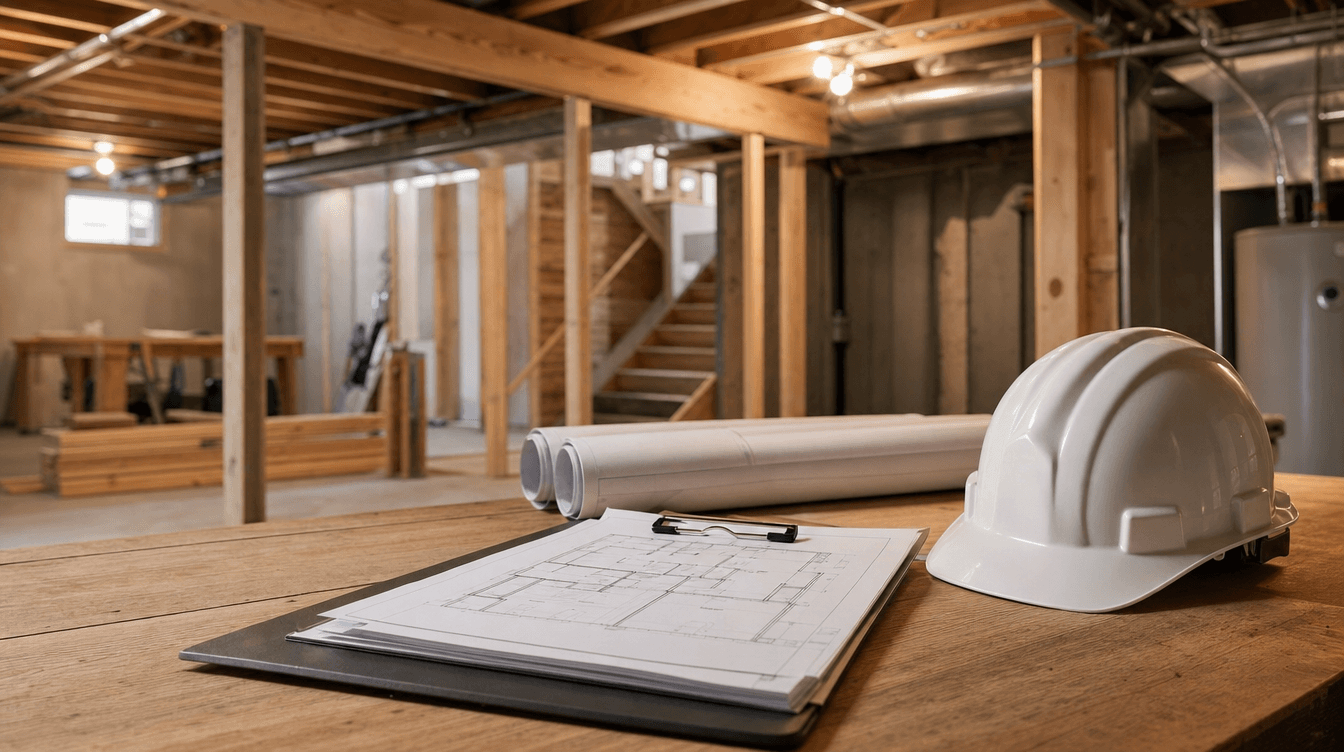
Who actually runs your basement build? The project manager's role — your single point of contact who coordinates trades, schedule, and quality so you don't have to.
A basement build involves a lot of moving parts — framers, electricians, plumbers, drywallers, inspectors, and finishers, all in sequence. The thing that keeps it from becoming chaos is a project manager: your single point of contact who coordinates all of it so you don't have to. Here's what that role actually does, and why it's the difference between a smooth build and a stressful one. (This describes our standard approach; specifics vary by project.)
The problem a project manager solves
Without someone coordinating, a renovation becomes a game of telephone — you chasing trades, trades waiting on each other, nobody quite sure what happens next. A project manager exists so that one person holds the whole picture and you always know who to call. It's the backbone of a calm build process.
Your single point of contact
The most valuable part for you as the homeowner: one person to talk to.
- You're not juggling a dozen trades' phone numbers.
- Questions get one clear answer from someone who knows the whole job.
- Updates come from one source, so nothing falls through the cracks — the heart of good project communication.
Coordinating the trades and schedule
Behind the scenes, the project manager runs the sequence:
- Booking each trade in the right order so the schedule holds and nobody's waiting.
- Managing the handoffs between stages — framing to electrical to inspection to drywall.
- Solving problems in real time when a surprise shows up behind a wall.
This coordination is exactly what lets us stand behind a guaranteed timeline — the schedule only works if someone's actively driving it.
Guarding quality and the details
A project manager also owns the quality of the finished result:
- Checking work as it progresses, not just at the end.
- Catching issues early, while they're cheap and easy to fix.
- Running the [final walkthrough](/blog/basement-final-walkthrough) and making sure the deficiency list actually gets done.
Why it matters for you
The payoff is peace of mind. Instead of managing a construction project on top of your real life, you have one accountable person making it run — coordinating the trades, holding the schedule, guarding quality, and keeping you informed. That's what turns a big, complicated build into something that feels handled, and it's central to our whole process.
Who manages a basement renovation?
With a full-service builder, a project manager runs it — your single point of contact who coordinates all the trades, holds the schedule, solves problems as they come up, and guards the quality of the finished work. Instead of you juggling framers, electricians, plumbers, and inspectors, one accountable person holds the whole picture and keeps the build moving in the right order.
What does a renovation project manager actually do?
They coordinate the entire build: booking each trade in the correct sequence, managing the handoffs between stages, solving problems in real time, checking quality as work progresses, and running the final walkthrough. For the homeowner, the biggest benefit is having one person to talk to and one clear source of updates, rather than chasing a dozen separate trades.
Why is a single point of contact important on a build?
Because a basement build has many trades working in sequence, and without one coordinator it becomes a game of telephone — you chasing people, trades waiting on each other, details slipping. A single point of contact means one person holds the whole picture, questions get one clear answer, and updates come from one source, so nothing falls through the cracks.