
Process
How We Manage Dust and Cleanliness During a Basement Build
By Peggy Malinowski · January 16, 2026
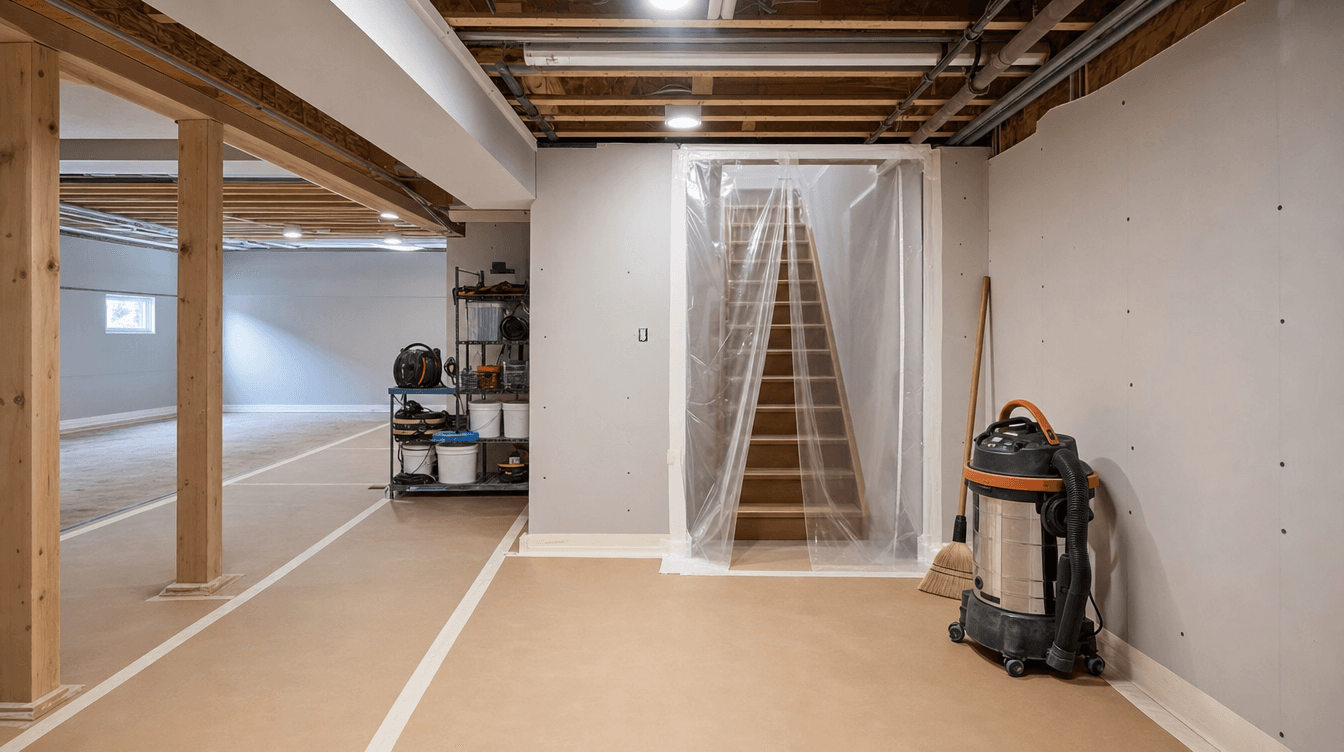
How we manage dust and cleanliness during a basement build — the barriers, habits, and cleanup that keep the mess downstairs so the rest of your home stays livable.
The single biggest worry we hear from homeowners living upstairs during a build isn't noise or timeline — it's dust. Construction makes it, and nobody wants a fine grey film over their whole house. The good news: with the right habits, the mess stays where the work is. Here's how we manage dust and cleanliness during a basement build. (This describes our standard approach; specifics vary by project and home.)
Contain it at the source
The first line of defense is keeping dust from ever leaving the basement:
- Dust barriers — sealing off the basement stairway and openings so airborne dust doesn't drift upstairs.
- Covering and protecting the path from the work zone to the exit.
- Managing the messiest work — cutting and sanding — with dust collection or by containing it tightly.
Contained at the source, dust never becomes a whole-house problem.
Protect the rest of the home
Beyond the basement, we look after the areas we pass through:
- Floor protection on the route the crew uses in and out.
- Keeping the work zone separate from your living space so the two don't mix.
- A clear, respectful path — this is your home, and we treat it that way.
The aim is that upstairs stays upstairs — livable and clean throughout.
Clean as we go
Cleanliness isn't just an end-of-job event:
- Daily tidy-up — a jobsite that's swept and organized, not chaotic, which also ties into safety.
- Debris removed regularly rather than piling up.
- Materials stored neatly so the space stays workable.
A clean site is a sign of a well-run one — and it keeps dust down day to day.
The final clean
At the end, we hand back a finished space, not a mess:
- A thorough final clean of the finished basement before the walkthrough.
- Debris and materials hauled away — you shouldn't be left with a pile.
- The space ready to move into, not ready to clean.
The takeaway
Managing dust and cleanliness comes down to containing dust at the source, protecting the rest of your home, cleaning as we go, and a thorough final clean. It's one of the biggest quality-of-life factors while living upstairs during a build, and getting it right is part of running a build that respects your home — the standard we hold across our process.
How do you keep construction dust out of the rest of the house?
The key is containing dust at its source. We seal off the basement stairway and openings with dust barriers so airborne dust doesn't drift upstairs, protect the crew's path in and out, and manage the messiest work — cutting and sanding — with dust collection or tight containment. Kept in the work zone, dust never becomes a whole-house problem, so upstairs stays livable and clean throughout the build.
Is a basement renovation very dusty to live above?
There's always some dust when you're cutting, framing, and sanding, but with proper barriers and clean-as-we-go habits it stays contained in the basement rather than spreading through the house. Sealing the stairway, protecting the route in and out, and tidying the site daily are what keep the impact minimal for the people living upstairs — dust management is one of the biggest quality-of-life factors in a well-run build.
Do you clean up at the end of a basement build?
Yes — we hand back a finished space, not a mess. That means a thorough final clean of the completed basement before the walkthrough, all debris and leftover materials hauled away, and the space ready to move into rather than ready to clean. Cleaning as we go throughout the project means the final clean is a finishing touch, not a rescue operation.