
Process
Staying Safe Around a Basement Build: What to Expect
By Peggy Malinowski · February 9, 2026
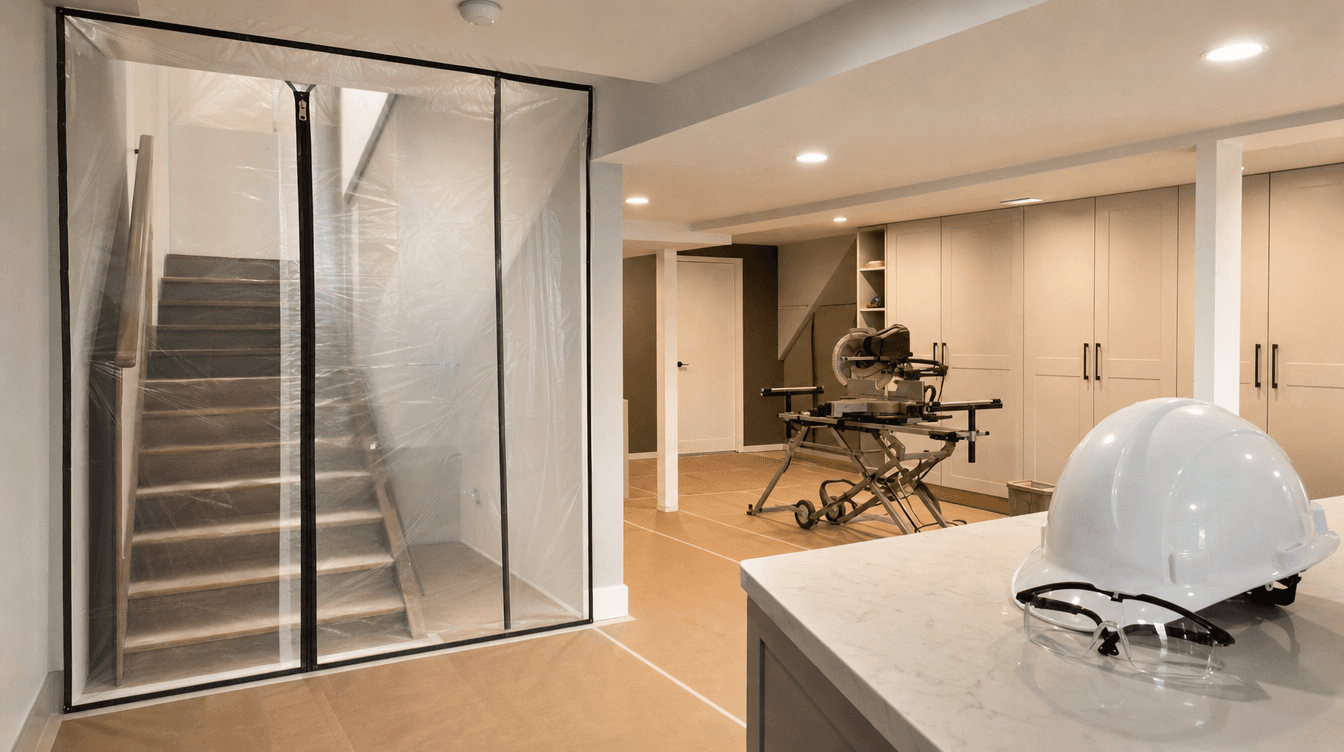
Staying safe around a basement build while you live upstairs — dust control, keeping kids and pets clear, and the safety measures a good crew has in place.
You're living in your home while the basement is being built, so it's fair to wonder about safety. A well-run basement build is a controlled, contained process — but a little awareness on your side keeps everyone comfortable. Here's what to expect and how to stay safe around the work. (This describes our standard approach; specifics vary by project.)
A good crew contains the work
The foundation of safety is a work zone that's sealed off from your living space:
- Dust barriers seal the basement so debris and dust stay contained.
- Floor protection covers the path in and out so nothing gets tracked through.
- A tidy site — a crew that cleans up as it goes is a safer crew.
This containment is part of keeping the disruption controlled while you carry on upstairs.
Keeping kids and pets clear
The simplest safety win is keeping curious little ones away from the work:
- Treat the basement as off-limits during construction — tools, materials, and open work aren't safe to wander into.
- Keep the access door closed or gated.
- Have a plan for pets so they don't slip down while the crew is moving in and out.
A quick family conversation at the start makes this effortless for the whole build.
Air quality and dust
Some dust is inevitable in construction, but it's managed:
- The sealed work zone keeps the bulk of it downstairs.
- Ventilation is handled so dust and any fumes are directed out, not into your living space.
- Sensitive household members — mention any allergies or respiratory concerns to your project manager so extra care is taken.
Trust the professionals with the trades
The genuinely hazardous work — electrical, structural changes, anything that needs a permit — is done by licensed trades and inspected. That's the whole point of using a professional crew: the dangerous parts are handled correctly and verified, not improvised. It's also why DIY on those systems is risky.
The takeaway
Staying safe around a basement build comes down to a contained work zone, keeping kids and pets clear, managed dust and air, and licensed trades on the hazardous work. A good crew handles most of it; your part is simply keeping the family clear of the zone. It's all part of a calm, well-run process.
Is it safe to live upstairs during a basement renovation?
Yes, when the build is well-run. A good crew seals the basement with dust barriers, protects the path in and out, and keeps the site tidy, so the work stays contained to the basement while you carry on upstairs. Your part is keeping kids and pets clear of the work zone and flagging any allergies or respiratory concerns so extra care is taken.
How do you keep kids and pets safe during construction?
Treat the basement as off-limits during the build — tools, materials, and open work aren't safe to wander into — and keep the access door closed or gated. Have a plan so pets don't slip downstairs while the crew moves in and out. A quick conversation with the family at the start makes this easy to maintain for the whole project.
How is construction dust managed in a home?
The sealed work zone keeps the bulk of the dust contained to the basement, and ventilation is handled so dust and any fumes are directed out rather than into your living space. Some dust is inevitable, but it's controlled. If anyone in the household has allergies or respiratory concerns, mention it to your project manager so additional precautions can be taken.