
Design & Room Types
Designing a Basement Home Office That You'll Actually Use
By Oscar Fonseca · November 24, 2025
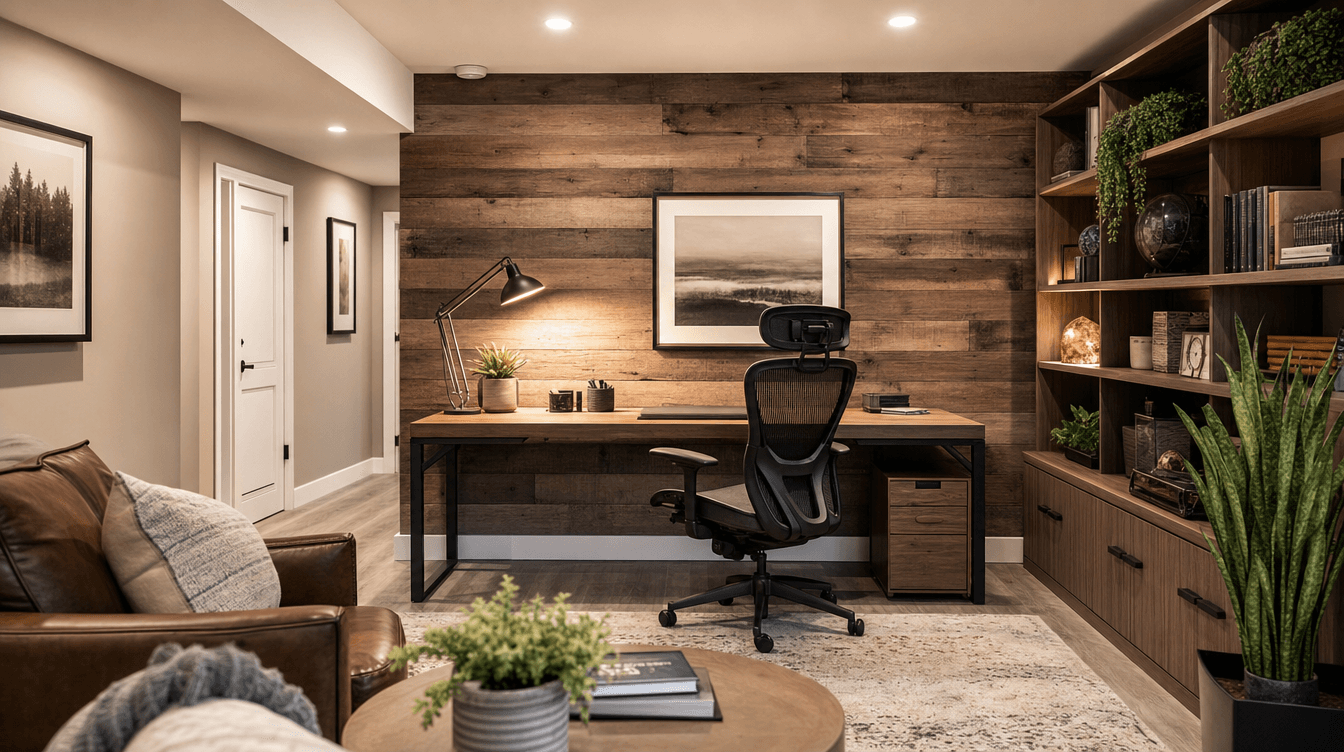
How to design a basement home office you'll actually use — light, quiet, and comfort choices that make a below-grade workspace productive instead of a dungeon.
A basement is a genuinely great spot for a home office — quiet, private, and away from the household — and the key to one you'll actually use is designing for light, quiet, and comfort so it feels productive rather than like a dungeon. With more people working from home, it's one of the most valuable rooms a basement can hold. Here's how to design it right. (Design guidance here is general; we tailor it to your space and show it to you first.)
Light: the make-or-break for a workspace
You'll spend hours here, so lighting matters most. With limited natural light below grade, the answer is to layer it well:
- Bright, even overhead [lighting](/blog/basement-lighting-no-windows) so there are no dark corners or eye strain.
- A dedicated task light at the desk.
- Warm-white bulbs, not harsh blue-white — comfortable for long stretches.
Good, warm light is the single biggest thing that keeps a basement office from feeling grim.
Quiet: the basement's superpower
For an office, quiet is a real advantage, and a basement delivers it:
- It's away from the kitchen and front door — naturally calmer than an office off the living room.
- [Soundproofing](/blog/basement-soundproofing-options) can be added so calls stay private and household noise stays upstairs.
That combination makes a basement one of the best places in the house to take focused calls and do heads-down work.
Comfort: what keeps you in the chair
A workspace has to be comfortable to be used:
- Warm flooring underfoot — vinyl plank over a proper subfloor, or a rug — so it's never a cold slab.
- Good ventilation and [heating](/blog/heating-a-finished-basement/) so it stays fresh and comfortable year-round.
- Enough electrical and data where you need it — planned into the walls, not run across the floor later, part of thinking through the electrical up front.
Add warmth to the design
Finally, make it a place you want to work:
- A feature wall behind the desk for a clean video-call background.
- Built-in storage to keep it tidy.
- Plants, art, and warm finishes to beat the "basement" feeling.
Get light, quiet, comfort, and a little warmth right, and a basement office becomes one of the most productive rooms in the house — the kind of thing worth working out in a proper design.
Is a basement a good place for a home office?
Yes — it's often one of the best spots in the house. A basement is naturally quiet and private, away from the kitchen and front door, which is ideal for focused work and calls. The main things to design for are good layered lighting (since natural light is limited), soundproofing, and comfort so it feels productive rather than like a dungeon.
How do you light a basement office?
Layer the light: bright, even overhead lighting so there are no dark corners, plus a dedicated task light at the desk, using warm-white bulbs rather than harsh blue-white ones since you'll spend hours there. Good lighting is the single most important factor in making a below-grade workspace comfortable and productive.
How do you keep a basement office quiet for calls?
A basement is already away from the busiest parts of the house, and you can add soundproofing — insulation in the walls and ceiling, and a solid door — so calls stay private and household noise stays upstairs. Planning the soundproofing during the build is far more effective than trying to add it to a finished room.