
Design & Room Types
Basement Mudroom Ideas for a Side or Back Entrance
By Oscar Fonseca · November 10, 2025
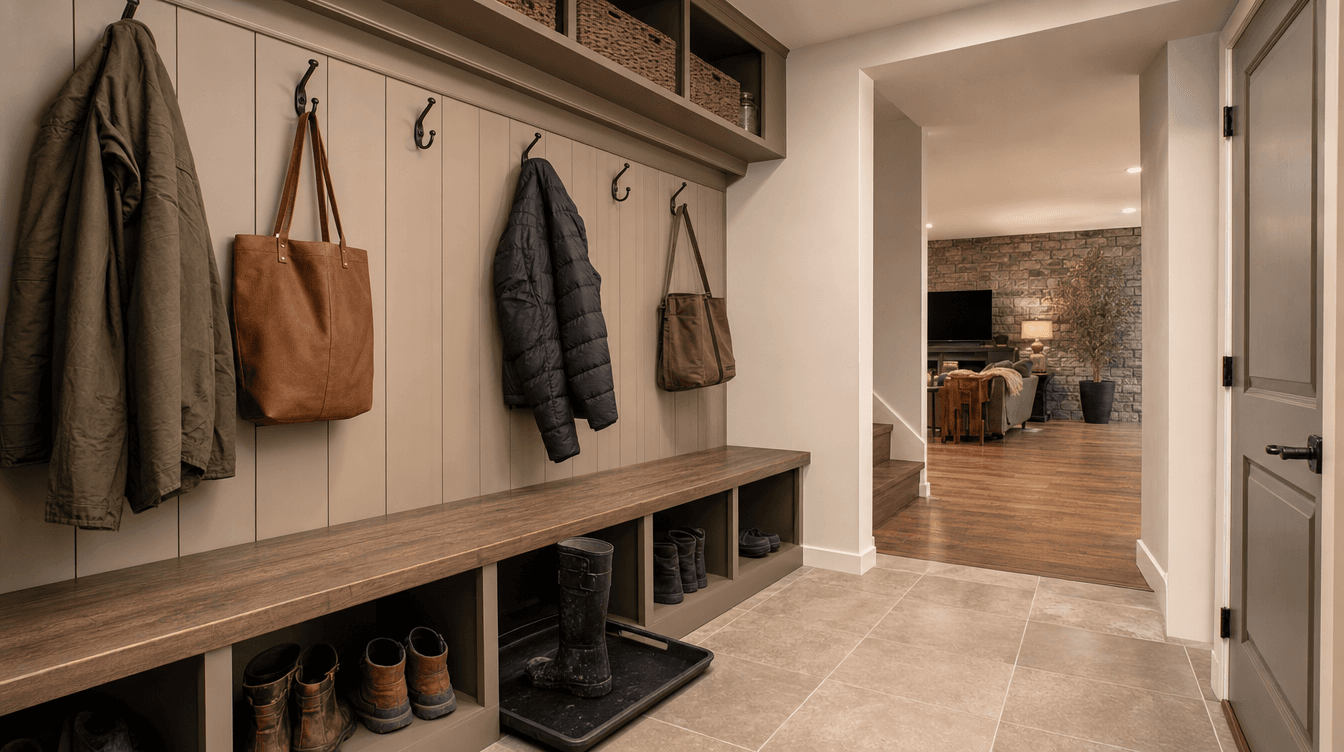
Basement mudroom ideas for a side or back entrance — how to design a hard-working drop zone with storage, durable finishes, and a welcoming feel below grade.
If your basement has its own side or back entrance, a mudroom is one of the smartest things to put right inside the door. It catches the coats, boots, bags, and mess before they travel through the house — and in our climate, that's gold. Here's how to design a basement mudroom that works hard and still looks great. (Design guidance here is general; we tailor it to your space and show it to you first.)
Why the basement entrance is perfect for it
A basement side entrance is often the door the family actually uses, so it's the ideal spot to contain the mess:
- It's the first thing you hit coming in from the yard, garage, or street.
- It keeps dirt and gear out of the main living space.
- It's especially valuable if the entrance also serves a future or legal suite — though a shared mudroom and a suite entrance are designed differently.
The storage that makes it work
A mudroom lives or dies by its storage:
- A bench with boots below and a spot to sit and take them off.
- Hooks and a rail for coats, bags, and leashes — easier than a closet for daily use.
- Cubbies or lockers so each family member has their own zone.
- Closed cabinets up top to hide the seasonal overflow — the same smart-storage thinking used throughout a good basement.
Finishes built for abuse
This room takes the most punishment in the house, so finishes matter:
- Durable, waterproof flooring — luxury vinyl or tile that shrugs off snow, mud, and salt.
- A boot tray or tiled drop zone right at the door.
- Wipeable walls and tough trim that handle bumps from bags and gear.
Choosing finishes for the environment is what keeps a mudroom looking good instead of beat-up.
Make it feel welcoming, not utilitarian
A mudroom can still be lovely:
- Good [lighting](/blog/basement-lighting-no-windows) so it's bright coming in.
- A warm paint colour and a mirror to make it feel like an entry, not a utility corner.
- A small rug or runner (washable) for softness.
The takeaway
A basement mudroom turns a side entrance into a hard-working drop zone — bench, hooks, cubbies, durable finishes, and a welcoming feel. It's one of the highest-value uses of the space right inside the door, and easy to work into a full basement design.
Can you put a mudroom in a basement?
Absolutely — if your basement has its own side or back entrance, right inside that door is an ideal spot for a mudroom. It catches coats, boots, bags, and mess before they travel through the house, which is especially valuable in a snowy climate. A bench, hooks, cubbies, and durable waterproof finishes turn the entrance into a hard-working drop zone.
What should a basement mudroom include?
The essentials are storage and durable finishes: a bench with boot storage below, hooks and a rail for coats and bags, cubbies or lockers so each person has a zone, and closed cabinets up top for overflow. Pair that with waterproof flooring, a tiled drop zone at the door, and wipeable walls, plus good lighting and a warm finish to keep it welcoming.
What flooring is best for a basement mudroom?
Durable, waterproof flooring — luxury vinyl plank or tile — because a mudroom takes the most abuse in the house from snow, mud, and salt. A boot tray or a tiled drop zone right at the door helps contain water. The goal is finishes chosen for the environment so the room shrugs off daily wear and keeps looking good rather than getting beat-up.