
Process
How We Build a Full Schedule Before We Break Ground
By Peggy Malinowski · February 6, 2026
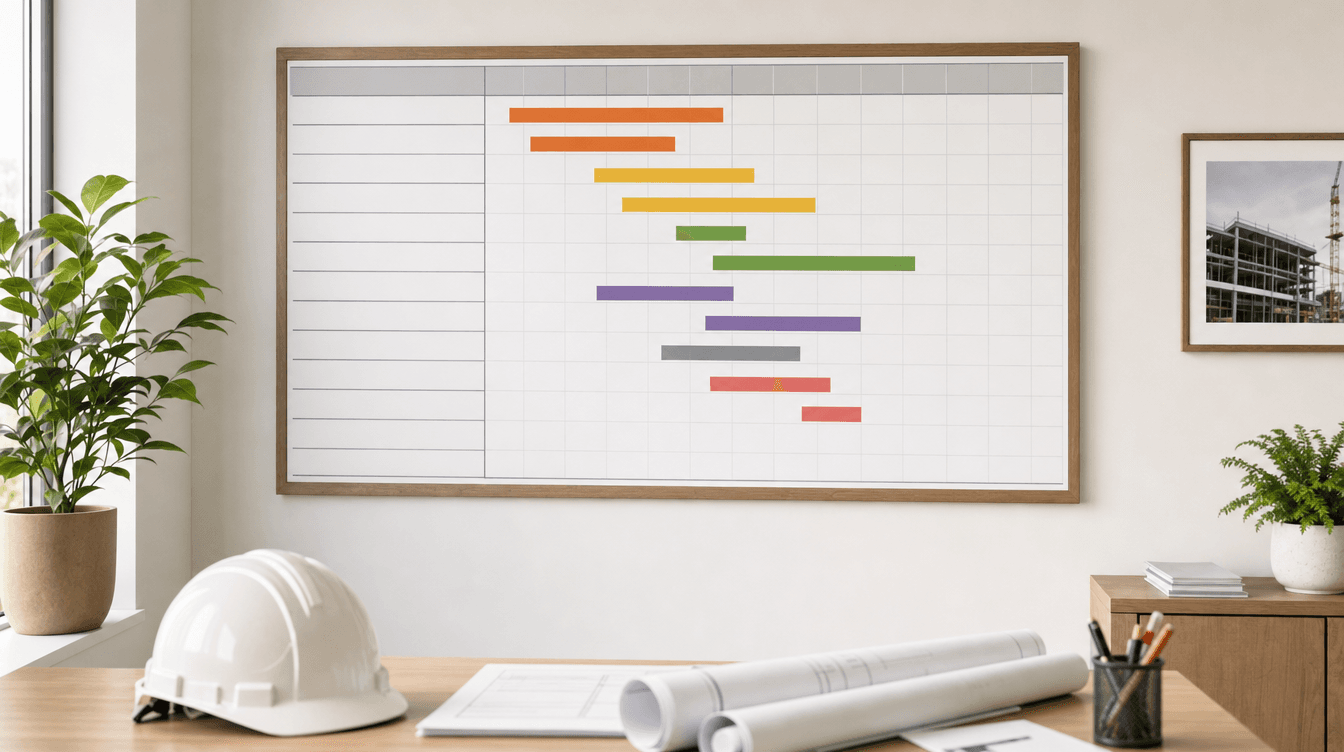
Why we build a complete basement schedule before breaking ground — how sequencing every trade up front keeps the project moving and hits the 13-week guarantee.
The single biggest reason basement renovations run late isn't slow work — it's gaps in the schedule, the dead days when nothing happens because the next trade wasn't booked or materials hadn't arrived. We prevent those gaps by building the complete schedule before we break ground: every trade sequenced, booked, and supplied in advance. That up-front planning is exactly what lets us stand behind a 13-week guarantee. Here's how it works and why it matters. (This describes our standard approach; every schedule is built around your specific project.)
Why basements run late: the gaps, not the work
A basement touches a surprising number of trades, and each one depends on the one before it — framing, then electrical, plumbing, HVAC, insulation, drywall, flooring, paint, trim, and final fixtures. When these aren't sequenced in advance, the project stalls in the handoffs — waiting days for an electrician who wasn't booked, or pausing because the flooring is still in a warehouse. The work itself is rarely the bottleneck; the coordination is. This is the root cause behind most of what makes basement projects run late.
What scheduling before we break ground actually means
Before day one on site, we map the entire project:
- Every trade sequenced — who comes, on which day, and in what order.
- Each dependency identified — what has to be finished for the next trade to start.
- Trades booked in advance, so they're reserved rather than chased mid-project.
- Materials lined up to arrive when they're needed, not ordered the morning they're due.
The result is a project that keeps moving, because the next step is always already arranged.
Why locked scope makes the schedule hold
A schedule is only as reliable as the plan behind it, which is why the design and selections are locked before the build. When the scope is settled up front, there are no mid-build pauses that ripple through every trade after. Planning the scope and the schedule together is what keeps both intact.
Why this lets us guarantee 13 weeks
You can only put money behind a timeline if you've genuinely planned it. Because the whole sequence is built before we start, we back the build with a 13-week guarantee — if we run past it, that's $500 per week credited back to you. That guarantee isn't optimism; it's the direct result of scheduling the project before breaking ground. For the week-by-week view of what that schedule looks like in practice, see our 13-week basement timeline, and for the bigger picture, what to expect from first call to finished.
Why do basement renovations take longer than expected?
Usually because of gaps in the schedule, not slow work — dead days waiting for a trade that wasn't booked or materials that hadn't arrived. When trades aren't sequenced and supplied in advance, the project stalls in the handoffs between them. Planning the full schedule before starting is what removes those gaps.
How do you keep a basement project on schedule?
By building the complete schedule before breaking ground: sequencing every trade, identifying each dependency, booking trades in advance, and lining up materials to arrive when needed. Locking the design and selections up front keeps the schedule from being derailed by mid-build decisions.
What is the 13-week basement guarantee?
It's our commitment to complete the build within 13 weeks — and if we run past it, we credit $500 per week back to you. We can guarantee it because the entire trade sequence is planned before construction starts, so the timeline is based on a real schedule rather than a hopeful estimate.