
Process
What Makes Basement Projects Run Late?
By Peggy Malinowski · March 11, 2026
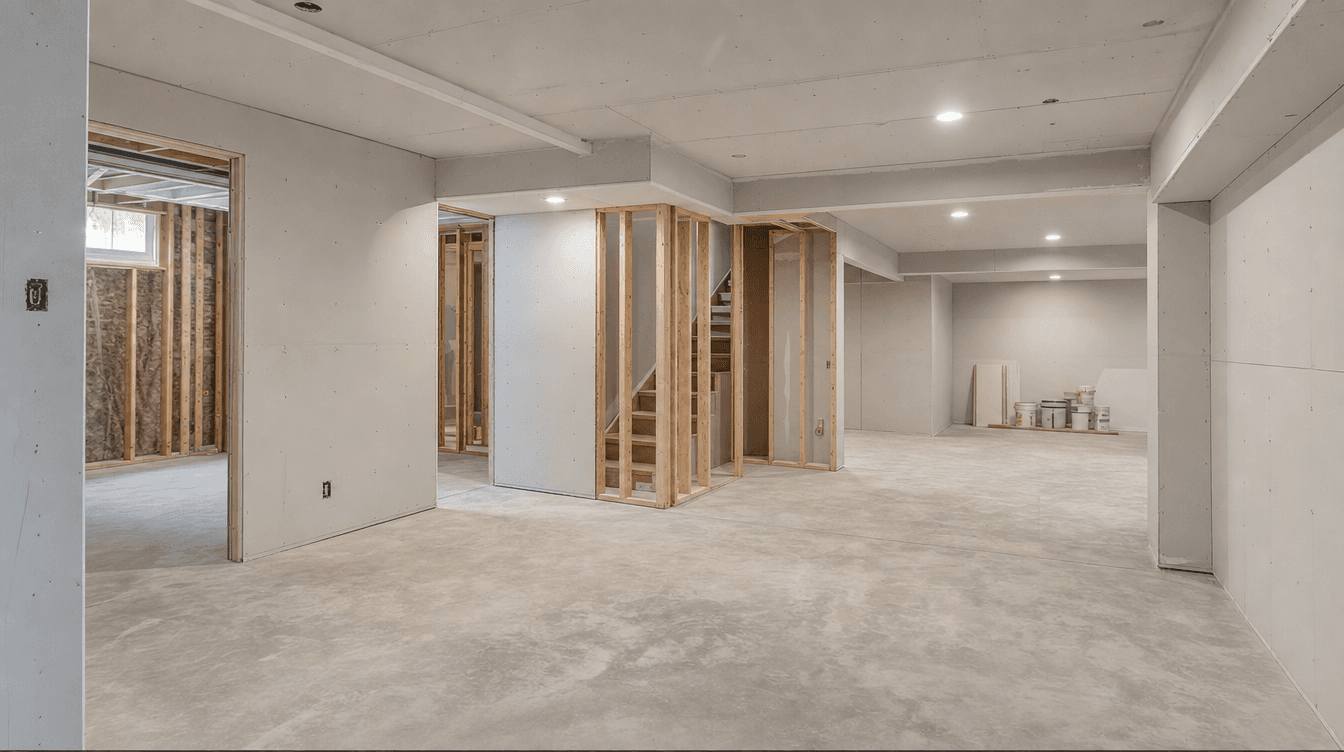
What makes basement projects run late — the real causes of renovation delays, and how a designed-first, fixed-price, scheduled build with a guarantee prevents them.
Basement projects run late for a handful of predictable reasons — decisions made too late, mid-build change orders, unordered materials, poor trade sequencing, and permit or hidden-condition surprises — and nearly all of them trace back to not planning thoroughly before work starts. The good news: because the causes are predictable, they're preventable. (Timelines are typical and confirmed when you book.)
1. Decisions made too late
The single biggest cause of delay is an unfinished design when construction begins. If the layout, finishes, and fixtures aren't settled, the crew ends up waiting on you to decide — and every open decision is a potential pause. The fix is a complete design phase up front, so by the time work starts, the decisions are made. It's the same reason locking big decisions during design matters so much.
2. Change orders mid-build
Changes after work is underway — especially structural ones like moving a wall or adding plumbing after framing — mean tearing out finished work and redoing it, which resets the clock. Fewer, earlier changes keep the schedule intact, and a thorough design dramatically reduces the need for them in the first place.
3. Materials not ordered ahead
If selections aren't locked and materials ordered in advance, a single backordered item — a specific tile, vanity, or fixture — can stall an entire stage while everything waits. Planning and ordering ahead keeps materials on site when each trade needs them.
4. Poor trade sequencing
A basement runs through many trades — framing, electrical, plumbing, HVAC, insulation, drywall, flooring, finishing. If they're not scheduled to hand off cleanly, you get dead days where nobody's on site:
- Gaps between trades stall progress.
- A trade arriving before the previous one finishes causes rework or waiting.
- Tight sequencing is what keeps a project moving day to day.
This coordination is exactly what makes the 13-week timeline hold.
5. Permits and hidden surprises
Two more common culprits: a project that wasn't properly permitted getting flagged, and hidden conditions — moisture, outdated electrical, a mechanical obstacle — that nobody assessed before starting. Both are avoided by pulling the right permits up front and assessing the space thoroughly during design, not discovering issues mid-build.
How we design the delays out
Every cause above is a planning failure, so the prevention is planning: design everything before we start so decisions aren't holding up the crew, lock selections and order materials ahead, schedule every trade in sequence for clean hand-offs, pull permits and assess the space up front, and back it with a 13-week completion guarantee — a $500-per-week credit to you if we run late. That guarantee is only possible because the delays are designed out. See how our process works.
Why do basement renovations run late?
Most often because the design wasn't finished before work started, so the crew waits on decisions. Other common causes are mid-build change orders, materials not ordered ahead, poor trade sequencing that leaves dead days, and permit or hidden-condition surprises. Nearly all are planning failures.
How do you keep a basement build on schedule?
By designing everything and locking selections before starting, ordering materials ahead, scheduling every trade to hand off cleanly, and pulling permits and assessing the space up front. We back the 13-week timeline with a $500-per-week credit if we run late.
What's the biggest cause of construction delays?
Decisions made too late. When the layout, finishes, and fixtures aren't settled before work begins, the whole project keeps pausing to wait on choices. A complete design phase up front is the single most effective way to prevent delays.