
Design & Room Types
Adding a Wine Room or Cellar to Your Basement
By Oscar Fonseca · June 6, 2025
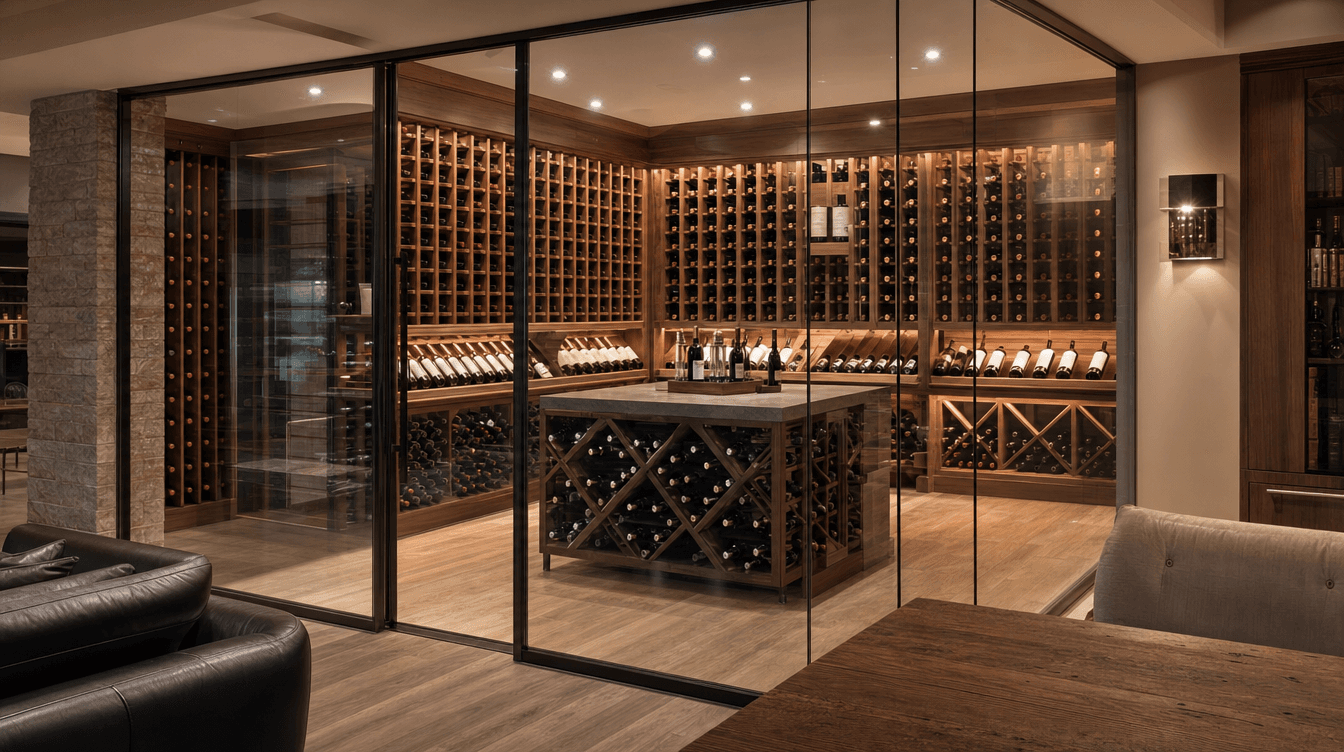
Adding a wine room or cellar to your basement — why a basement is ideal, what makes wine storage work (cooling, insulation, racking), and clever spaces to put one.
A basement is the ideal spot for a wine room or cellar — naturally cool, away from sunlight, and easy to turn into a showpiece. But the thing that separates a real wine room from a shelf of bottles is climate control: a sealed, insulated space with a dedicated cooling unit that holds a steady temperature and humidity. Here's what makes a basement wine cellar work and where to put one. (Design guidance here is general; we tailor it to your space and show it to you first.)
Why a basement is perfect for wine
Basements have natural advantages for wine storage:
- Naturally cool and stable — below grade, temperatures swing far less than upstairs.
- Dark — no sunlight, which wine dislikes.
- Out of the way — a corner, nook, or under-stair space that's otherwise underused.
These are the same qualities that make a basement great for a home theatre — controlled conditions in a tucked-away space.
Climate control is what makes it a real cellar
This is the make-or-break detail. Wine needs a steady, cool temperature and the right humidity, not the daily swings of a normal room. A proper wine room is:
- Sealed and insulated like a small, well-built box within the basement.
- Fitted with a dedicated cooling unit that holds the target conditions year-round.
- Vapor-managed, so the insulation and the moisture control work together rather than causing condensation.
Skip the climate control and you have a display shelf; build it in and you have a cellar that actually protects the wine.
Racking, display, and lighting
This is where a wine room becomes beautiful:
- Wood or metal racking sized and arranged for your collection.
- A glass wall or door so the cellar is visible from the rec room or bar — a genuine feature.
- Accent lighting that makes the bottles glow without heating them.
Designed well, it's as much a design feature as a storage space.
You don't need a big space
A wine cellar doesn't require a whole room. Some of the most effective ones are small:
- Under the stairs — a classic, space-savvy spot.
- A nook or alcove turned into a glass-fronted cellar.
- Beside a [bar](/blog/basement-bar-kitchen-cost) for a natural entertaining zone.
A compact, well-designed cellar has outsized impact — which is exactly the kind of thing we work out in a basement design before building.
Is a basement good for a wine cellar?
Yes — it's arguably the best spot in the house. Basements are naturally cool, stable in temperature, dark (no sunlight), and often have underused corners or under-stair space. Those conditions give a wine cellar a head start, though a proper cellar still needs dedicated climate control to hold steady temperature and humidity.
Does a wine room need special cooling?
Yes, if you want it to genuinely store wine. A real wine room is sealed and insulated with a dedicated cooling unit that maintains a steady, cool temperature and the right humidity year-round. Without that climate control, it's really just a display shelf — the cooling is what protects the wine over time.
How much space do you need for a basement wine cellar?
Not much. Some of the most effective cellars are small — tucked under the stairs, into a nook, or beside a bar — and enclosed in glass as a feature. The key is proper insulation and cooling for whatever the size, not a large footprint. A compact, well-designed cellar can have a big impact.