Permits & Legal Suites
Do Legal Suites Need Their Own Furnace?
By Kloe Bay · June 24, 2026
Do legal basement suites need their own furnace in Calgary? What the independent-heat requirement actually means, and the system options that satisfy it.
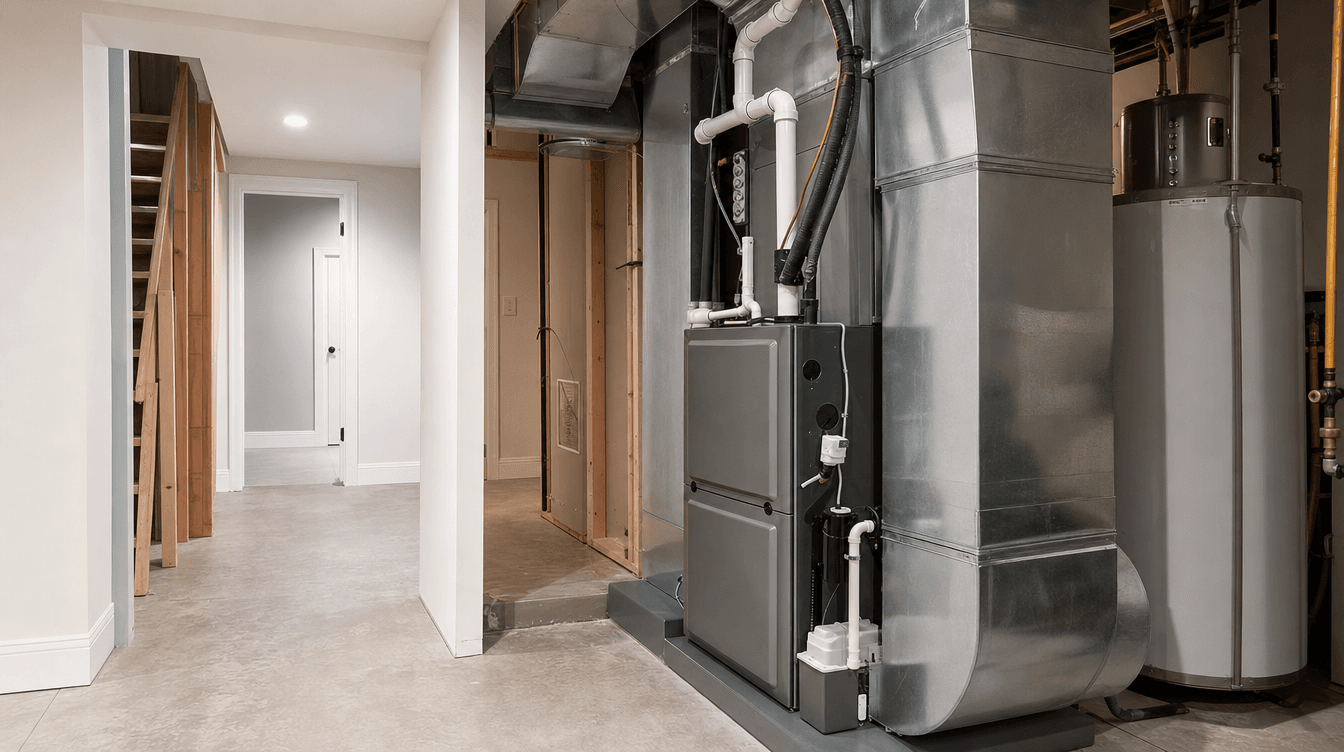
A legal basement suite in Calgary needs independent heat — the suite must control its own heating separately from the main home — but that doesn't automatically mean a second full furnace. Independent heat can be satisfied a few ways depending on your home, from a dedicated furnace to an independently controlled zone to dedicated electric heating. What matters is that the suite's heating is separate and controllable. (This is general information; we confirm the right approach and current rules for your exact address.)
What the requirement actually is
Among the core requirements for a legal secondary suite — a separate entrance, egress windows, fire and smoke separation, and its own kitchen and bathroom — is independent heat. In plain terms, the suite has to manage its own heating on its own, not be at the mercy of the main home's thermostat. The reasons are practical: tenant control (someone living in the suite should set their own temperature) and separation (keeping the systems appropriately divided ties into the fire-separation principle behind a legal suite).
Independent heat doesn't automatically mean a second furnace
A whole separate furnace is one way to provide independent heat, but not the only way. Depending on your existing setup, the options include:
- A dedicated furnace for the suite — the most clearly separate approach.
- An independently controlled zone off the home's system, so the suite regulates its own heat.
- Dedicated electric heating for the suite, independent of the main furnace.
Which is right depends on your home's mechanical layout, the suite's size, and what's most practical to build — which is why it's a design decision, not a one-size answer.
Why it has to be designed in from the start
Independent heat is a systems decision, and systems live behind the walls and in the mechanical room. Retrofitting it into an already-finished basement means opening things back up — messy and expensive. Building the suite as part of a full basement development means the heating is planned in cleanly alongside the furnace room, ducting, and overall heating approach from day one. This is one more reason we build suites correctly from the start rather than retrofitting existing finished basements.
How it fits the bigger legal-suite picture
Independent heat is one requirement among several, and they're all easier to hit when designed together. For the full set — permits, egress, separation, kitchen, and bathroom — see our legal basement suite in Calgary guide, and because the rules are evolving through 2026 (see the rezoning explainer), we always confirm the current requirements for your specific address before designing.
Does a legal basement suite need its own furnace in Calgary?
It needs independent heat — the ability to control its own heating separately from the main home. That can be a dedicated furnace, but it can also be an independently controlled zone or dedicated electric heating, depending on your home. The requirement is separation and control, not specifically a second furnace.
What does independent heat mean for a suite?
It means the suite regulates its own temperature on its own, rather than sharing a single thermostat with the main dwelling. It's both a comfort issue for tenants and part of the separation principle behind a legal suite.
Can independent heat be added to an already-finished basement?
It can, but retrofitting heating systems into finished space is disruptive and costly because it means reopening walls and mechanicals. It's far cleaner to design it in from the start as part of a full basement development, which is how we build legal suites.