
Materials & Suppliers
Choosing Basement Fixtures and Finishes: A Homeowner's Guide
By Josh Wallace · December 18, 2025
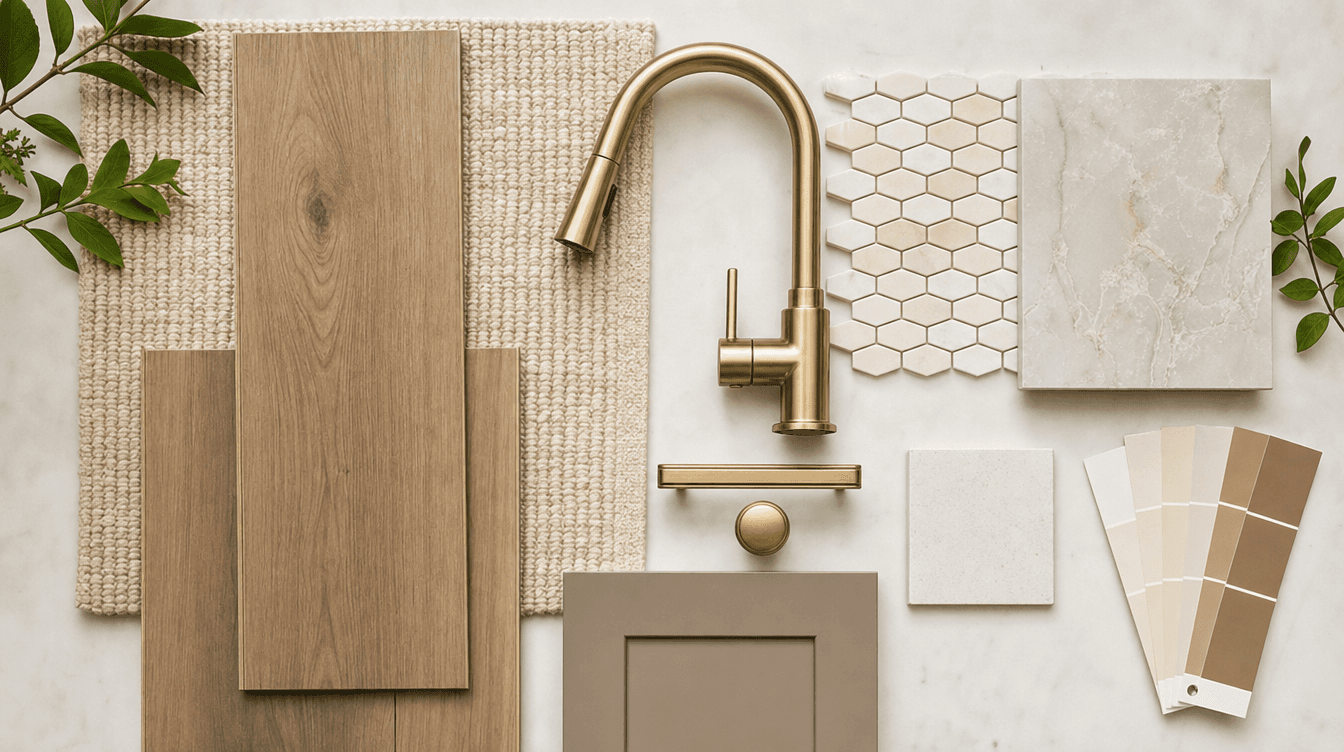
A homeowner's guide to choosing basement fixtures and finishes — how to balance looks, durability, and budget, and where quality matters most below grade.
Choosing your fixtures and finishes is the fun part of a basement — but with endless options, it's also where people get overwhelmed. A few simple rules make good calls easy: match durability to the room, spend where you touch and see it daily, don't skimp on quality details, and keep it cohesive. Here's a homeowner's framework for choosing well. (This is general selection guidance; we narrow it to good options for your space and budget.)
Rule 1: Match durability to the room
A basement takes moisture and traffic, so durability comes first:
- Waterproof flooring like luxury vinyl plank for living areas.
- [Moisture-tolerant materials](/blog/moisture-resistant-basement-materials) in bathrooms, laundry, and near the mechanical room.
- Tough, cleanable surfaces where kids and daily life happen.
Looks matter, but below grade, choosing finishes built for the environment is what keeps the space looking good for years.
Rule 2: Spend where you touch and see it daily
Put the budget where you'll feel it:
- The floor, the main lighting, and the bathroom fixtures you use constantly are worth investing in.
- Rarely used or tucked-away items — a closet, a utility spot — are where you can save.
This is the finish-tier logic applied to individual choices: premium where it counts, standard where it doesn't.
Rule 3: Don't skimp on quality details
Quality shows up in the small things you don't think about:
- Solid cabinet hardware that feels substantial.
- Good faucets and fixtures that won't drip or wear out in a couple of years.
- Durable finishes that hold up to cleaning and use.
Cheap fixtures are the classic false economy — they look fine on day one and fail early. Spending a little more on the things you use every day pays off.
Rule 4: Keep it cohesive
A cohesive palette always looks more expensive than it is:
- Finishes that belong together rather than a dozen unrelated choices.
- A consistent metal finish on hardware, fixtures, and lighting.
- A restrained palette carried through the space — the same colour-and-finish thinking that ties a basement together.
Don't decide it all alone
The biggest tip: don't try to choose everything by yourself. That's exactly what the design and selection process is for — we narrow the thousand options down to a handful of good ones for your space and budget, so you're choosing between yeses, not drowning in maybes. It makes selections the enjoyable part again, as part of a full basement development.
How do you choose finishes for a basement?
Match durability to each room first (waterproof flooring, moisture-tolerant materials in wet zones, tough surfaces in high-traffic areas), then spend where you touch and see things daily and save on rarely used items. Avoid cheap fixtures that fail early, and keep the palette cohesive. A guided selection process narrows the options to good choices for your space.
Where should you spend more on basement fixtures?
On the things you use and touch every day — the floor, the main lighting, and the bathroom fixtures — plus quality details like solid hardware and good faucets that won't wear out. Save on rarely used or hidden items. Cheap fixtures are a false economy: they look fine at first but fail early and cost more to replace.
How do you keep basement finishes from looking mismatched?
Choose a cohesive palette and carry it through the whole space — coordinated finishes, a consistent metal tone on hardware and fixtures, and a restrained set of accent choices. A cohesive palette looks more expensive than it is, whereas a dozen unrelated selections read as busy. A guided design process helps keep everything working together.