
Materials & Suppliers
Vinyl Plank vs Tile vs Carpet: Basement Flooring Compared
By Josh Wallace · October 27, 2025
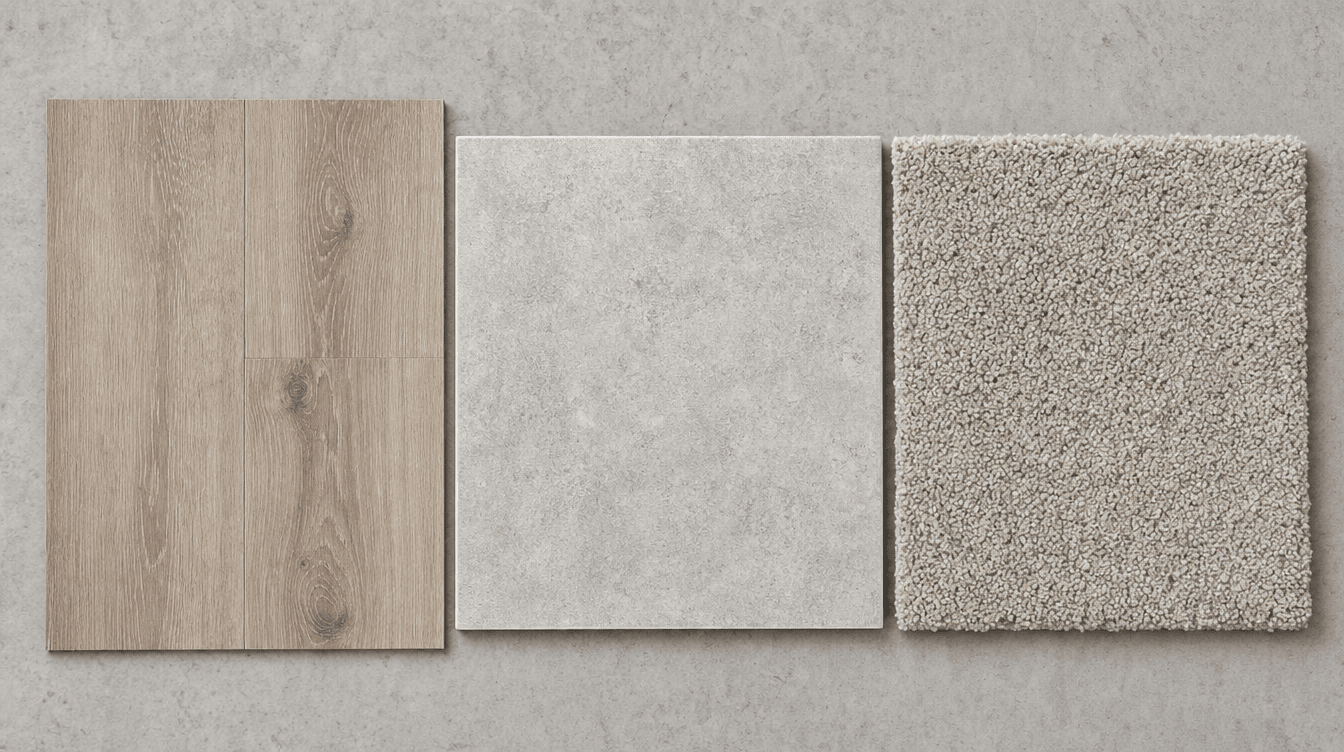
Vinyl plank vs tile vs carpet for a basement — a straight comparison of moisture resistance, warmth, comfort, and cost, and which flooring wins where.
For a basement, the three main flooring options — luxury vinyl plank, tile, and carpet — each win in different rooms, and the deciding factor is always moisture, because a basement floor sits on concrete. The short version: vinyl plank for most of the space, tile in wet zones, carpet used carefully for cozy rooms. Here's the head-to-head comparison. (This is general materials guidance; the right choice for your basement is confirmed during design.)
The golden rule: moisture comes first
Every basement flooring decision starts with water resistance, because the floor sits on a slab that can carry moisture. Whatever you choose sits on a proper subfloor that separates it from the concrete — but the flooring itself still needs to tolerate the below-grade environment. That single fact reshuffles the usual rankings you'd use upstairs.
Luxury vinyl plank: the all-around winner
LVP is the best all-around basement floor for most spaces:
- Waterproof — shrugs off spills and incidental moisture.
- Warm and comfortable underfoot, unlike tile.
- Durable and wood-look, so it's attractive and tough.
- Great for rec rooms, living areas, and most bedrooms.
For the bulk of a basement, it's hard to beat — which is why it tops our best basement flooring guide.
Tile: the wet-zone champion
Tile wins where water is likely:
- Completely waterproof and extremely durable — ideal for bathrooms, laundry areas, and near the mechanical room.
- The downside: it's cold and hard underfoot, so wall-to-wall tile in living areas can feel unwelcoming unless you add in-floor heat.
Use it where its waterproofing earns its keep.
Carpet: cozy, but use it carefully
Carpet is the comfort option — soft, warm, and quiet, lovely in a bedroom or media room. But it's the riskiest with moisture:
- It holds water if the floor ever gets wet and can grow mold.
- It needs the right subfloor beneath it and a genuinely dry basement.
- Never use it in a damp basement or a wet-prone area.
Our take on whether carpet belongs in a basement goes deeper — the short answer is "yes, carefully, in the right room."
The pro move: mix them by room
You don't have to pick one. The best basements mix flooring by room:
- Vinyl plank through the main living space.
- Tile in the bathroom and mechanical/laundry areas.
- Carpet in a bedroom or theatre, if the basement is reliably dry.
Right material, right room — that's the whole philosophy, and it's what we plan as part of a full basement development.
What is the best flooring for a basement?
Luxury vinyl plank is the best all-around choice for most of a basement — it's waterproof, warm underfoot, durable, and looks like wood. Tile is best in wet zones like bathrooms and laundry areas, and carpet works for cozy rooms like bedrooms if the basement is reliably dry. Many basements mix all three by room.
Is vinyl plank or tile better for a basement?
It depends on the room. Vinyl plank is better for living areas and bedrooms because it's waterproof and warm underfoot. Tile is better in bathrooms, laundry, and near mechanical rooms because it's completely waterproof and durable, though it's cold and hard unless paired with in-floor heat. Using each where it fits is ideal.
Can you put carpet in a basement?
Yes, but carefully. Carpet is cozy and warm, great in a bedroom or media room, but it's the riskiest flooring for moisture — it holds water and can grow mold if the floor gets wet. It needs a proper subfloor beneath it and a reliably dry basement, and should never be used in a damp or wet-prone area.