Permits & Legal Suites
The Calgary Basement Inspection Process, Explained
By Kloe Bay · December 30, 2025
The Calgary basement inspection process explained — the stages inspectors check, what they're looking for, and why inspections protect you, not slow you down.
The Calgary basement inspection process happens in stages, not just at the end — most importantly a rough-in inspection while the walls are still open, and a final inspection once the space is complete. Inspections exist to protect you: they're independent, third-party confirmation that the work was done to code and the space is safe. Far from a hurdle, a passed inspection is one of the most valuable things you own on a finished basement. Here's how it works. (This is general information; the exact inspections and current requirements for your project are confirmed with the City of Calgary.)
Inspections happen in stages — on purpose
The single most important thing to understand is that inspections are staged, because an inspector has to see the critical work before it's covered up. Drywall hides the framing, wiring, and plumbing, so those get checked while everything is still open. This staging is why permitted work can't be faked after the fact — and why unpermitted work is so hard to verify later.
The rough-in inspection
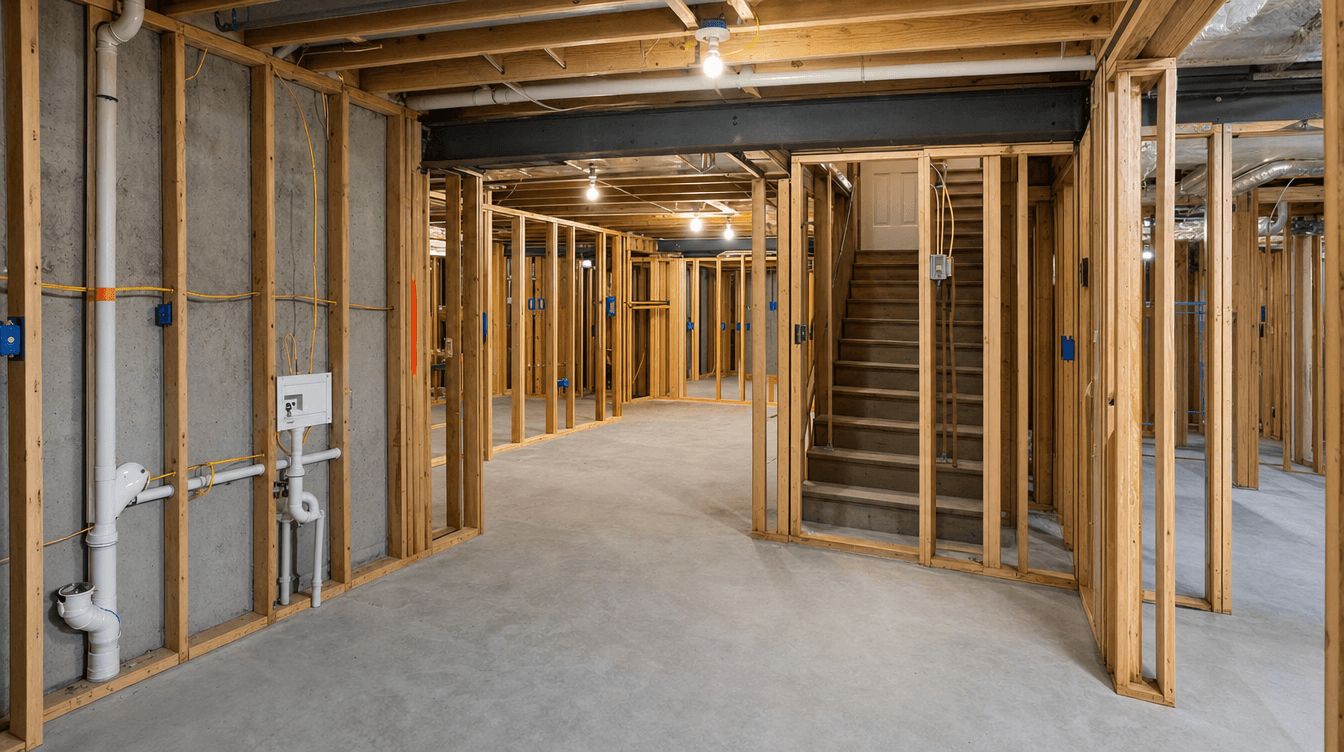
After the rough-in work is done — but before insulation and drywall — an inspector checks the bones of the basement:
- Framing — built correctly and safely.
- Electrical — wiring, boxes, and load done to code.
- Plumbing — supply and drainage correct.
- Egress windows — sized properly for escape and rescue.
This is the big one, because once the walls close up, none of it is visible again.
The final inspection
Once the basement is finished, a final inspection confirms the completed space meets code — the last check before the space is officially good to use. In a legal suite, this is also where suite-specific items like fire separation and interconnected alarms are confirmed.
What inspectors are actually looking for
At every stage, the underlying question is safety — that the work meets the building code and the space is safe to live in. Inspections aren't looking for style or finish quality; they're verifying the things that keep you and any tenants safe.
Why inspections protect you
A passed inspection is independent, third-party proof that your basement was built correctly:
- It protects your resale — buyers and their lawyers value permitted, inspected work.
- It protects your insurance — inspected work doesn't carry the coverage risks of unpermitted work.
- It gives you peace of mind that the space is genuinely safe.
The reassuring part: we schedule and coordinate every inspection and build to pass, so the process is managed for you as part of the whole build — not another thing on your plate.
What do inspectors check in a basement?
Primarily safety and code compliance. At the rough-in stage, before drywall, they check framing, electrical, plumbing, and egress windows while everything is visible. At the final stage, they confirm the completed space meets code. In a legal suite, they also verify suite-specific items like fire separation and interconnected alarms.
When do basement inspections happen?
In stages, not just at the end. The key one is the rough-in inspection, done after framing, electrical, and plumbing but before insulation and drywall — because the inspector must see that work before it's covered up. A final inspection follows once the basement is complete to confirm it meets code.
Why are basement inspections important?
Because a passed inspection is independent, third-party proof the work was done to code and is safe. That protects your resale value (buyers value permitted, inspected work), protects your insurance (unlike unpermitted work), and gives you peace of mind. Inspections protect the homeowner rather than slowing the project down.