
Materials & Suppliers
Choosing Interior Doors for Your Basement
By Josh Wallace · July 25, 2025
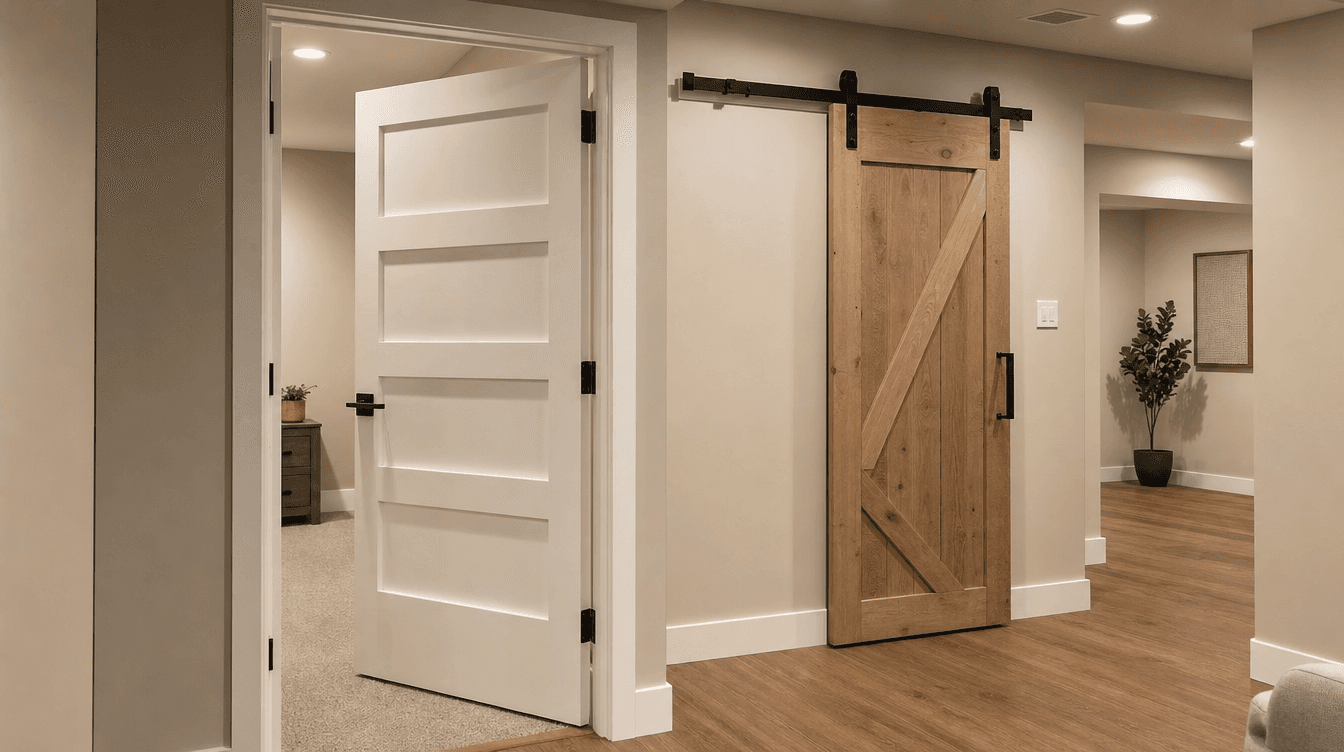
Choosing interior doors for your basement — solid vs hollow core, styles that save space, and where sound and moisture should steer the decision.
Interior doors are one of those finishing details that quietly shape how a basement feels and functions — the difference between rooms that feel solid and private and ones that feel flimsy. They're an easy thing to overlook, so here's a practical look at choosing the right doors for a basement. (This is general guidance; the right choice depends on your layout, which we work through with you.)
Solid core vs hollow core
The single biggest door decision:
- Hollow-core doors are lighter and cheaper — fine for closets and low-traffic spots.
- Solid-core doors feel substantial, block far more sound, and suit bedrooms and any room where privacy matters.
- In a basement, sound travels, so solid-core is often worth it where you want quiet — it pairs with good soundproofing.
This one choice drives both the feel and the sound performance of every room.
Styles that fit the space
Basements often have tight spots where the door style matters:
- Standard swing doors where there's room for them to open.
- Pocket or [barn-style](/blog/basement-feature-wall-ideas) doors where a swing would eat into a small room — great space-savers.
- Bi-fold doors for closets and storage where full access matters but swing room is tight.
Matching the door type to the space keeps a basement feeling open, not cramped.
Don't forget the utility rooms
The functional doors matter too:
- The mechanical/[furnace room](/blog/basement-electrical-101) needs proper access and, in some cases, specific requirements.
- Under-stairs and storage doors should be easy to use, not afterthoughts.
- Any [egress](/blog/egress-windows-calgary-code) or exit path stays clear — doors should never complicate a way out.
Match the look
Finally, tie it together:
- Consistent style and colour with the rest of the basement's finishes and the floor above.
- Hardware that matches — handles, hinges, and finishes in one family.
- Trim and casing that ties the doors into the room cleanly.
The takeaway
Choosing basement doors comes down to solid-core where sound and privacy matter, space-smart styles like pocket and barn doors in tight spots, proper doors on utility rooms, and a consistent look throughout. Get these right and the finished basement feels solid and intentional — the kind of detail we plan into every basement development.
Should basement doors be solid or hollow core?
It depends on the room. Hollow-core doors are lighter and cheaper and are fine for closets and low-traffic spots, but solid-core doors feel substantial and block far more sound, which makes them worth it for bedrooms and anywhere privacy matters. Because sound travels easily in a basement, solid-core doors — paired with good soundproofing — are often the better call in the living and sleeping areas.
What kind of door is best for a small basement room?
Where a swinging door would eat into a small room, space-saving styles shine. Pocket doors slide into the wall, barn-style doors slide along it, and bi-fold doors work well for closets where you want full access without swing room. Matching the door type to a tight space keeps the basement feeling open rather than cramped, which is a big part of how a small room lives larger.
Do basement utility rooms need special doors?
The mechanical or furnace room needs proper, easy access, and in some cases there are specific requirements for it, so it shouldn't be treated as an afterthought. Any door on an egress or exit path also needs to keep that way out clear and simple to use. A builder handles these functional doors as part of the plan, so access and safety are covered alongside the finished look.