
Design & Room Types
Basement Laundry Room Ideas That Make Laundry Less of a Chore
By Oscar Fonseca · September 6, 2025
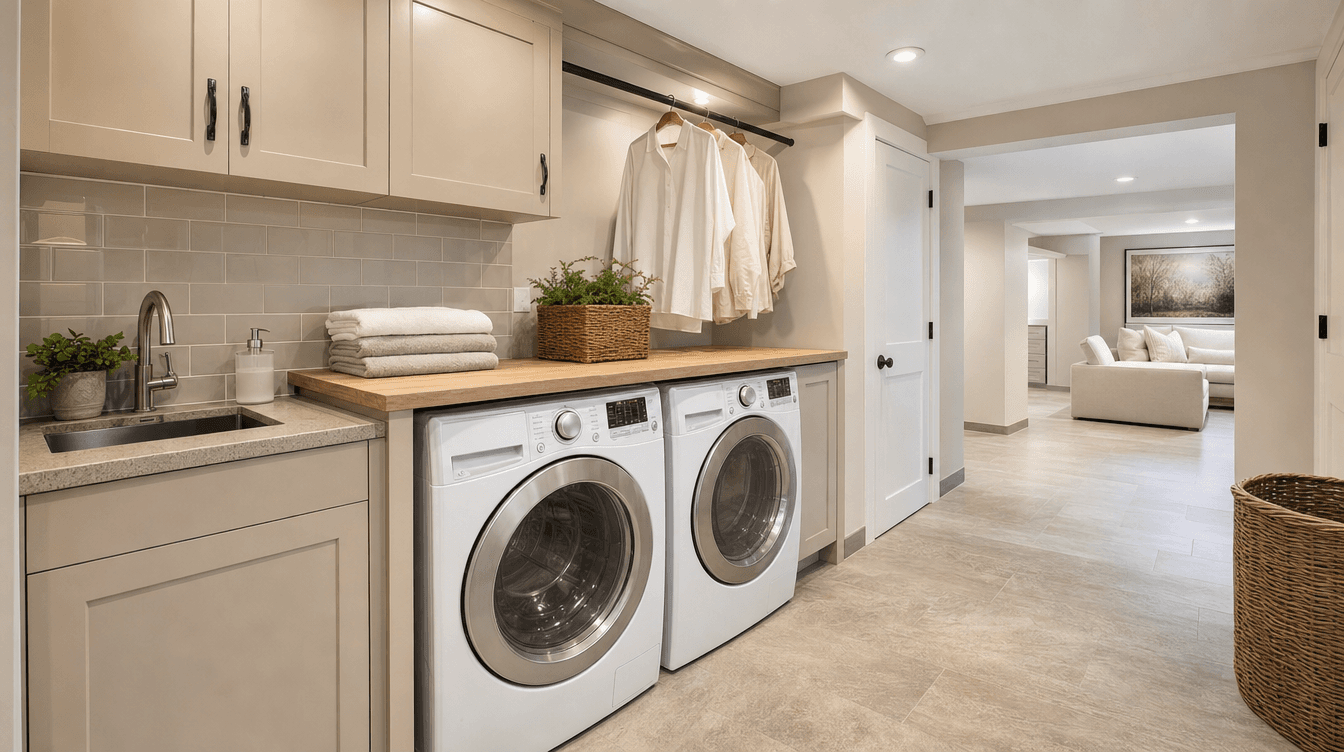
Basement laundry room ideas that make laundry less of a chore — turning the machines in the corner into a bright, organized room you don't mind spending time in.
The laundry is almost always in the basement — but "washer and dryer shoved in a corner" and "a proper laundry room" are very different experiences. When you're finishing a basement, it's the perfect moment to turn that chore-zone into a bright, organized space you actually don't mind using. Here's how to design a basement laundry room that works. (Design guidance here is general; we tailor it to your space and show it to you first.)
Give it a real layout
A functional laundry room is about flow — the steps of doing laundry, made easy:
- Counter space beside or above the machines for folding.
- A sink for hand-washing and soaking (if plumbing allows).
- Hanging space — a rod or rail for air-drying and shirts straight out of the dryer.
- A logical path — dirty in, sorted, washed, dried, folded, out.
Even a compact room feels effortless when the layout follows how you actually do laundry.
Storage is the whole game
A tidy laundry room lives or dies by storage:
- Cabinets above the machines for detergent and supplies.
- Open shelving or baskets for sorting.
- A dedicated spot for the ironing board, drying rack, and the odds and ends — the same smart-storage thinking that keeps a basement organized.
Hide the clutter and even a working room looks calm.
Make it bright and pleasant
The difference between a dungeon and a nice laundry room is light and finish:
- Good [lighting](/blog/basement-lighting-no-windows) — bright, so you can actually see stains and sort colours.
- A durable, [waterproof floor](/blog/best-basement-flooring-calgary) that laughs off spills and leaks.
- A cheerful paint colour — it's a utility room, but it doesn't have to feel like one.
A pleasant laundry room is one you don't dread walking into.
Plan for the practical stuff
A few technical details make a laundry room safe and trouble-free:
- A floor drain or drain pan as a safeguard against leaks — part of good moisture management.
- Proper [ventilation](/blog/basement-ventilation-air-quality) for the dryer and the humidity laundry creates.
- Enough electrical and plumbing, done to code — the rough-ins planned in during the build.
These aren't glamorous, but they're what keep a basement laundry room from becoming a moisture problem.
Combine it smartly
A laundry room often shares space beautifully:
- A laundry + [mudroom](/blog/basement-mudroom-ideas) near a side entrance.
- A laundry + storage/utility zone that keeps all the "working" functions together.
- A second laundry for a legal suite, which has its own considerations.
The takeaway
A basement laundry room is worth designing properly — a real layout, great storage, good light, and the practical drainage and ventilation turn a corner full of machines into a room that makes laundry genuinely easier. It's one of the most-used spaces in the house, so it's worth getting right in your basement design.
How do you design a good basement laundry room?
Start with a layout that follows how you actually do laundry — counter space for folding, a sink if plumbing allows, hanging space, and a logical dirty-to-clean path. Add plenty of storage (cabinets, shelving, a spot for the ironing board), good bright lighting, a durable waterproof floor, and the practical drainage and ventilation. Even a compact room feels effortless when it's planned around real use.
Does a basement laundry room need a floor drain?
A floor drain or a drain pan under the washer is a smart safeguard against leaks, and it's part of good basement moisture management. Combined with proper dryer ventilation to handle humidity, it's what keeps a laundry room from turning into a moisture problem. The exact setup is planned during the build as part of the plumbing and drainage rough-ins.
Can you combine a basement laundry room with other spaces?
Yes, and it often works beautifully. A laundry-plus-mudroom near a side entrance keeps mess contained; a laundry-plus-utility zone groups the "working" functions together; and a legal suite may need its own separate laundry, which has its own considerations. Combining smartly makes the most of the space while keeping each function practical.