Materials & Suppliers
Radon in Calgary Basements: What to Know and How It's Handled
By Josh Wallace · October 6, 2025
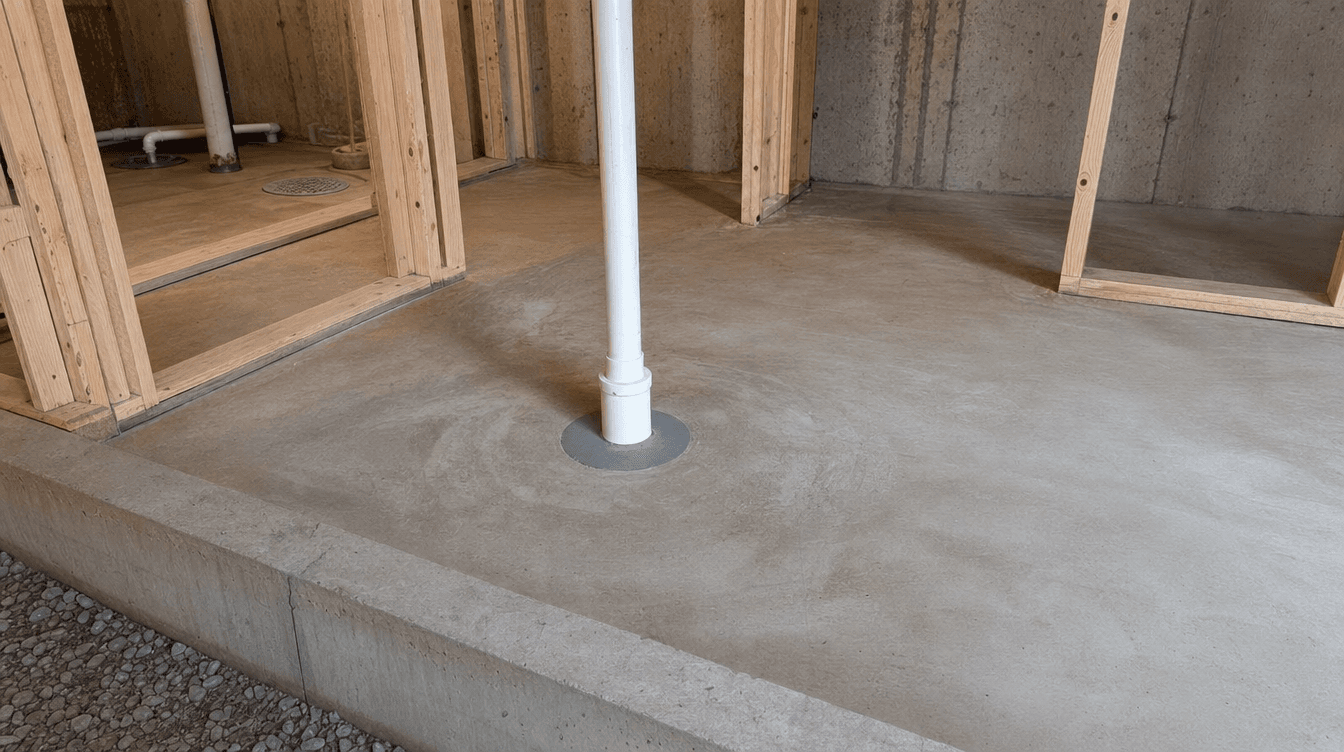
Radon in Calgary basements — what it is, why testing matters, and how a finished basement can be built radon-ready with a mitigation rough-in.
Radon is one of those things most homeowners have heard of but few plan for — and finishing a basement is the perfect moment to deal with it. Radon is a naturally occurring gas that can seep up from the ground into homes, and it's common enough in this region to be worth taking seriously. The good news: testing is simple, and a basement can be built radon-ready. Here's what to know. (This is general information; test your own home and follow current health guidance.)
What radon is (in plain terms)
Radon is a colourless, odourless gas that occurs naturally in the ground and can enter a home through the foundation. It's common across much of Alberta, which is why it's a sensible thing to check for. You can't see or smell it, so the only way to know your level is to test.
Testing comes first
Before worrying about mitigation, the starting point is always a test:
- Test kits are inexpensive and widely available, and long-term tests give the most reliable picture.
- Levels vary house to house, even between neighbours, so your neighbour's result doesn't tell you yours.
- Health Canada publishes the guideline for when action is recommended — worth looking up the current number.
Finishing a basement is a great prompt to test, because it's much easier to build in a solution than to add one later.
How a basement is built radon-ready
If mitigation is wanted, the mechanics are well understood:
- A rough-in during construction — a pipe and sealed pathway that lets any sub-slab gas be vented, put in place while the floor and walls are open.
- Sealing entry points — sealing cracks and gaps in the foundation as part of good moisture and air management.
- A sub-slab depressurization system — the standard active mitigation approach, which a rough-in makes simple to add or complete.
Doing this during the build is far cheaper and cleaner than retrofitting a finished space.
Why finishing time is the right time
Once drywall and flooring go in, adding radon mitigation means cutting into finished surfaces. During construction, the slab edges and walls are open, so a rough-in is quick and inexpensive — the same logic as handling every hidden system before it's covered up. Building radon-ready is cheap insurance.
The takeaway
Radon is manageable and nothing to panic about: test your home, and if you're finishing the basement, build it radon-ready with a mitigation rough-in. It's a small, smart step that protects your family's air for the long haul, part of building a healthy finished basement. Talk to us about a radon rough-in when we plan your build.
Is radon a problem in Calgary basements?
Radon is a naturally occurring gas found across much of Alberta, so it's worth taking seriously — but levels vary house to house, even between neighbours. Because you can't see or smell it, the only way to know your home's level is to test. Finishing a basement is a great time to test and, if needed, to build in mitigation while everything is open.
How do you reduce radon in a basement?
The standard active approach is a sub-slab depressurization system, which vents gas from beneath the slab before it enters the home, along with sealing foundation cracks and entry points. During a basement build, a rough-in (a pipe and sealed pathway) can be installed while the floor and walls are open, making it simple and inexpensive to add or complete a full system.
Should I test for radon before finishing my basement?
Yes — it's the ideal time. Testing is inexpensive, and long-term test kits give the most reliable reading. If your level warrants action, it's far cheaper and cleaner to build in a mitigation rough-in while the slab and walls are open than to retrofit a finished space later. Check Health Canada's current guideline for when action is recommended.