Permits & Legal Suites
Does a Legal Basement Suite Need Separate Utilities?
By Kloe Bay · May 11, 2026
Does a legal basement suite need separate utilities? What's typically required for heat and safety, what's optional like separate metering, and why to confirm current rules.
A common question when planning a legal basement suite: does it need its own separate utilities — a separate furnace, its own electrical panel, a separate meter? The answer separates what's typically required for safety and function from what's optional and about convenience or billing. Here's how to think about it. (This is general information; the exact requirements are confirmed against current City code for your address, and suite rules are evolving through 2026.)
Requirements vs. preferences
The key distinction is between two different questions:
- What code requires for a suite to be a safe, self-contained dwelling.
- What's optional — nice to have for managing a rental, but not a legal requirement.
Mixing these up is where a lot of confusion comes from, so it's worth separating them.
Heating: usually a real requirement
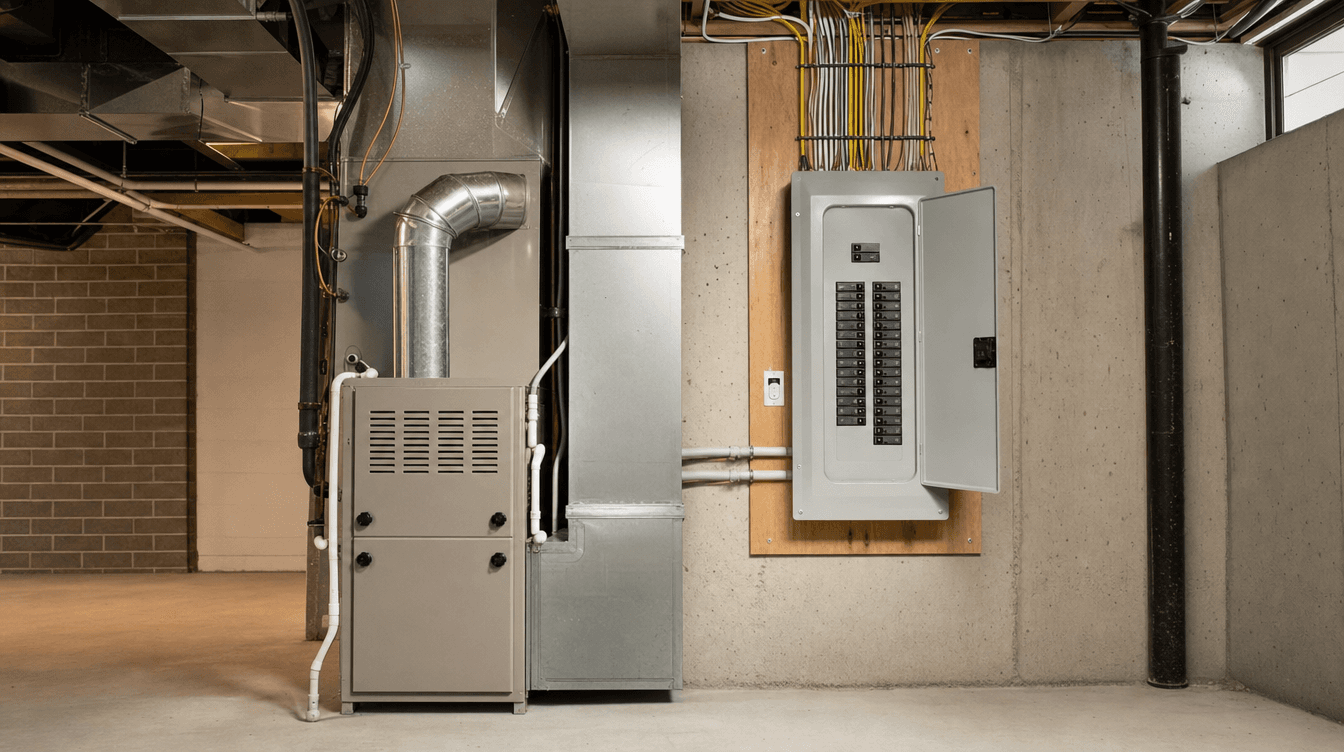
Heat is one area that genuinely matters. A legal suite needs adequate, independent heating so the occupants control their own comfort and the system is safe — which is why furnace and heating requirements are taken seriously. Whether that means a fully separate furnace or an approved alternative depends on current code and your home's setup, and it's confirmed during design.
Separate metering: usually optional
Here's where people over-assume: a separate electricity or gas meter is generally about billing, not legality. A landlord might want separate meters so a tenant pays their own utilities, but it's typically a preference rather than a code requirement for the suite to be legal. Many legal suites share metering with the main home and the utilities are handled in the lease.
Electrical safety: yes, done properly
The suite's electrical must be safe and adequate — proper circuits, permitted and inspected — but that's about safe wiring, not necessarily a separate panel. Again, safe-and-code-compliant is the requirement; fully separate is often a choice.
Why this is a "confirm current rules" topic
Suite requirements — including the specifics around systems — are set by the City and are evolving through 2026. What's required versus optional can shift, and it depends on your home. So the responsible approach is to design the suite to current code for your address rather than assume. We handle exactly that as part of building a suite legally.
The takeaway
A legal suite needs safe, adequate, independent heating and safe electrical — but fully separate utilities like a dedicated meter are usually about convenience and billing, not legality. The line between required and optional is set by current code, so we confirm it for your address and build accordingly. Learn more on our legal suite page.
Does a legal basement suite need a separate furnace?
It needs adequate, independent heating so occupants control their own comfort and the system is safe — but whether that means a fully separate furnace or an approved alternative depends on current code and your home's setup. Heating is one area that genuinely matters for a legal suite, so it's confirmed against current requirements during design rather than assumed.
Does a basement suite need its own meter?
Usually not for legality — a separate electricity or gas meter is generally about billing convenience, letting a tenant pay their own utilities, rather than a code requirement for the suite to be legal. Many legal suites share metering with the main home and handle utilities in the lease. If you want separate meters, it's a choice, not typically a legal must.
What utilities does a legal suite actually require?
The genuine requirements center on safety and function: adequate independent heating and safe, adequate, permitted electrical. Fully separate systems like a dedicated meter are usually optional. Because the line between required and optional is set by the City and is evolving through 2026, the specifics should be confirmed against current code for your address rather than assumed.