
Materials & Suppliers
Basement Ventilation and Air Quality: What You Need to Know
By Josh Wallace · June 30, 2025
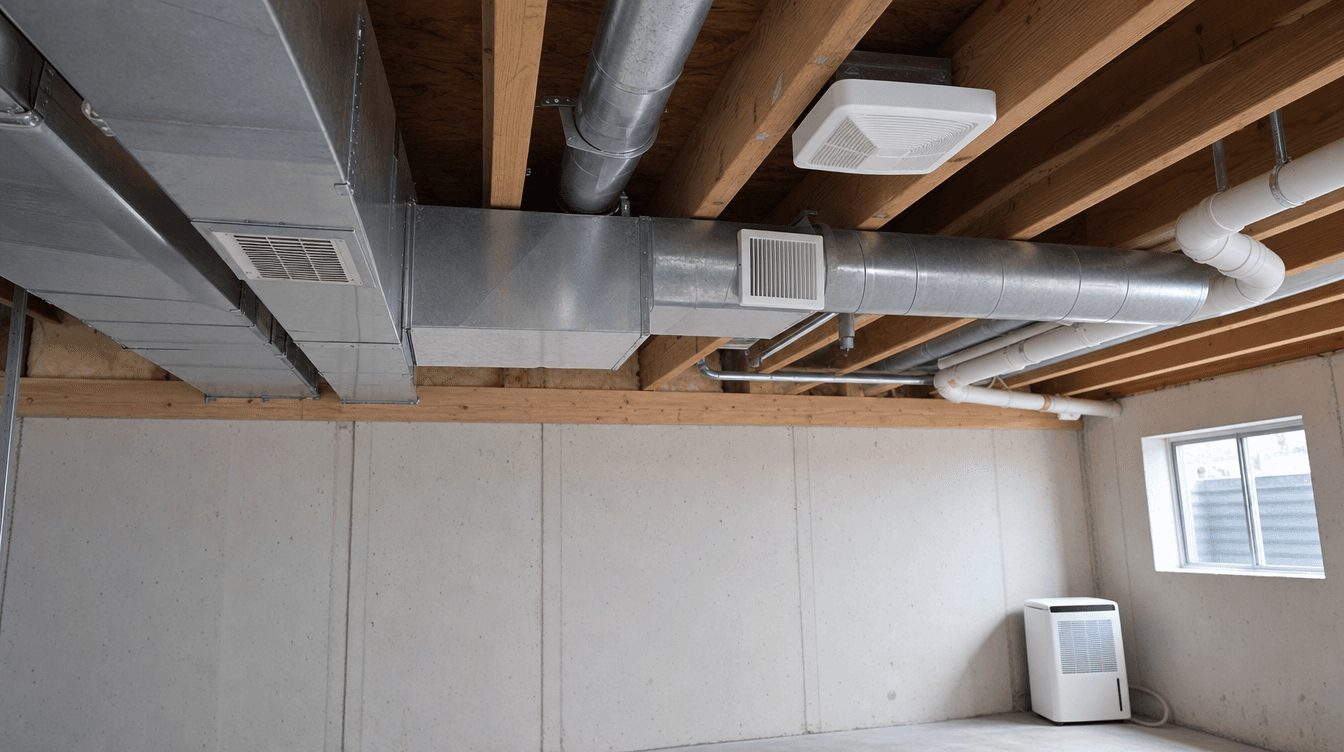
Basement ventilation and air quality — why below-grade spaces need fresh air and humidity control, how it's handled, and what keeps a finished basement healthy.
Air quality is one of the most overlooked parts of a finished basement — and one of the most important. Because a basement is a closed-in, below-grade space, air and humidity don't move the way they do upstairs, so proper ventilation and humidity control are what keep it feeling fresh instead of stale and musty. Here's what a healthy basement needs. (This is general construction guidance; your basement's ventilation is designed for its specific conditions.)
Fresh air: supply and return
The foundation of good basement air is being properly connected to the home's heating and cooling system, with both:
- Supply air — conditioned air delivered into the space.
- Return air — the part people forget. Without a return, air just sits and goes stale.
Balancing supply and return is what keeps air actually moving through a finished basement, rather than stagnating.
Humidity: the below-grade challenge
A basement is naturally cool, which means humidity tends to collect there, especially in summer. Managing it is key to comfort and to avoiding that damp, musty feeling:
- Good air movement helps keep humidity from settling.
- A dehumidifier is a smart addition in many homes.
- An HRV (heat-recovery ventilator) benefits some homes — it efficiently swaps stale inside air for fresh outside air.
This works alongside the moisture management that keeps the basement dry in the first place — air quality and moisture control go together.
The specific spots that need venting
Certain areas need dedicated exhaust, and these aren't optional:
- Bathrooms need proper exhaust fans to move moisture and odours out.
- A suite kitchen needs range venting.
- A [gym](/blog/basement-home-gym-design) or laundry area benefits from extra airflow.
Skipping these is how moisture and smells build up in the exact rooms that generate them.
Why it matters
Ventilation is the unglamorous detail that makes a basement genuinely comfortable and healthy — as fresh as any room upstairs. It's easy to build in during construction, planned alongside the heating and mechanicals, and difficult to fix well after the fact. That's why we design the air handling right into a full basement development from the start.
Why does my basement smell musty?
Usually stale air, excess humidity, or hidden moisture. A basement is a closed-in, below-grade space, so without proper supply-and-return ventilation the air stagnates, and its natural coolness lets humidity collect. Improving air movement, adding a dehumidifier, and ruling out any moisture source typically clears it up — and building ventilation in properly prevents it.
How do you ventilate a finished basement?
Connect it properly to the home's heating and cooling system with both supply and return air so the air actually moves, manage humidity with good airflow and often a dehumidifier (or an HRV in some homes), and add dedicated exhaust where it's needed — bathroom fans and range venting for a suite kitchen. It's designed in during construction.
Do basements need a dehumidifier?
Many do, because a basement's natural coolness causes humidity to collect, especially in summer. A dehumidifier is a simple, effective way to keep humidity in a comfortable range and prevent that damp, musty feeling. Combined with proper ventilation and moisture management, it keeps a finished basement fresh and healthy year-round.