
Cost
How Much More Does a Legal Suite Cost Than a Regular Basement?
By Bo Fric · September 26, 2025
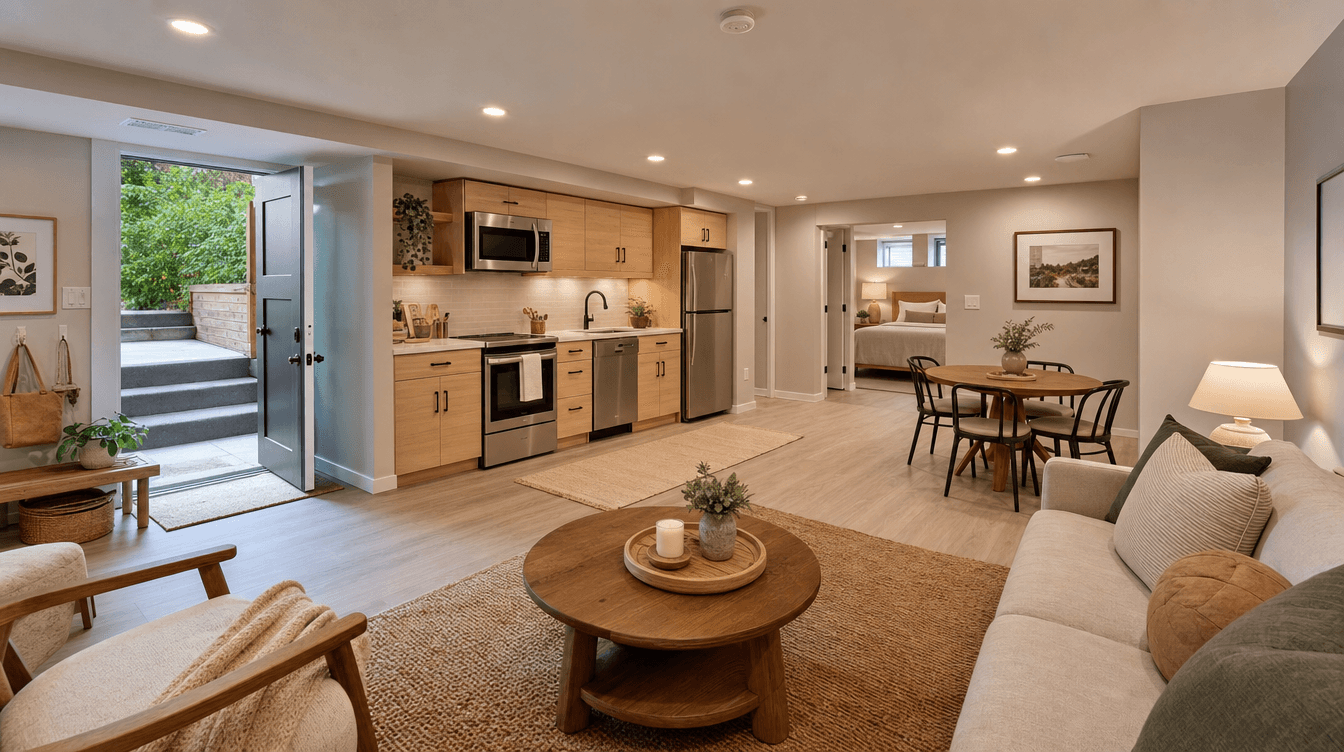
Why a legal basement suite costs more than a regular finished basement — the extra requirements that drive the difference, and why the income can be worth it.
A legal basement suite costs more than a regular finished basement, and the reason is simple: a regular basement is living space for you, while a legal suite is a separate, self-contained dwelling the building code requires to be safe and independent. That extra requirement — not fancier finishes — drives the cost difference. But a suite is also the one basement that can pay you back through rental income. Here's what accounts for the difference. (Cost here is qualitative; your exact figures come in a fixed-price quote.)
A regular basement vs. a legal suite
The two are fundamentally different projects:
- A regular finished basement is living space for your household — a rec room, bedrooms, a bathroom, maybe a bar.
- A [legal secondary suite](/legal-basement-suite-calgary/) is a complete, independent dwelling for a separate household, which the code holds to a higher standard.
That "separate, safe, independent" requirement is where the added cost comes from.
What a suite adds (and why it costs more)
A legal suite requires several things a regular basement simply doesn't:
- A second kitchen — plumbing, electrical, cabinetry, and appliances (the bar-vs-kitchen jump writ large).
- A [separate entrance](/blog/basement-suite-separate-entrance) — often cutting in an exterior stairwell.
- [Egress windows](/blog/egress-windows-calgary-code) in every bedroom.
- [Fire separation](/blog/legal-suite-fire-safety-requirements) between the suite and the main home.
- Independent heat and interconnected [alarms](/blog/basement-smoke-co-alarms).
Each is real, code-mandated work. It's the same reason a suite involves more permits and a longer review than a simple finish.
It's about safety and legality, not luxury
The key point: the extra cost isn't fancier finishes — it's the safety and legal requirements built into the structure to make a second dwelling livable and legal. You could finish a regular basement to a very high standard for less than a legal suite, because the suite's cost is in the bones, not the surfaces.
The flip side: income
Here's why the higher cost often makes sense: a legal suite can generate rental income month after month. It's the one basement that can pay you back, so while it costs more up front, the long-term math frequently works in your favour — which is why so many homeowners choose it, and why it can add a distinct kind of value. Whether it's right for you comes down to your goals, your home, and a real fixed-price quote.
Why does a legal basement suite cost more than a regular basement?
Because a suite is a separate, self-contained dwelling the code requires to be independent and safe, which adds a second kitchen, a separate entrance, egress windows, fire separation, independent heat, and interconnected alarms. A regular basement doesn't need any of that. The difference is in code-mandated structural work, not fancier finishes.
Is a legal suite worth the extra cost?
It often is, because a legal suite can generate rental income month after month — it's the one basement that can pay you back over time. So while it costs more up front than a regular finish, the long-term math frequently works in your favour. Whether it's right depends on your goals, your home, and a fixed-price quote.
How much more does a suite cost than a regular basement?
There's no single number — it depends entirely on your home, the existing conditions, and what the suite requires (especially the separate entrance and second kitchen). Rather than a misleading figure, the reliable way to know is a fixed-price quote on your actual space, which prices the specific suite requirements for your home.