
Permits & Legal Suites
Secondary Suite vs Garden Suite: What's the Difference?
By Kloe Bay · January 23, 2026
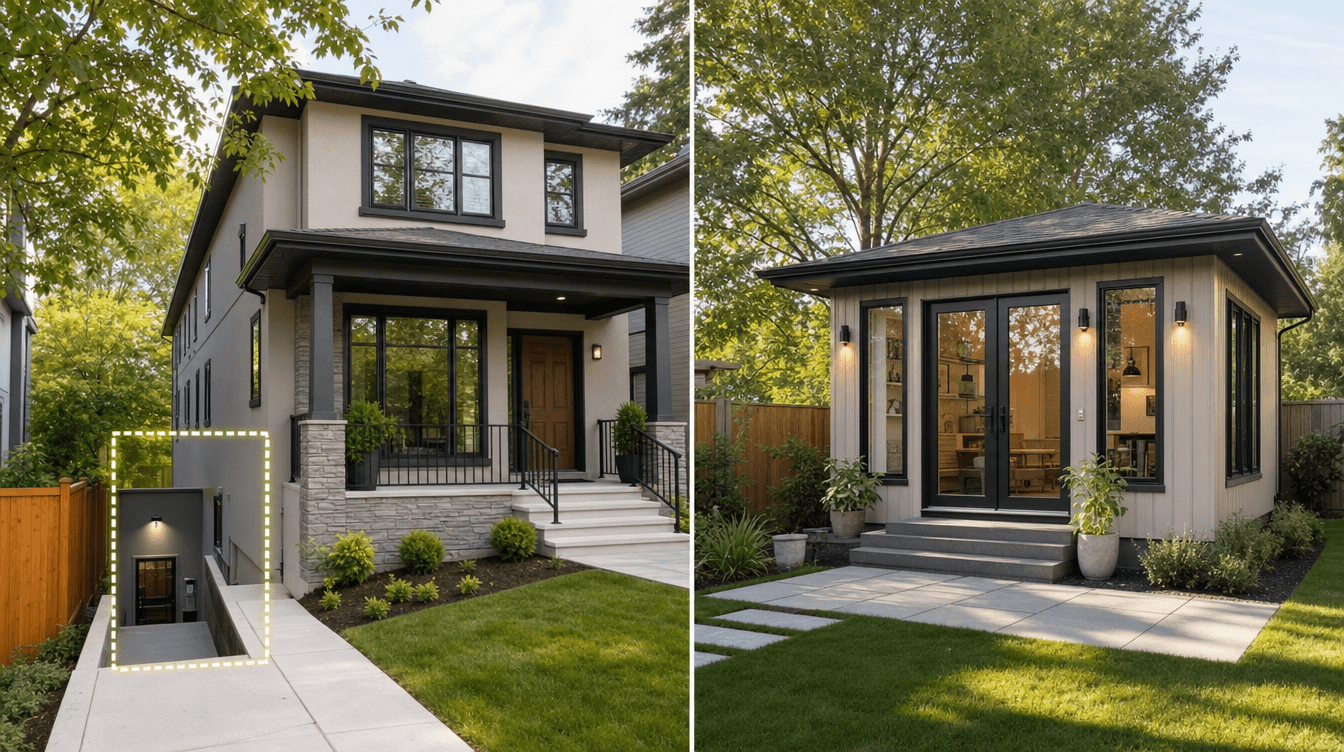
Secondary suite vs garden suite — the difference between a basement suite inside your home and a separate backyard build, and how to choose between them.
If you're looking to add a legal rental or family unit, you'll run into two terms: a secondary suite and a garden suite. They both add a self-contained dwelling to your property, but they're very different builds. Here's the plain-English difference and how to think about choosing between them. (This is general information; the current rules and what's allowed on your specific lot are confirmed with the City — suite rules are evolving through 2026.)
The simple difference
The core distinction is where the unit lives:
- A secondary suite is a self-contained unit within your existing home — most commonly a basement suite, with its own entrance, kitchen, and bathroom, tucked into space you already have.
- A garden suite (sometimes called a backyard or laneway suite) is a separate, detached building in your yard — essentially a small standalone home.
Both are legal secondary-suite-type dwellings when built to code; the difference is one uses existing space and the other is new construction on your lot.
What each involves
They're quite different projects:
- A basement secondary suite works with your home's existing structure — you're finishing and adapting space that's already there, which generally makes it more affordable and faster than building new. It's the same scope as any legal basement suite.
- A garden suite is a ground-up building — foundation, structure, its own full systems — so it's a larger project with its own set of approvals, and it consumes yard space.
How the requirements differ
Both must be self-contained and code-compliant — their own entrance, kitchen, bathroom, and the required life-safety features — but because a garden suite is a detached building, it brings additional considerations like its own footprint, setbacks, and site rules. A basement suite's requirements center on the suite code within the home — egress, fire separation, and the rest. Exact rules for both are set by the City and are changing through 2026, so your address and lot determine what's actually allowed.
How to choose
A rough way to think about it:
- Choose a basement secondary suite if you want the most cost-effective path and you have suitable basement space — you're using square footage you already own.
- Consider a garden suite if you want a fully separate building, have the yard for it, and don't want a unit inside your main home.
For most homeowners already finishing a basement, the secondary suite is the natural, efficient choice — but it's worth knowing both exist.
The takeaway
A secondary suite is inside your home (usually the basement); a garden suite is a separate backyard building. Both add a legal dwelling; they differ in cost, scale, and rules. We focus on legal basement suites — using space you already have — and always confirm the current City requirements for your address. Learn more on our legal suite page.
What's the difference between a secondary suite and a garden suite?
A secondary suite is a self-contained unit within your existing home — most often a basement suite with its own entrance, kitchen, and bathroom. A garden suite (also called a backyard or laneway suite) is a separate, detached building in your yard, essentially a small standalone home. Both are legal dwellings when built to code; the difference is existing space versus new construction.
Is a basement suite cheaper than a garden suite?
Generally yes. A basement secondary suite adapts space that already exists in your home, so it's usually more affordable and faster than a garden suite, which is a ground-up building with its own foundation, structure, systems, and site approvals. The exact costs depend on your project, but using existing square footage is typically the more cost-effective path.
Which is better, a secondary suite or a garden suite?
Neither is universally better — it depends on your goals and lot. A basement secondary suite is the efficient choice if you have suitable basement space and want the most cost-effective route. A garden suite suits homeowners who want a fully separate building and have the yard for it. The current City rules and what's allowed on your specific lot should guide the decision.