
Materials & Suppliers
Sump Pumps, Floor Drains & Basement Water Management
By Josh Wallace · November 27, 2025
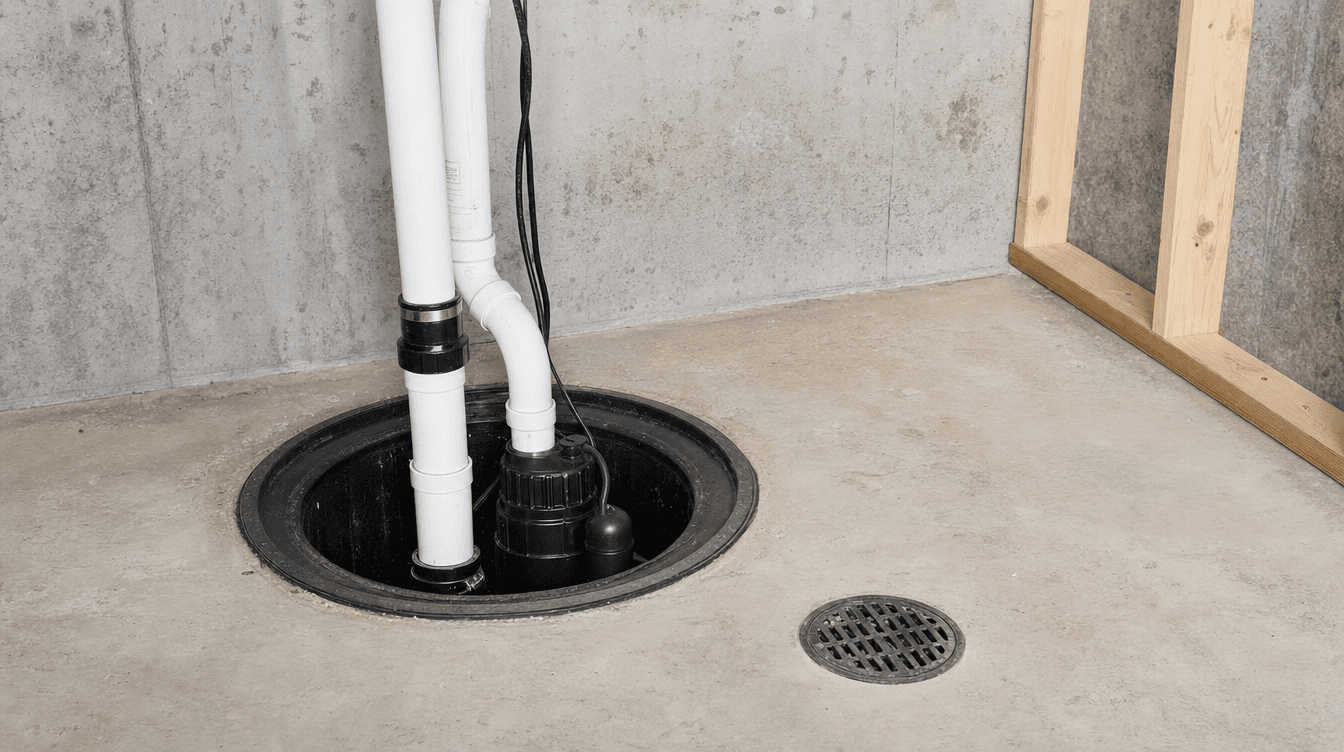
How basements stay dry — sump pumps, floor drains, and the water-management systems under your slab, what each does, and what development changes.
The systems that keep a basement dry — a sump pump, floor drains, and proper water management — live under and around your slab, and getting them right is the foundation everything else in a finished basement rests on. A sump pump removes groundwater before it rises, floor drains give stray water somewhere safe to go, and any existing moisture must be resolved before finishing. (This is general guidance; your basement's water situation is assessed and addressed for your specific home.)
The sump pump: your first line of defense
A sump pump sits in a pit (the sump) at the low point of the basement:
- Groundwater collects in the pit rather than seeping across the floor.
- The pump switches on when the water reaches a set level and pushes it away from your foundation.
- It keeps the water table from rising into your finished space.
Where there's real groundwater, a working sump pump is what stands between you and a wet basement — so it's the first thing to understand about your basement's water picture.
Floor drains: a safe exit for stray water
Floor drains give water a place to go if something goes wrong — a leaking appliance, a hot-water tank failure, or a spill — instead of pooling and ruining finishes. They're especially valuable in the mechanical room (furnace, hot-water tank), a laundry area, and anywhere near water.
Why this matters before you finish
Here's the non-negotiable: water has to be handled before a basement is finished. If there's an existing moisture problem, beautiful flooring and drywall don't fix it — they trap it, and you get mold and damage behind the walls. That's why we assess the water situation first. It's the same reason moisture tops the list when buying a home with an unfinished basement and why it's the number-one item among common basement mistakes.
What development changes (and protects)
Finishing a basement doesn't mean burying these systems — it means designing around them: keep the sump pit and floor drains accessible after finishing (not sealed behind drywall), plan the mechanical room and access panels so maintenance stays easy, and manage the wall assembly and moisture together so the framing and the water systems work as one. Get the unglamorous stuff right up front, and the finished basement above it lasts.
What does a sump pump do in a basement?
It sits in a pit at the basement's low point, collects groundwater before it can rise across the floor, and pumps it away from your foundation. It's the primary system keeping a basement dry where there's groundwater present.
Do I need a floor drain in a finished basement?
A floor drain gives stray water — from a leak, appliance failure, or spill — a safe place to go instead of ruining your finishes, so it's valuable especially in the mechanical room and laundry area. Whether and where you need one depends on your basement, which we assess during design.
Can you finish a basement that has had water problems?
Only after the water issue is properly resolved. Finishing over an existing moisture problem traps it and leads to mold and damage behind the walls. We assess and address the water situation first, then design and finish around dependable water management.