
Materials & Suppliers
Basement Flooring Underlayment: The Layer Under the Floor That Matters
By Josh Wallace · December 5, 2025
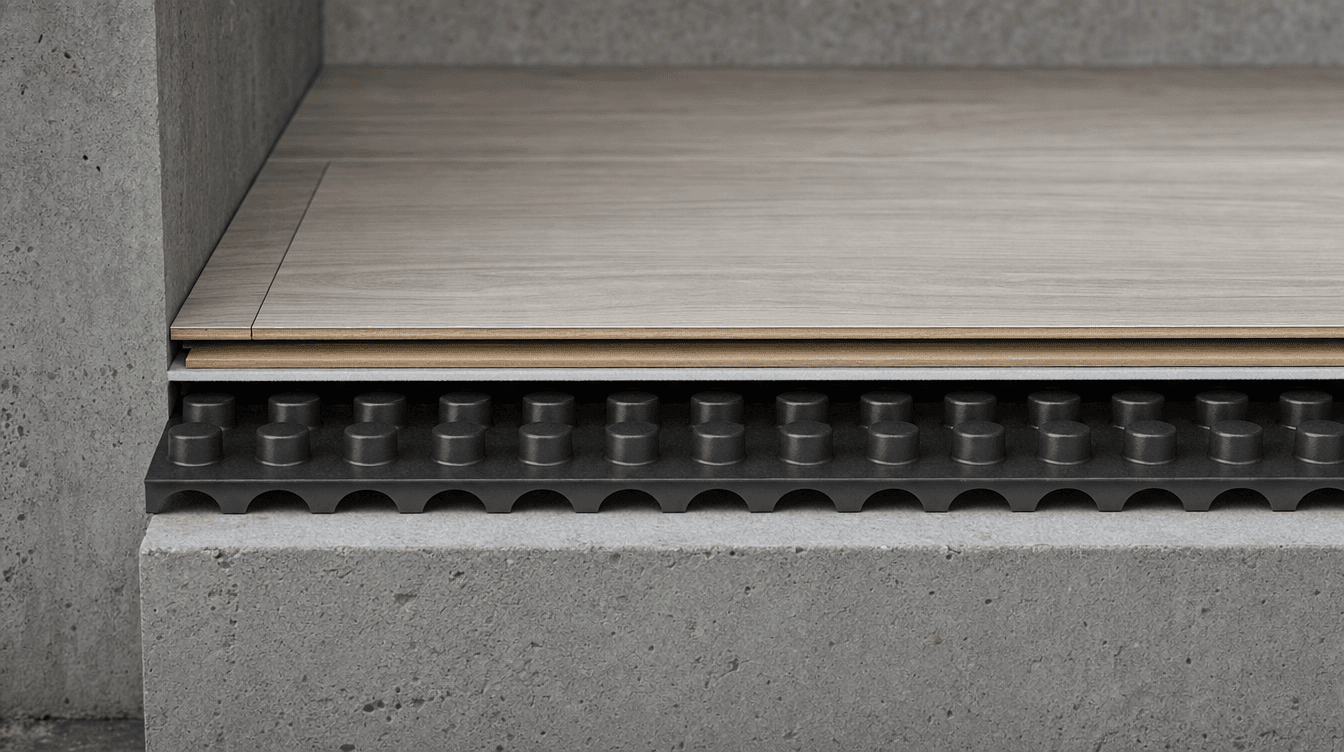
Basement flooring underlayment — the layer between the concrete and your floor that manages moisture, warmth, and comfort, and why it matters below grade.
When people choose basement flooring, they think about the surface — the vinyl, the tile, the carpet. But the layer underneath it does quiet, important work: managing moisture, adding warmth, and making the floor comfortable. Getting the underlayment right is one of the reasons a basement floor feels good and lasts. Here's what it does and why it matters. (This is general construction guidance; the right build-up for your basement is confirmed during the build.)
What underlayment is
"Underlayment" is the layer (or layers) between the concrete slab and your finished floor. Depending on the floor and the basement, it can include a moisture barrier, a subfloor panel or membrane, and a thin cushioning layer. It's the difference between flooring laid straight onto cold, potentially damp concrete and flooring that sits on a proper, comfortable base.
The three jobs it does
A good underlayment build-up handles:
- Moisture management — a barrier or dimpled membrane that keeps slab moisture away from the finished floor, working with the basement's overall moisture control.
- Warmth — lifting the floor off the cold slab and adding a thermal break, so it isn't freezing underfoot.
- Comfort and sound — a bit of give and some sound dampening, so the floor feels and sounds better.
Common approaches
A few typical build-ups you'll hear about:
- A dimpled membrane or subfloor panel (like the interlocking panels many people know by brand name) that creates an air gap and raises the floor off the slab.
- A moisture barrier plus underlayment under luxury vinyl or laminate.
- A plywood subfloor in some assemblies where a solid, raised base is wanted.
The right one depends on your flooring choice and the slab, which is part of the flooring decision overall.
Why it matters more in a basement
Above grade, underlayment is mostly about comfort and sound. In a basement, it also carries the moisture and cold responsibility, because it sits right on a below-grade slab. Skipping or skimping on it is a classic way to end up with a cold, clammy floor — or worse, trapped moisture under the finish. It's the same principle as insulating the walls properly: the hidden layer does the real work.
The takeaway
The underlayment is the unsung hero of a basement floor — managing moisture, adding warmth, and improving comfort. Choosing the right build-up for your slab and flooring is what makes the finished floor feel warm, quiet, and durable rather than cold and hard. We build the floor from the slab up so the whole assembly works, as part of a full basement development.
Do you need underlayment for basement flooring?
In a basement, yes — it does more than upstairs. The underlayment between the concrete slab and your finished floor manages moisture, lifts the floor off the cold slab for warmth, and adds comfort and sound dampening. Laying flooring straight onto a below-grade slab risks a cold, clammy floor or trapped moisture, so a proper build-up is an important part of the assembly.
What goes under basement flooring?
Depending on the flooring and the slab, the build-up can include a moisture barrier, a dimpled membrane or subfloor panel that creates an air gap and raises the floor off the concrete, and a thin cushioning layer. Some assemblies use a plywood subfloor for a solid raised base. The right combination depends on your flooring choice and is confirmed during the build.
Why is basement flooring underlayment more important than upstairs?
Because it sits directly on a below-grade concrete slab, so it carries moisture and cold responsibilities on top of the comfort and sound roles it plays upstairs. A proper underlayment keeps slab moisture away from the finished floor and provides a thermal break so the floor isn't freezing. Skipping it is a common cause of cold, clammy basement floors or hidden moisture problems.