
Materials & Suppliers
Basement Insulation Types Compared
By Josh Wallace · November 25, 2025
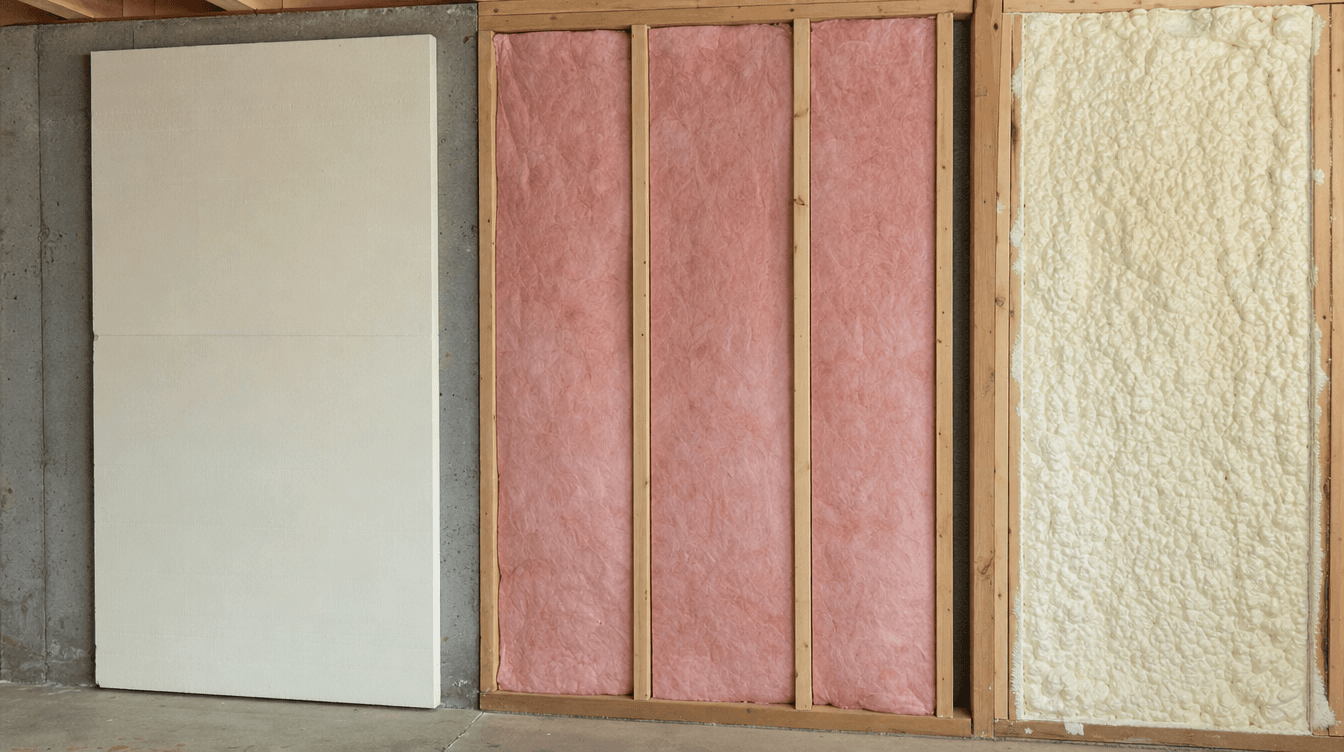
Basement insulation types compared — batt, rigid foam, and spray foam — and why a below-grade wall needs an assembly that manages moisture, not just R-value.
Insulating a basement isn't the same as insulating an upstairs wall, and the type of insulation matters more than people realize. Below grade, insulation has two jobs — keeping the space warm and managing moisture — and different products handle that differently. Here's a plain comparison of the main types and why the assembly matters as much as the material. (This is general construction guidance; the right assembly for your basement is confirmed during the build.)
Why a basement is a special case
An upstairs wall mostly worries about heat. A basement wall also faces the cool, damp concrete behind it, so the wrong insulation in the wrong place can trap moisture and grow mold — the same reason vapor barriers are handled so carefully down here. That's why the type and placement matter, not just the R-value number.
Batt insulation
The familiar fluffy stuff (fibreglass or mineral wool) that fits between studs:
- Pros: inexpensive, easy to install, good R-value for the price.
- The catch: on its own, against a below-grade wall, batt can let warm humid air reach cold concrete and condense. It generally needs to be part of a proper assembly — not stuffed straight against the foundation.
Rigid foam board
Solid foam panels, often used against the concrete:
- Pros: resists moisture, keeps the concrete surface warm so condensation doesn't form, and works as part of the insulate-your-walls assembly.
- Common approach: rigid foam against the concrete, then a framed wall in front — a reliable, moisture-smart setup.
Spray foam
Applied as a liquid that expands and hardens:
- Pros: excellent air seal and moisture control in one step, great for irregular surfaces and rim joists.
- The catch: the priciest option, and it's a professional install — not a DIY afternoon.
It's the assembly, not just the product
The real answer isn't "which insulation is best" — it's which assembly is right for a below-grade wall. The modern approach combines materials so the wall is warm and can dry: often rigid foam against the concrete, framing, and appropriate insulation and vapor control on the room side. Matched to your basement, this is what prevents the hidden moisture problems that come from insulating a basement like it's upstairs.
The takeaway
Batt, rigid foam, and spray foam each have a place, but in a basement the winning move is the right assembly — one that manages moisture as well as heat. We build the assembly that suits your foundation and climate, so the space stays warm, dry, and healthy, as part of a full basement development.
What is the best insulation for a basement?
There's no single "best" product — what matters is the right assembly for a below-grade wall, one that manages moisture as well as heat. Rigid foam against the concrete (which keeps the surface warm so condensation doesn't form) combined with a framed wall is a common, reliable approach. Batt and spray foam each have a place within a properly designed assembly.
Can you use regular batt insulation in a basement?
Yes, but usually as part of a proper assembly rather than stuffed straight against the concrete. On its own against a below-grade wall, batt can let warm humid air reach the cold foundation and condense, which grows mold. Paired correctly — typically with rigid foam against the concrete and appropriate vapor control — batt works well and remains cost-effective.
Is spray foam worth it in a basement?
It can be. Spray foam gives an excellent air seal and moisture control in a single step and is especially good for irregular surfaces and rim joists. The trade-offs are that it's the most expensive option and requires a professional install. Whether it's worth it depends on your basement; often a rigid-foam-based assembly achieves the goal at lower cost.