
Materials & Suppliers
Basement Vapor Barriers Explained
By Josh Wallace · October 13, 2025
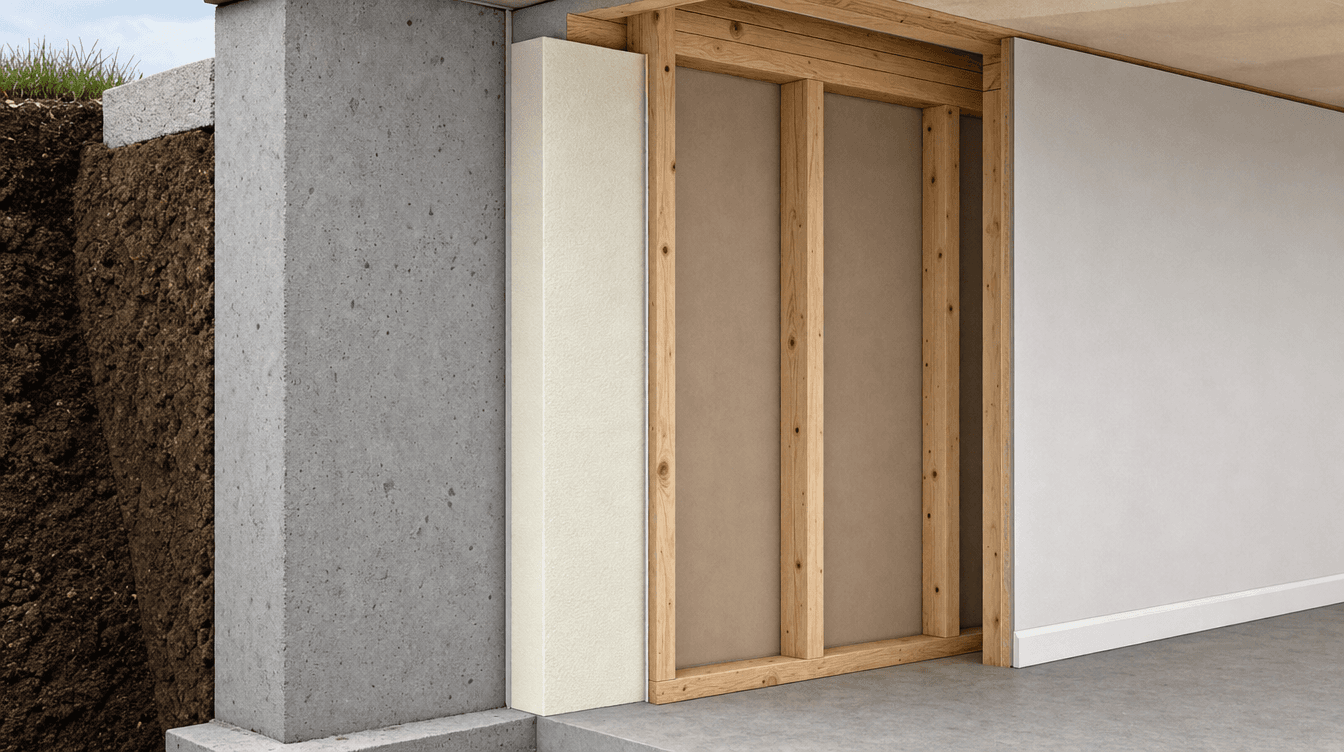
Basement vapor barriers explained — what they do, why placement is everything in a basement, and how the wall assembly keeps moisture from getting trapped.
Vapor barriers are one of the most misunderstood parts of a basement, and getting them wrong is a classic path to hidden mold. A vapor barrier controls how moisture (as vapor) moves through a wall — the goal is to stop humid air from hitting a cold surface and condensing inside the wall. In a basement, placement is everything, because moisture can push from two directions. Here's how it actually works. (This is general construction guidance; the right assembly for your basement is confirmed during the build.)
What a vapor barrier does
A vapor barrier (or vapor retarder) controls the movement of water vapor through a wall assembly. Its job is to keep humid air from reaching a cold surface where it would turn into liquid water — condensation — inside the wall, which is what leads to mold and damage. It's about managing where moisture can and can't travel.
Why a basement is different (and tricky)
Above grade, the logic is straightforward. A basement is trickier because a below-grade wall can face moisture pressure from two directions:
- Humid room air on the inside.
- The cool, damp concrete on the outside.
Put a plastic (poly) vapor barrier in the wrong spot — for example, sealed against cold concrete — and instead of stopping moisture, you can trap it where it can't dry out. That trapped moisture is a classic mold recipe, and it's exactly why a basement wall isn't insulated the same way as an upstairs wall.
It's about the whole assembly
The modern approach isn't "staple up some poly" — it's designing the whole [wall assembly](/blog/insulate-basement-walls) to dry, not trap:
- Foam against the concrete that keeps the surface warm and manages vapor.
- A framed wall in front of it.
- Vapor control on the room side that's appropriate for that specific assembly.
The type and placement of any vapor barrier have to match the assembly — which is why it's a design decision, not a default. It works hand in hand with the moisture management and insulation around it.
The takeaway
A vapor barrier in a basement isn't optional, but it's also not one-size-fits-all. It has to be right for a below-grade wall specifically — the wrong barrier in the wrong place causes the exact problem it's meant to prevent. Getting the assembly right is part of building a basement that stays dry for the long haul, as part of a full basement development.
Do you need a vapor barrier in a basement?
Yes, but it has to be the right type in the right place for a below-grade wall — it's not optional, and it's not one-size-fits-all. A vapor barrier controls how moisture moves through the wall to prevent condensation inside it. In a basement, the whole assembly (foam against concrete, framing, appropriate room-side vapor control) has to be designed to dry rather than trap moisture.
Where does the vapor barrier go in a basement wall?
It depends on the assembly, which is why it's a design decision rather than a fixed rule. The modern basement approach uses foam against the concrete to manage vapor and keep the surface warm, with room-side vapor control appropriate to that assembly. Placing a plastic barrier against cold concrete can trap moisture and cause mold, so placement must match the wall.
Can a vapor barrier cause mold in a basement?
Yes — if it's the wrong type or in the wrong spot. Sealing a plastic vapor barrier against cold concrete can trap moisture where it can't dry out, which grows hidden mold. That's why a basement wall needs an assembly designed to dry, with the vapor barrier matched to it, rather than a generic poly sheet used the way it might be upstairs.