
Design & Room Types
Basement Playroom and Kids' Space Ideas
By Oscar Fonseca · July 11, 2025
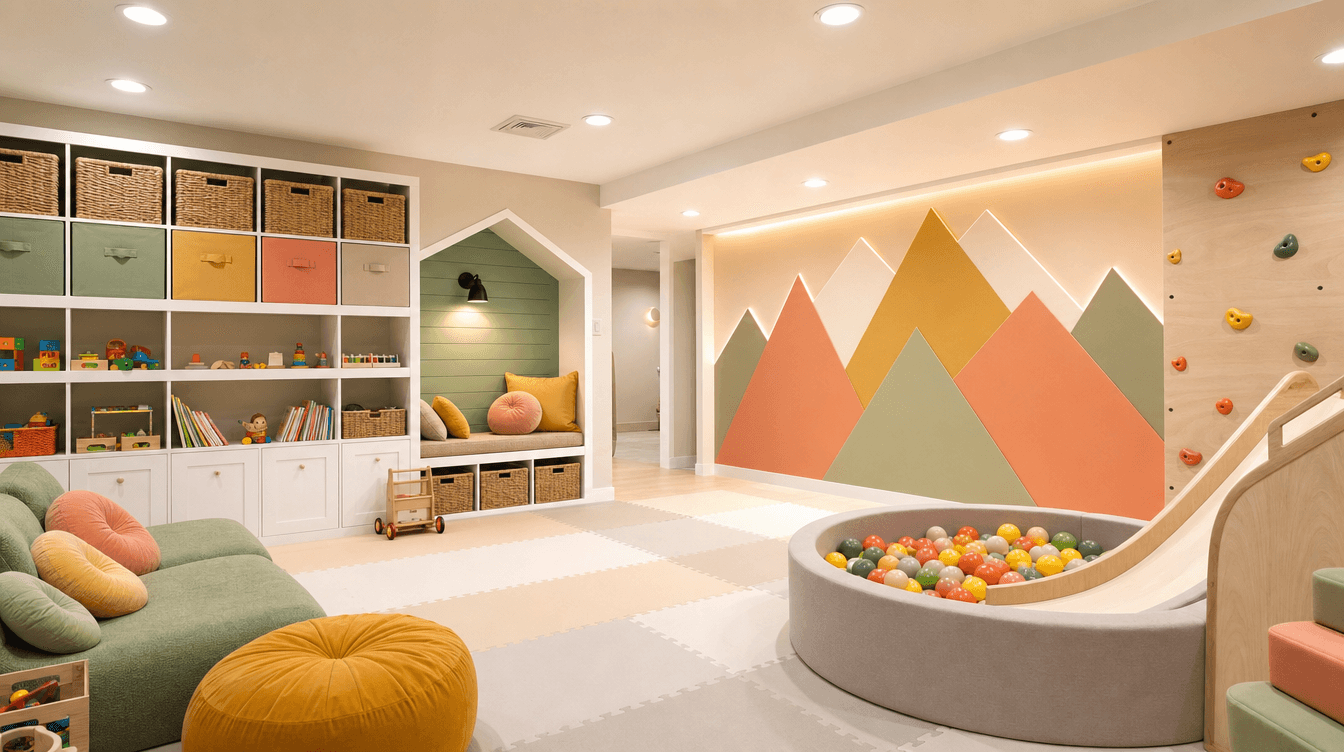
Basement playroom and kids' space ideas — safe, durable, flexible design that grows with your family, plus the details worth planning in from the start.
The best basement playroom is designed around three things: durability, safety, and flexibility — a space that survives daily kid use, keeps little ones safe, and adapts as they grow from toddlers to teens. A basement is ideal for it, keeping the toys and the mess downstairs. Here's how to design a kids' space worth building. (Design guidance here is general; we tailor it to your family and show it to you before we build.)
Build it durable
Kids are tough on a room, so the finishes have to take it:
- Washable, hard-wearing flooring like luxury vinyl plank — warm, soft enough for play, and it shrugs off spills.
- Wipeable paint that survives crayon, markers, and sticky hands.
- Durable, kid-proof finishes throughout, chosen to clean up easily.
Design for safety
A kids' space should feel safe for them and easy on you:
- Soft, warm flooring or play mats over the subfloor for comfort and cushioning.
- Good, bright lighting so the space never feels like a dark basement.
- Covered outlets, rounded edges, and secured built-ins for peace of mind.
Plan for flexibility — kids grow fast
This is the most important idea: the playroom for a three-year-old isn't the hangout for a thirteen-year-old. Design a space that adapts:
- Open floor space now for toys and play, easily rearranged into a games, study, or hangout zone later.
- Built-in storage that hides the daily chaos and keeps earning its keep as needs change.
- A flexible layout that doesn't lock you into one age — the same zoning thinking that makes any basement adaptable.
Designing for the long term means you build once instead of renovating every few years.
Keep it bright and fun
Finally, a kids' space should feel joyful, not like a utility area:
- Warm colours and a fun feature wall for personality.
- Layered, bright lighting so it never reads as a dark basement — part of making a basement feel less like a basement.
- A cozy nook for reading or quiet time.
Get durability, safety, flexibility, and warmth right, and you've built a space the whole family actually uses. It's one of the most rewarding rooms in a basement design.
What flooring is best for a basement playroom?
Luxury vinyl plank is ideal — it's warm, durable, washable, and waterproof, so it handles spills and heavy play. Adding soft play mats over it gives extra cushioning for little ones. It sits over a proper subfloor, which keeps the floor warm and comfortable underfoot in a below-grade space.
How do you design a basement playroom that grows with kids?
Design for flexibility: keep open floor space that can shift from toys to a games or study zone, add built-in storage that adapts to changing needs, and avoid locking the layout into one age. That way the room evolves from a toddler playroom to a teen hangout without a full renovation.
How do you make a basement playroom safe for kids?
Use soft, warm flooring or play mats, keep lighting bright, cover outlets, round off edges where possible, and secure any built-ins to the wall. A well-lit, cushioned, hazard-aware space feels safe for little ones and gives parents peace of mind while the kids play downstairs.