
Permits & Legal Suites
Smoke and Carbon Monoxide Alarm Requirements for a Basement
By Kloe Bay · June 20, 2025
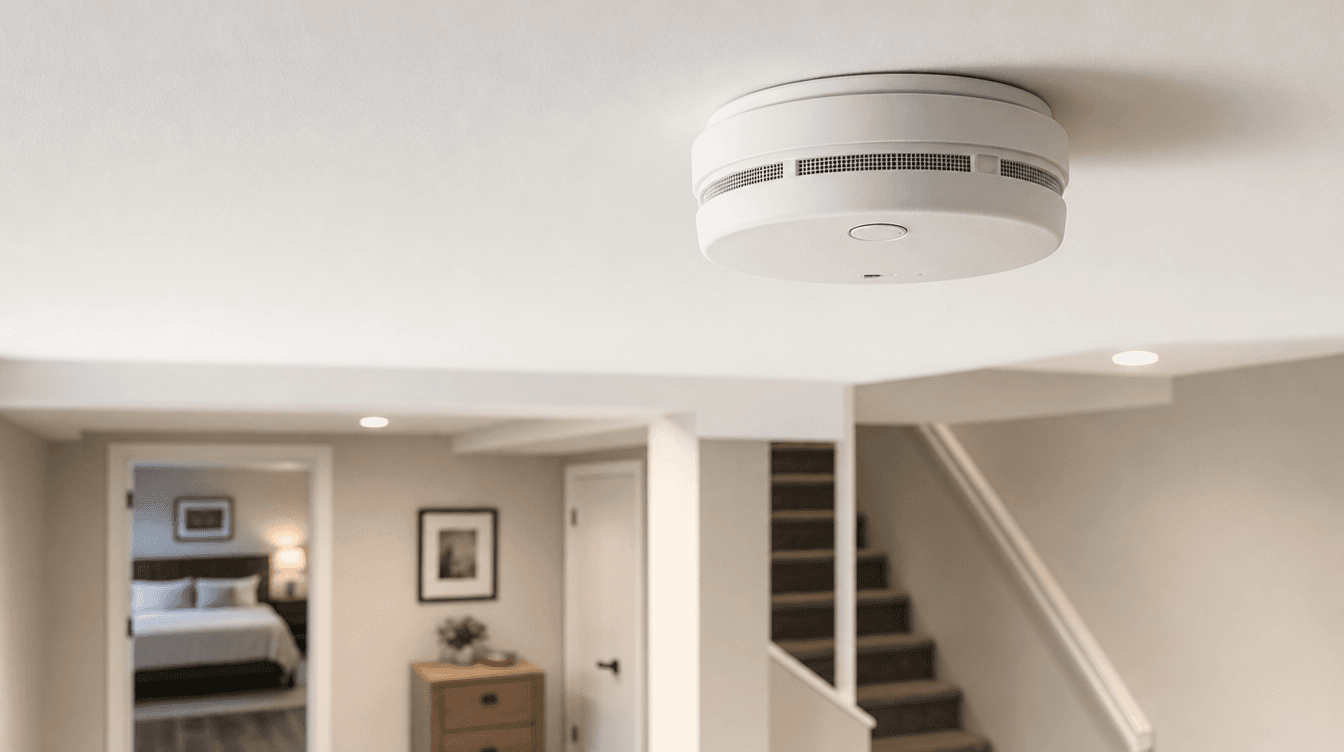
Smoke and carbon monoxide alarm requirements for a finished basement — where they go, why interconnection matters, and the extra rules for a legal suite.
Smoke and carbon monoxide alarms are a code requirement for a finished basement, not an optional extra — and the details matter. A finished basement needs smoke alarms (with one in any bedroom), interconnected so they all sound together, plus carbon monoxide detection near fuel-burning appliances and sleeping areas. A legal suite steps the requirements up further. Here's what a basement actually needs. (This is general information; exact current requirements are confirmed against code for your project.)
Smoke alarms: and why "interconnected" is the key word
A finished basement needs smoke alarms, and any bedroom you add down there needs its own. But the single most important feature is interconnection:
- When one alarm sounds, they all sound — throughout the home, upstairs and down.
- This is what protects sleeping occupants. A fire starting in the basement at night triggers the alarms in the upstairs bedrooms, waking everyone — not just an alarm in an empty basement.
Interconnected alarms are a life-safety essential, which is why they're central to a legal suite's fire safety and to any finished basement.
Carbon monoxide detection: the invisible hazard
Carbon monoxide is odourless and invisible, so detection is the only protection. A basement needs CO detection:
- Near fuel-burning appliances — most commonly the furnace and hot-water tank.
- Near sleeping areas — so occupants are warned while they sleep.
A basement with a furnace and a bedroom needs CO detection, full stop — it's not negotiable.
Legal suites: the requirements step up
For a legal secondary suite, the requirements increase because there are now two households to protect. Both the suite and the main home need proper, interconnected smoke and CO coverage, so an alarm in one unit warns the other. This is one of the core life-safety pieces an inspection verifies before a suite is legal.
It's straightforward to build in right
The good news: proper alarm coverage is easy to build in correctly during construction — the wiring and interconnection are planned with the electrical, not bolted on afterward. We always install it to code and have it inspected, as part of a full basement development. It's a small, essential detail that a quality build never gets wrong.
Does a finished basement need smoke alarms?
Yes — smoke alarms are a code requirement for a finished basement, and any bedroom you add needs its own. Crucially, they should be interconnected so that when one sounds, they all sound throughout the home. That way a fire starting in the basement wakes people sleeping upstairs, which is what makes interconnected alarms a life-safety essential.
Where do carbon monoxide detectors go in a basement?
Near fuel-burning appliances such as the furnace and hot-water tank, and near sleeping areas so occupants are warned while asleep. Carbon monoxide is invisible and odourless, so detection is the only protection — a basement with a furnace and a bedroom needs CO detection as a non-negotiable safety requirement.
Do basement suites have extra alarm requirements?
Yes. A legal secondary suite has stepped-up requirements because there are two households to protect: both the suite and the main home need proper, interconnected smoke and CO coverage so an alarm in one unit warns the other. It's a core life-safety element that's verified during inspection before the suite is considered legal.