
Materials & Suppliers
Basement Stairs: Materials, Railings, and Safety
By Josh Wallace · October 10, 2025
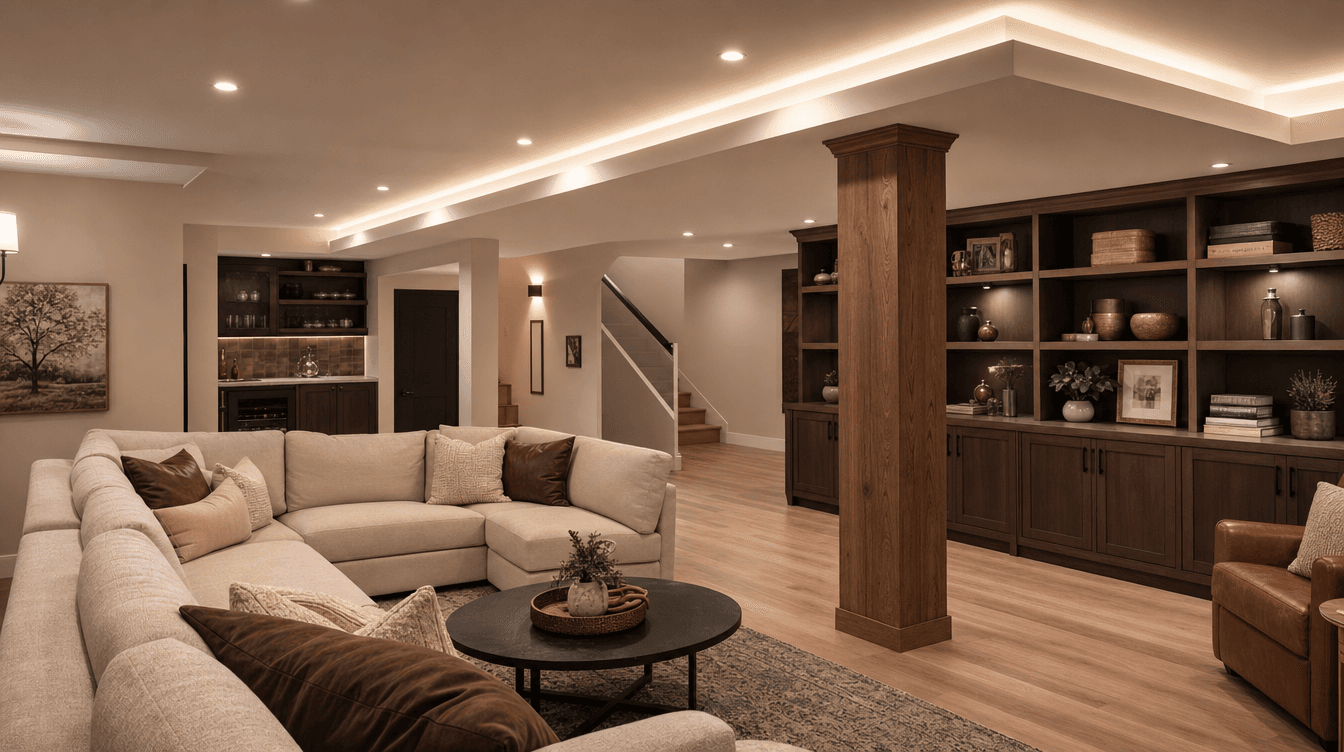
Basement stairs guide — how the right treads, railings, and lighting make the staircase safer and better-looking, and why it's often an overlooked upgrade.
The staircase is the first thing you touch on the way down — yet it's one of the most overlooked parts of a basement. Getting it right makes the whole space feel finished and, more importantly, safe. Here's a practical look at basement stairs: the materials, railings, and safety details worth thinking about. (This is general guidance; specifics are chosen with you and built to current code.)
Refinishing vs leaving the builder stairs
Most basements start with bare builder-grade stairs:
- Finishing the treads — carpet, wood, or a wood-look surface that matches the flooring below.
- Closing in open risers for a more finished, safer feel (and no more dropped items disappearing).
- It's a small upgrade with a big impact on how the whole basement reads.
Finishing the stairs is one of those details people underestimate until they see it done.
Railings and handrails
Both a safety essential and a design feature:
- A code-compliant handrail is required — this isn't optional, it's safety and code.
- Railing style — from simple painted pickets to modern metal or glass — sets the tone.
- Solid, secure mounting so it's genuinely there when someone needs it.
Done well, a railing is safety and style at once.
Light the stairs properly
Stairs are the most important place to get lighting right:
- Good [lighting](/blog/basement-lighting-no-windows) over the full run — no dim, shadowy steps.
- A switch at top and bottom so no one navigates them in the dark.
- Optional step or accent lighting for a premium, safe finish.
A well-lit stair is a safe stair — this is where lighting isn't just aesthetic.
Open vs closed staircases
The layout choice:
- An open staircase feels bright and spacious, connecting the basement to upstairs.
- A closed-in stair can gain a door for sound and separation, useful with a suite.
- The right choice depends on your layout and whether you want the basement open or separate.
The takeaway
Basement stairs come down to finished treads and risers, a secure code-compliant railing, proper lighting, and the right open-or-closed layout. It's an easy part to overlook, but getting it right makes the descent safer and makes the whole basement feel genuinely finished — a detail worth planning into any basement development.
Should I finish my basement stairs?
It's one of the highest-impact small upgrades. Bare builder-grade stairs can be finished with carpet, wood, or a wood-look surface that matches the flooring below, and open risers can be closed in for a more finished, safer feel. People routinely underestimate the difference until they see it done — finished stairs are what make the descent feel like part of the living space rather than a construction leftover. It also improves safety and how the whole basement reads.
Do basement stairs need a railing?
Yes — a code-compliant handrail is required, not optional, because it's a core safety element. Beyond meeting code, the railing is also a design feature: styles range from simple painted pickets to modern metal or glass, setting the tone for the space. The key on the safety side is solid, secure mounting so the railing is genuinely there when someone needs it. A good railing delivers safety and style at the same time.
How do I make basement stairs safer?
Lighting is the biggest factor — light the full run well with no dim, shadowy steps, and put a switch at both the top and bottom so no one navigates them in the dark. A secure, code-compliant handrail is essential, and closing in open risers plus finishing the treads with a slip-appropriate surface helps too. Optional step or accent lighting adds a premium, safe finish. A well-lit, well-railed stair is a safe stair.