
Materials & Suppliers
Dealing With Support Posts and Bulkheads in Your Basement
By Josh Wallace · November 4, 2025
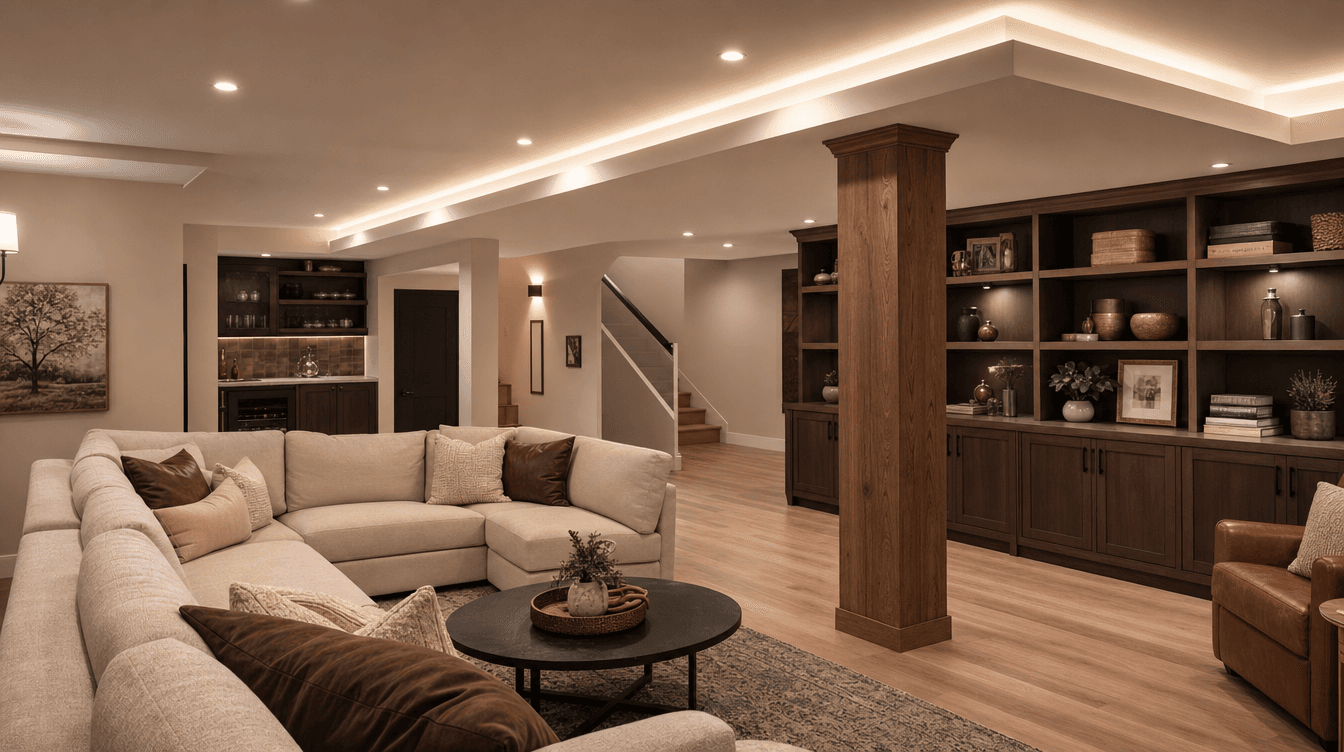
How to deal with support posts and bulkheads in your basement — why they're there, what you can and can't move, and smart ways to hide or feature them.
Support posts and bulkheads are in almost every basement, and the reality is that they're structural — you usually can't just remove them. But you don't have to: the best approach is to design around them so they look intentional, whether that means wrapping a post as a feature or turning a bulkhead into a ceiling detail. Here's what they are, what can and can't move, and how to make them work. (This is general guidance; anything structural is assessed for your specific home.)
What support posts are (and why you can't just remove them)
The steel columns in your basement — often called teleposts — are holding up your house. They carry the load of the floors above down to the foundation. That means:
- You usually can't simply remove a post without compromising the structure.
- Relocating a load is sometimes possible with an engineered beam, but it's a real structural job — properly designed and permitted, not a casual change.
- Any change to a load-bearing element is assessed and engineered, never guessed.
Honesty here matters: a builder who promises to make all your posts disappear cheaply is waving a red flag.
What bulkheads are
Bulkheads are the boxed-in sections that run along the ceiling. They exist to hide the essential systems that have to run somewhere:
- Ductwork for heating and cooling.
- Plumbing drains and supply lines.
- Beams and structural elements.
Some bulkheads can be tightened up or the runs rerouted to reclaim height; others can't, depending on what's inside. We plan these carefully to preserve ceiling height, the same care that goes into every basement development.
Turning obstacles into features
The design move is to stop fighting posts and bulkheads and start using them:
- Wrap a post in wood, stone, or millwork so it reads as a deliberate feature, not an obstacle.
- Use posts to define zones — two columns can mark the edge of a seating area or bar in an open layout.
- Turn a bulkhead into a design detail — a tray-ceiling effect, a soffit for accent lighting, or a natural break between spaces.
The key is planning early
The difference between an eyesore and a feature is planning it in from the start. When posts and bulkheads are designed around from day one — wrapped, zoned, lit, or worked into the layout — they stop looking like compromises and start looking intentional. That's exactly the kind of thing you resolve in the design stage, before anything is built.
Can you remove a support post in a basement?
Usually not without structural work. Those steel teleposts carry the load of the house above, so removing one isn't a casual change. Sometimes a load can be relocated with an engineered beam, but that's a real, permitted structural job that must be properly designed — not something to guess at or do cheaply.
What is a bulkhead in a basement and can it be removed?
A bulkhead is a boxed-in section of ceiling that hides ductwork, plumbing, or beams that have to run somewhere. Some can be tightened up or rerouted to reclaim ceiling height; others can't, depending on what's inside. We assess each one and plan the ceiling to preserve as much height as possible.
How do you hide a support post in a finished basement?
The best approach is to make it a feature rather than hide it entirely — wrap it in wood, stone, or millwork, or use a pair of posts to define the edge of a zone like a seating area or bar. Designed in from the start, a wrapped post looks intentional instead of like an obstacle in the middle of the room.