
Materials & Suppliers
Basement Window Wells and Drainage, Explained
By Josh Wallace · December 14, 2025
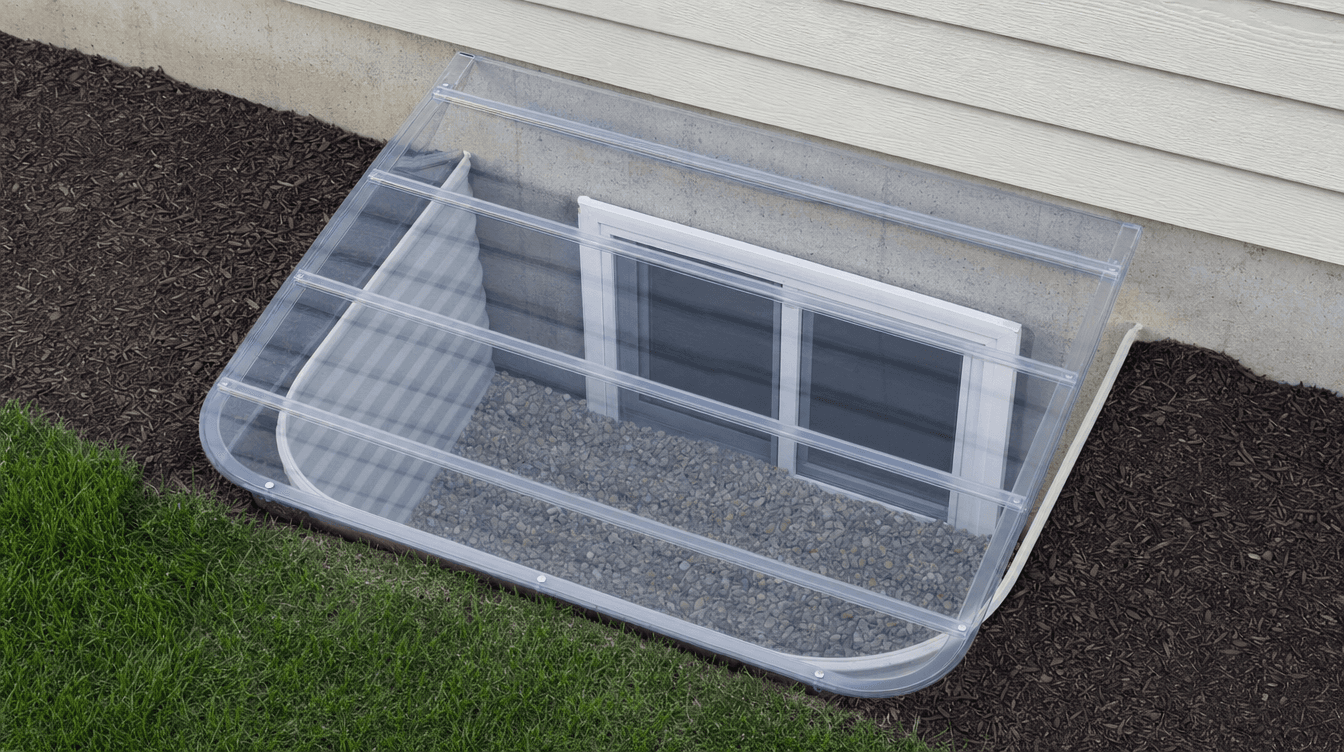
Basement window wells and drainage — why the well matters as much as the window, how proper drainage keeps water out, and what a good window well setup includes.
When people think about a basement window, they picture the glass — but the window well outside it does just as much work. A well that drains properly keeps water away from your foundation; one that doesn't can turn into a little pond right against your basement wall. Here's how window wells and their drainage actually work, and what a good setup includes. (This is general construction guidance; the right details for your home are confirmed during the build.)
What a window well does
A window well is the recessed area outside a below-grade window that holds back the surrounding soil and lets light and air reach the window — essential for any egress window that sits partly below ground. But holding back soil is only half its job. The other half is managing water, because a well naturally collects rain and snowmelt that has to go somewhere.
Why drainage is the whole game
If a window well can't drain, water pools in it — and a pool of water sitting against a basement window is exactly how leaks and moisture problems start:
- Standing water finds the weak points around the window frame and seal.
- Freeze-thaw pressure in winter stresses the window and well.
- Chronic dampness feeds the mold and rot you're trying to avoid.
Get the drainage right and the well quietly protects the basement for decades; get it wrong and it becomes a recurring headache.
What a proper window well setup includes
A window well built to keep water out generally has:
- A gravel base that drains — so water percolates down and away rather than pooling.
- A connection to the drainage system — often tied to the weeping tile / foundation drainage so water has a clear path away.
- The right depth and size — deep enough to drain below the window sill, and sized for the egress requirements if it's an egress window.
- A well cover — a clear cover that keeps rain, snow, leaves, and debris out while still letting light in.
Grading matters too
Drainage doesn't stop at the well. The ground around it should slope away from the house, so surface water heads away from the foundation rather than toward the well in the first place. It's part of the same water-management thinking that keeps a whole basement dry — the well is one piece of a bigger system.
The takeaway
A window well is not just a hole for light — it's a water-management feature, and its drainage is what protects your foundation and window. A proper gravel base, a path to the drainage system, the right size, and a cover are what separate a well that works from one that floods. We build them to keep water where it belongs, as part of a full basement development.
Why does my basement window well fill with water?
Usually because it can't drain. A window well collects rain and snowmelt, and if there's no gravel base or connection to the foundation drainage, that water has nowhere to go and pools against the window. Poor grading around the house sending surface water toward the well makes it worse. Proper drainage and a well cover are what keep it from filling up.
How does a window well drain?
A properly built well has a gravel base that lets water percolate down, often connected to the home's weeping tile or foundation drainage so it has a clear path away from the house. The well should be deep enough to drain below the window sill. Combined with ground that slopes away from the foundation, this keeps water from pooling against the basement window.
Do window wells need covers?
A cover is highly recommended. A clear well cover keeps rain, snow, leaves, and debris out — reducing the water and clogging that lead to pooling — while still letting daylight reach the window. For an egress window, any cover must be easy to open or remove from inside so it never blocks the emergency exit. It's a small add that prevents a lot of water problems.