Design & Room Types
Basement Bar Ideas: Wet Bar vs Dry Bar Design
By Oscar Fonseca · August 11, 2025
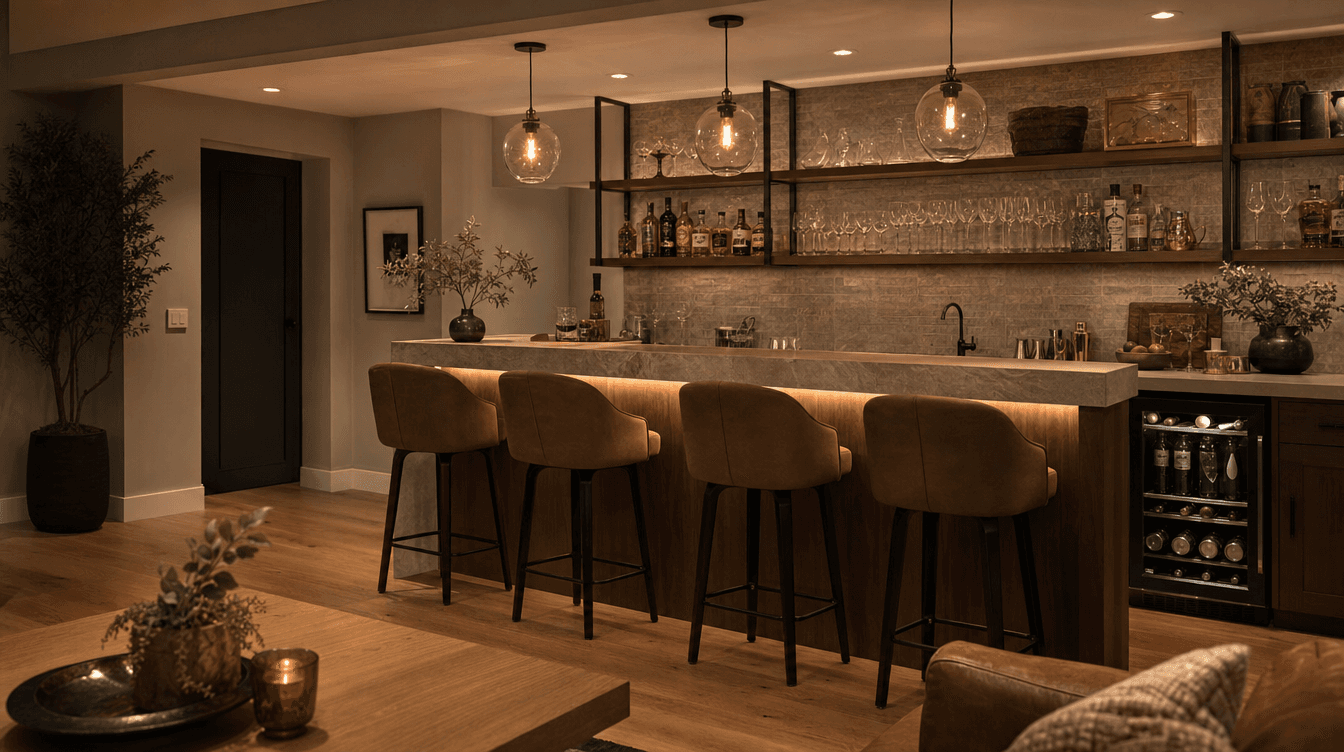
Basement bar ideas and design — wet bar vs dry bar, layout and seating, storage and lighting — how to design a home bar that becomes the heart of the basement.
A bar instantly turns a basement into a place people want to gather, and designing one comes down to four decisions: wet bar vs. dry bar, the layout and seating, storage and display, and lighting. Get those right and the bar becomes the heart of the space. Here's how to design one you'll love. (Design guidance here is general; we tailor it to your space and show it to you first. For what a bar costs, see our [cost breakdown](/blog/basement-bar-kitchen-cost).)
Wet bar vs. dry bar
The first and biggest choice is whether there's a sink:
- A wet bar has running water — ideal for real entertaining, rinsing glassware, and mixing drinks. It does more, and (because of the plumbing) costs a bit more.
- A dry bar skips the plumbing — cabinets, a counter, a bar or beverage fridge, maybe a coffee station. Cleaner and more affordable.
Both look fantastic; the question is simply how much you'll use running water at the bar.
Layout and seating
The layout shapes how the bar is used:
- A straight run along a wall — simple and space-efficient.
- An L-shape in a corner — more counter and storage.
- An island or peninsula — social, and great for a big open rec room.
The key move for a real bar feel: a counter overhang for stools, which turns a counter into a place people actually sit and gather.
Storage and display
Thoughtful storage is what makes a bar feel custom:
- Open shelving for glassware and a curated display.
- Bottle storage — a rack, or a nearby wine cellar.
- Closed cabinets to hide the clutter.
- A built-in beverage or wine fridge.
Lighting: the magic
Lighting is what gives a bar its evening, grown-up mood:
- Pendants over the bar as a focal point.
- Backlit or lit shelving to make glassware glow.
- Under-counter lighting for warmth and depth.
It's the same layered-lighting thinking that makes any basement feel intentional — a bar just rewards it especially well.
Bringing it together
Nail the type, layout, storage, and lighting, and the bar stops being a counter and becomes the centrepiece of the basement — the spot everyone drifts toward. It's one of the most rewarding features to work out in a basement design before you build.
What's the difference between a wet bar and a dry bar?
A wet bar has a sink and running water, making it better for real entertaining, rinsing glasses, and mixing drinks — but it requires plumbing, so it costs a bit more. A dry bar has no sink: cabinets, a counter, and a bar fridge. Both look great; the choice is how much you'll use running water at the bar.
How do you design a basement bar for entertaining?
Choose a layout that invites people in — a straight run, L-shape, or island — and build in a counter overhang for stools so guests can sit. Add generous storage and display for glassware and bottles, a beverage or wine fridge, and layered lighting (pendants, backlit shelving, under-counter glow) for an evening atmosphere.
Does a basement bar need a sink?
Only if you want a wet bar. A sink is great for real entertaining and drink-making but requires plumbing, which adds cost. Many homeowners are happy with a dry bar — cabinets, counter, and a beverage fridge — which looks just as good and is simpler and more affordable. It comes down to how you'll use it.