
Materials & Suppliers
The Best Flooring for a Basement Home Gym
By Josh Wallace · November 14, 2025
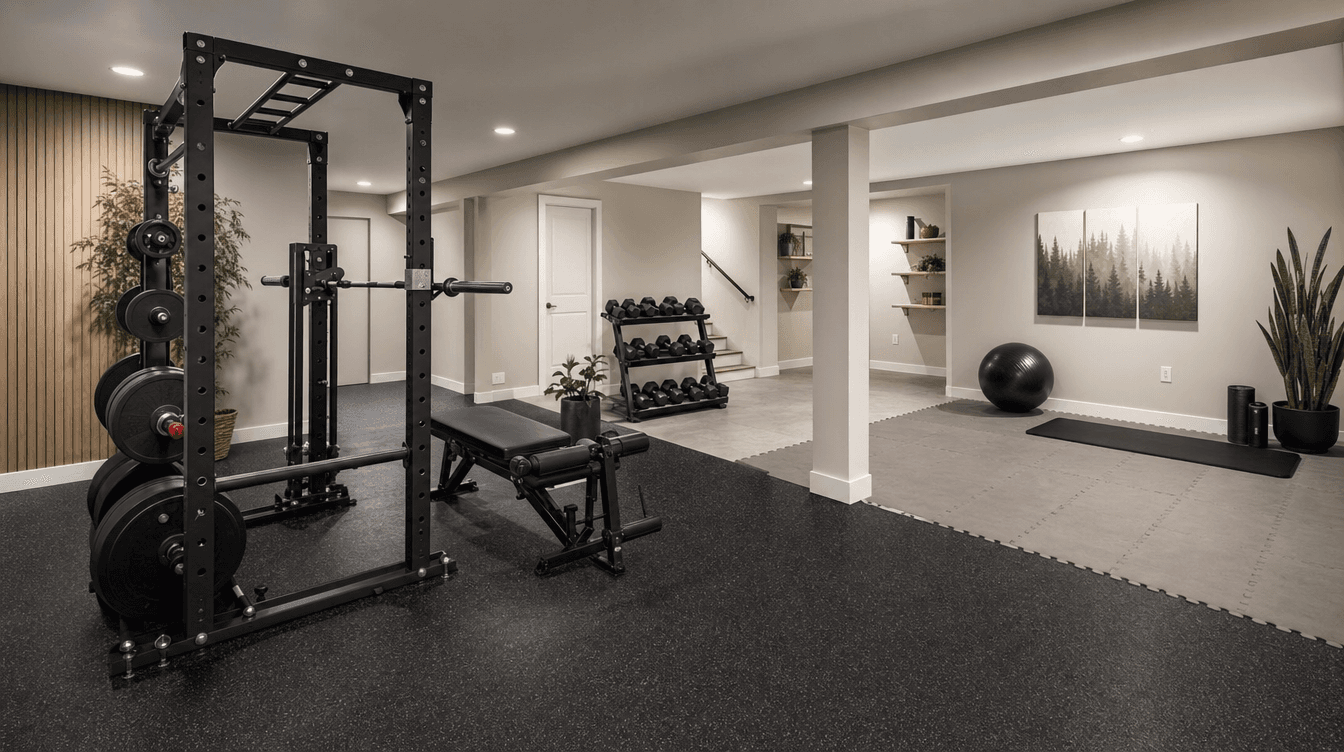
The best flooring for a basement home gym — why gym flooring is its own decision, the rubber and foam options, and how the layers below the surface protect the floor.
A basement home gym has one material decision that matters more than the rest: the floor. Gym flooring takes a beating — dropped weights, treadmills, sweat — and it's its own thing, separate from the flooring you'd choose for a living area. Here's how to get a gym floor that protects your equipment, your slab, and your joints. (This is general construction guidance; the right build-up for your gym is confirmed during the build.)
Why a gym floor is a special case
A gym floor has to do jobs a normal floor doesn't:
- Absorb impact from dropped weights, so the slab (and your equipment) survive.
- Cushion joints for workouts and floor exercises.
- Grip and stay put under heavy machines and quick movements.
- Take sweat and cleaning without being damaged.
That's why gym flooring is chosen for performance, not just looks — though it can still look sharp.
The main options
For a basement gym, the common choices are:
- Rubber flooring — the gold standard. Rolls or interlocking tiles, tough, grippy, and great at absorbing impact. Ideal under a weight or lifting zone.
- Foam tiles — softer and cheaper, good for stretching, yoga, or a kids' play-and-exercise zone, but not for heavy weights.
- A hybrid layout — rubber in the lifting area, foam or a durable vinyl elsewhere, matching the floor to how each zone is used.
Matching the surface to the activity is the smart move rather than one material everywhere.
What's underneath matters too
Here's the part people miss: in a basement, what's under the gym floor is as important as the surface. Rubber laid straight on a cold, potentially damp slab misses two things:
- A moisture-managing base — the same underlayment thinking used elsewhere, so slab moisture doesn't get trapped.
- A bit of warmth and separation from the cold concrete.
A proper build-up — moisture control, then the gym surface — is what keeps a basement gym floor from being cold, clammy, or a hidden moisture problem.
Don't forget the weight
One practical note: a home gym can be heavy — a rack, plates, and machines add up. It's worth flagging so the floor and slab are considered for the load, part of confirming the basement is ready for what you're putting in it.
The takeaway
The best basement gym floor is usually rubber over a proper moisture-managing base — tough, cushioned, and built for impact — with foam or vinyl in the lighter zones. Get the layers right and the floor protects your equipment, your slab, and your body for years, as part of a full basement development.
What is the best flooring for a basement home gym?
Rubber flooring is the gold standard — rolls or interlocking tiles that are tough, grippy, and great at absorbing the impact of dropped weights, ideal under a lifting zone. Foam tiles suit lighter areas like stretching or yoga. Many gyms use a hybrid: rubber in the weight zone, foam or durable vinyl elsewhere. Just as important is a proper moisture-managing base underneath.
Can you put rubber gym flooring directly on a basement slab?
It's better not to. In a basement, what's under the gym floor matters as much as the surface — rubber laid straight on a cold, potentially damp slab can trap moisture and stay cold and clammy. A proper build-up with moisture control (the same underlayment thinking used for other basement floors) under the rubber keeps the floor dry, warmer, and free of hidden moisture problems.
Does a home gym need special floor support?
It's worth considering. A home gym can get heavy once you add a rack, plates, and machines, so it's smart to flag the equipment early so the floor build-up and slab are suited to the load. It's part of confirming the basement is ready for what you're putting in it, and it's easy to plan for when the gym is part of the design from the start.